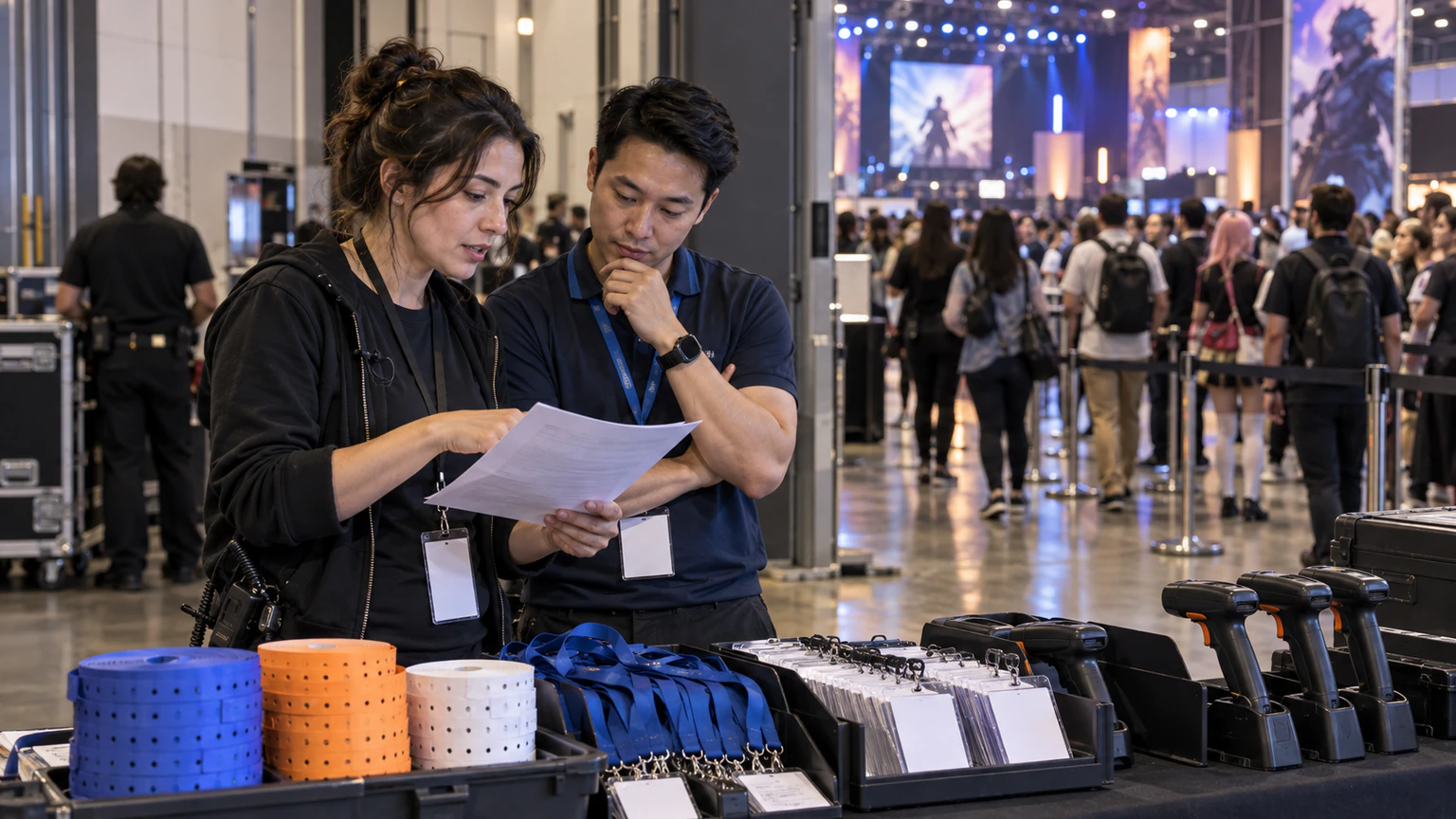

Recent coverage linking zero-failure networks with real-time event management in Saudi industries is a useful prompt for event teams.
The point is not that events should copy telecom or infrastructure environments exactly. They cannot. But the operating principles behind highly resilient systems are still relevant when an event has to keep moving under pressure.
For organizers, venue operators, and event tech buyers, the practical question is simple: what would change if live event operations were designed with fewer single points of failure?
Resilience at events rarely comes from one heroic response. It comes from workflows that keep working when conditions change.
Why this matters
Most event failures do not begin as total collapse. They begin as smaller disruptions that spread:
- a registration issue slows entry
- queue pressure builds outside a gate
- radio comms become inconsistent
- a staffing gap delays a decision
- session turnover runs late
- VIP movement conflicts with attendee flow
- an on-site vendor misses a timing dependency
Each issue may seem manageable on its own. Together, they create operational fragility.
That is why the idea of zero-failure networking is useful as a mindset. In event operations, the goal is not perfection. The goal is to prevent one problem from becoming a chain reaction.
What event teams can borrow from zero-failure thinking
Highly reliable operating environments usually share a few habits: they monitor conditions in real time, reduce critical dependencies, define escalation paths clearly, and prepare fallback options before they are needed.
Those habits translate well to events.
1. Identify the workflows that cannot fail cleanly
Some event processes can tolerate delay. Others cannot.
Start by mapping the workflows where failure creates immediate knock-on effects:
- entry and check-in
- badge printing and access validation
- speaker readiness and stage handoff
- session room turnover
- crowd flow at pinch points
- security escalation
- transport and loading schedules
- power, connectivity, and production coordination
These are the areas where resilience planning matters most.
If a team treats every task as equally critical, it becomes harder to protect the ones that actually keep the event operational.
2. Reduce single points of failure
A common weakness in live events is over-reliance on one person, one device, one supplier contact, or one decision channel.
Look for operational dependencies such as:
- only one team member knowing the access control setup
- one approval bottleneck for all live changes
- a single communications channel with no backup
- one supplier holding essential event-day information
- manual handoffs that depend on perfect timing
Then ask what backup is realistic.
That may mean:
- a second trained operator for critical workflows
- printed fallback lists for key access scenarios
- secondary comms methods for supervisors
- clear substitute decision-makers
- documented run-of-show changes shared across leads
The strongest event operation is not the one that assumes nothing will go wrong. It is the one that still works when one part goes wrong.
Build a real-time operations model, not just a plan
The selected industry signal also points to real-time event management. That matters because resilience is not only a planning exercise. It depends on what the team can see and act on during live delivery.
Many event plans are detailed on paper but weak in real-time control.
In practice, teams need a live operating rhythm that answers a few questions quickly:
- What is happening now?
- Where is pressure building?
- Who owns the decision?
- What is the fallback if the first option fails?
- How is the update shared across teams?
3. Define leading indicators, not just incident responses
Teams often prepare for major incidents but miss the earlier signals that predict them.
Useful event-day indicators may include:
- entry throughput slowing below target
- queue length growing faster than expected
- session rooms reaching capacity earlier than planned
- turnover times slipping between agenda blocks
- delays in speaker arrival or backstage readiness
- unusual attendee clustering around activations
- repeated support calls from the same area
These are not necessarily emergencies. They are warning signals.
Once the team agrees on which signals matter, it becomes easier to trigger action earlier instead of waiting for visible disruption.
4. Set escalation thresholds before the event starts
One of the biggest causes of live confusion is not the issue itself. It is uncertainty about when a local problem becomes a wider operational problem.
Set simple thresholds in advance. For example:
- when queue times require opening another lane
- when room capacity requires redirect messaging
- when schedule slippage requires agenda adjustment
- when a technical issue requires switching to backup process
- when security, medical, or venue leadership must be informed immediately
This helps front-line teams act faster and with more confidence.
How to translate resilience into everyday event workflows
Zero-failure thinking sounds strategic, but its value is operational. It should change how teams brief, monitor, and respond.
Before the event
- rank mission-critical workflows by impact of failure
- list the top dependencies for each one
- document fallback process for each critical failure point
- assign primary and backup owners
- test escalation routes across organizer, venue, and suppliers
- brief staff on thresholds, not only tasks
During the event
- run short recurring ops check-ins
- track a small set of live indicators
- surface issues early, even if they seem minor
- log changes to plan in one shared operational view
- confirm that backup options remain available as conditions change
After the event
- review near-misses, not only major incidents
- identify which dependencies created the most strain
- check whether escalation thresholds were clear enough
- update playbooks based on actual event-day behavior
Questions event tech buyers should ask
For teams evaluating technology, resilience should be part of the review, especially for tools that support live operations.
Useful questions include:
- Does this workflow reduce manual dependency or add more of it?
- What happens if connectivity degrades or staffing is reduced?
- Can supervisors see operational status quickly enough to act?
- How easily can the team switch to a fallback process?
- Does the tool fit the live operating model, or does it assume ideal conditions?
This is less about chasing a buzzword and more about protecting delivery under real event conditions.
Common mistakes to avoid
- treating resilience as only an IT issue
- writing contingency plans that are too long to use live
- focusing only on worst-case incidents, not early warning signs
- assuming experienced staff can improvise every failure point
- leaving backup ownership unclear
- separating venue, production, and organizer escalation paths too much
Most event disruption is operational before it becomes technical. That is why resilience has to be designed into the workflow, not added as a final checklist item.
What this means for event teams
The recent signal around zero-failure networks and real-time event management is best read as an operating lesson, not a direct product claim.
For events, resilience means building systems of work that can absorb pressure, surface problems early, and keep decisions moving.
Teams do not need to eliminate every possible failure. They do need to reduce brittle dependencies and improve real-time control where it matters most.
That is often what separates an event that feels calm under pressure from one that starts to unravel when the day stops going to plan.