AV is easy to notice when it fails and easy to overlook when it works.
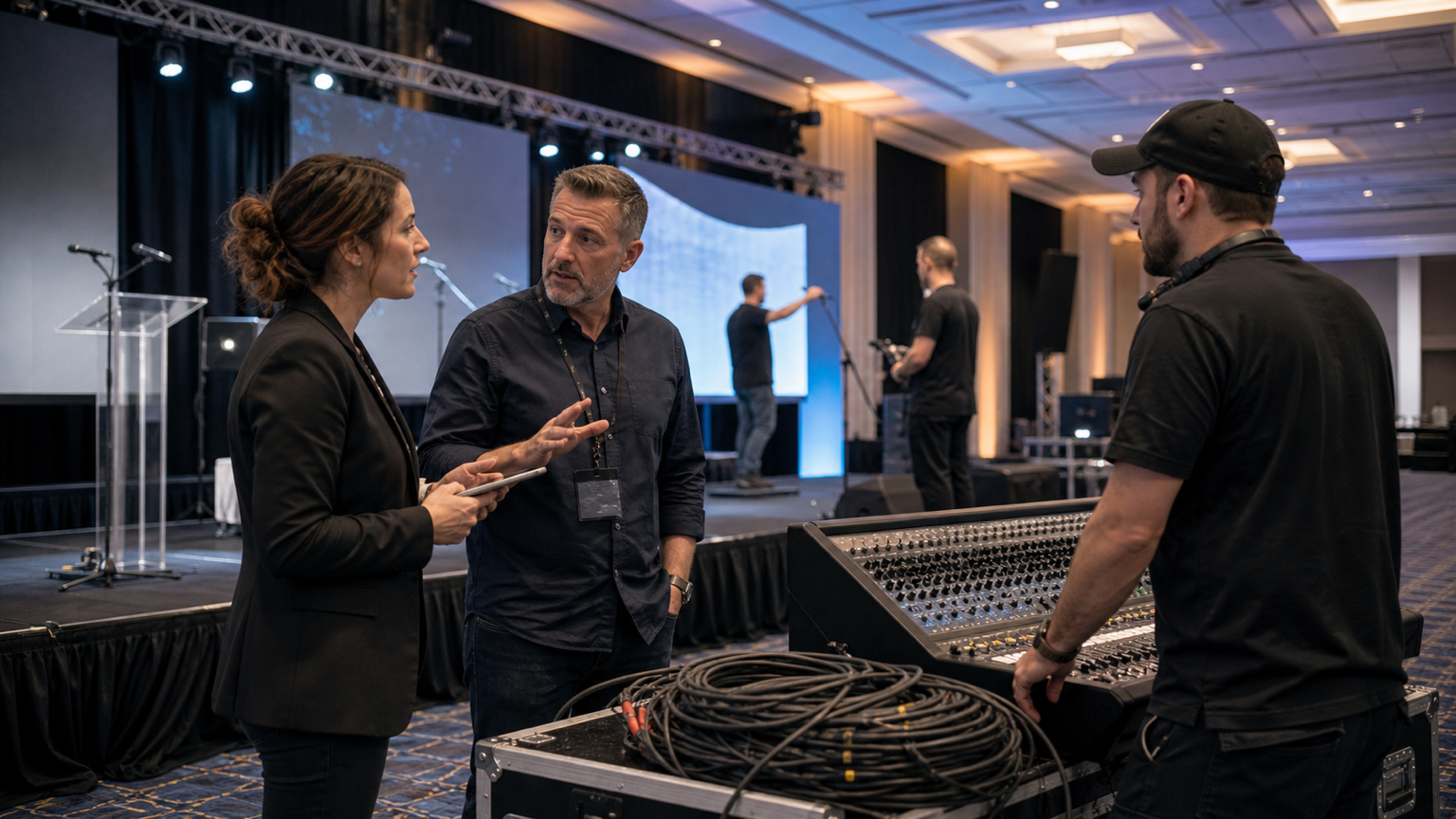
For most event teams, that is exactly why the partner relationship matters. Audio, screens, staging, cueing, power, room turns, and troubleshooting all sit close to the live attendee experience.
A recent industry milestone, 30 years of AV support from one provider in the trade show and events space, is a useful reminder that longevity can matter in this category. Not because time alone proves quality, but because repeat event work usually depends on trust, consistency, and operational fit.
A strong AV partnership is not just a vendor arrangement. It is part of how an event team reduces uncertainty before doors open.
For organizers, expo managers, and AV coordinators, the practical question is not simply who can supply equipment. It is who can support the event reliably across planning cycles, venue realities, and live-day changes.
Why long-term AV relationships matter
Many event problems that appear technical are really coordination problems.
A microphone issue may trace back to unclear room ownership. A delayed keynote may come from incomplete cueing. A poor demo may be caused by weak rehearsal planning, not weak hardware.
That is where long-term AV relationships can help. Over time, a provider can build working knowledge around:
- how your team plans and communicates
- which show elements are most critical
- what the venue tends to complicate
- where timing usually slips
- how sponsors, speakers, and exhibitors affect technical demands
That familiarity does not remove risk, but it can reduce repeated misunderstandings.
What event teams should look for in an AV partner
Price matters. Equipment matters. But event operations usually feel the impact of other factors first.
When evaluating an AV partner, organizers should look for evidence of practical execution:
- clear pre-event planning processes
- experience with similar event formats and scale
- defined points of contact
- willingness to review run of show details early
- realistic staffing plans for setup, show hours, and strike
- a calm approach to live troubleshooting
It also helps to understand whether the provider is built for one-off equipment delivery or ongoing event support. Those are not the same job.
If your event includes general sessions, breakout rooms, expo floor activity, sponsor demos, or hybrid content capture, the relationship needs to support coordination, not only inventory.
The best AV partners usually reduce the number of surprises your team has to manage, not just the number of boxes on the equipment list.
Start the relationship before the technical order is final
One common mistake is treating AV as a late-stage procurement line.
By the time the technical order is being finalized, several operational decisions may already be harder to change:
- room layouts that create poor sightlines
- agenda timing that leaves no buffer for resets
- sponsor commitments that need extra support
- stage designs that complicate movement
- venue choices that affect rigging, access, or power
Bringing the AV partner into planning discussions earlier can surface these constraints while there is still time to adjust.
This does not mean every event needs a large technical build. It means technical reality should inform the plan before the live day exposes it.
Consistency helps when events repeat
Long-term partnerships become especially useful when events recur annually, seasonally, or across multiple locations.
In repeat events, teams often benefit from continuity in areas such as:
- show calling and cue structure
- speaker support routines
- room-by-room technical expectations
- staff communication habits
- load-in and strike rhythm
- post-event review and improvement
Instead of rebuilding the working relationship from zero each cycle, the team can spend more time refining what actually needs to change.
That continuity is valuable for lean operations teams. It protects attention. Staff can focus on attendee experience, sponsor delivery, and live adjustments instead of reteaching basic event context.
Where long-term partnerships can still go wrong
Familiarity can help, but it can also create blind spots if the relationship stops being actively managed.
Event teams should watch for warning signs such as:
- technical plans being reused without enough review
- unclear updates when the agenda changes
- staff assumptions replacing documented confirmation
- slow adaptation to new formats or audience expectations
- budget conversations happening too late to shape decisions
A long-standing partner should know your event well. That does not mean they should operate on autopilot.
Every edition needs a fresh look at format, goals, risk points, and attendee flow.
How to manage the AV partnership more effectively
Strong organizer-vendor relationships are usually structured, not casual.
A practical management approach includes a few basics:
1. Share a believable source of truth
The AV team should be working from current versions of the agenda, floor plan, room assignments, and run of show. If they receive updates through scattered chat messages, risk rises quickly.
2. Define owners on both sides
Who approves changes? Who owns speaker support? Who handles venue coordination? Who signs off on show-day adjustments that affect budget or timing?
3. Review pressure points early
Do not wait for setup day to discuss transitions, wireless needs, sponsor demos, playback cues, confidence monitors, or overflow risks.
4. Rehearse the live moments that matter
Not every event needs a full rehearsal, but major transitions usually need one. Keynotes, product reveals, panel handoffs, walk-ons, and video starts are all easier to deliver when expectations are tested in advance.
5. Hold a real post-event review
Ask what failed, what almost failed, what caused delay, and what should change next time. A long-term partnership gets stronger when lessons are documented instead of remembered vaguely.
Questions to ask before renewing or expanding the relationship
If your team is considering a multi-event AV relationship, use questions that go beyond equipment pricing:
- How does this partner handle event-day changes?
- Do they communicate clearly with production, venue, and organizer teams?
- Have they shown they understand our attendee and sponsor priorities?
- Do they help identify risks early?
- Can they support consistency across recurring events?
- What did we learn from the last event, and did the partner act on it?
These questions help separate a supplier that completes tasks from a partner that improves delivery.
What this means for the wider event tech stack
There is also a broader operational lesson here.
Event teams often think about software partnerships strategically and technical vendors tactically. In practice, both shape reliability. The same logic used to evaluate a platform should apply to AV support: can the partner reduce friction, adapt to the real workflow, and stay dependable under pressure?
That is why AV should not sit outside event tech thinking. It is one of the most visible parts of execution.
When the relationship is strong, attendees may never comment on it. Sessions start credibly. Speakers feel supported. Sponsor moments land properly. Staff look more in control.
That quiet success is usually earned long before show day.
Final thought
Long-term AV partnerships do not guarantee great events. But they can create a more stable base for them.
For organizers, the goal is simple: choose partners who understand that event success depends on planning discipline, communication clarity, and calm execution, not just gear.
If a provider can help your team improve those things over time, the relationship is doing real operational work.