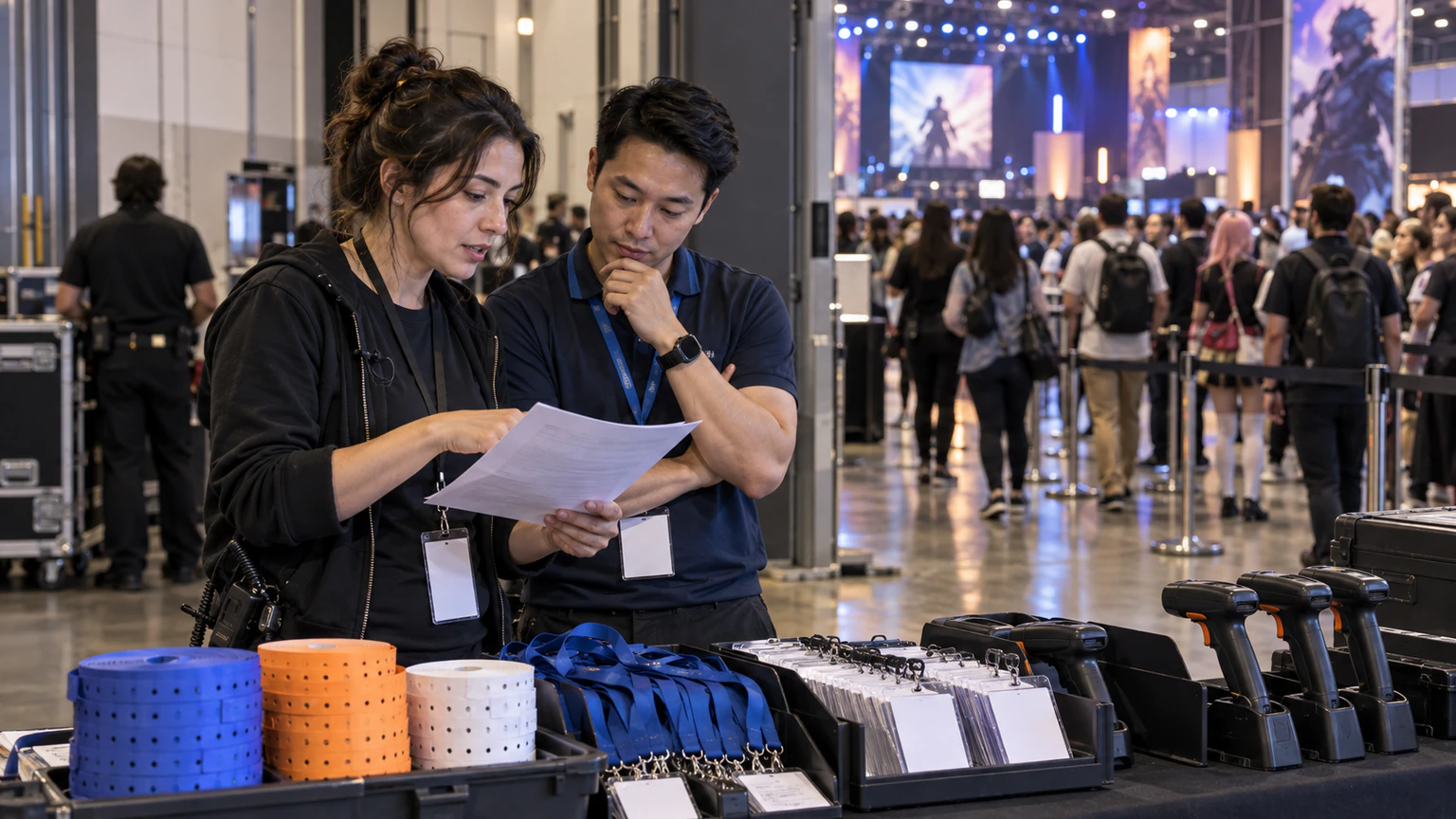

AI is starting to show up more often in event planning conversations, including venue sourcing.
Recent event tech coverage has also pointed to new tools around sourcing and digital accreditation. That combination matters because venue selection is not an isolated planning task. It affects arrival flow, staffing, access control, attendee experience, and the pace of on-site operations later.
For organizers, the real question is not whether AI sounds promising. It is whether it helps the team make better venue decisions without creating more review work, more data cleanup, or more operational risk.
If AI helps your team shortlist venues faster but makes requirements harder to verify, it has not really improved sourcing.
That is why adoption needs a checklist, not just enthusiasm.
Why venue sourcing is a good candidate for structured AI adoption
Venue sourcing includes a lot of repeatable work:
- comparing capacity and layout options
- reviewing location fit
- checking date availability
- matching venue features to event format
- tracking proposal responses
- summarizing tradeoffs for internal approval
Those steps can become time-consuming, especially for teams running repeat events, regional programs, or multi-format portfolios.
AI can be useful here if it helps the team organize options, standardize comparisons, and speed up first-pass evaluation. But the final decision still depends on operational details that need human review.
Start with the sourcing problem, not the tool
Before adopting anything, define where the current process actually breaks.
Common sourcing problems include:
- too much time spent gathering basic venue data
- inconsistent comparison across venues
- slow internal approvals
- unclear requirements between event, marketing, and operations teams
- important on-site needs discovered too late
- separate planning for venue choice and accreditation or check-in logistics
If the team cannot name the friction clearly, it becomes much harder to judge whether AI is helping.
The best adoption starting point is not, “Where can we use AI?” It is, “Where are we repeatedly losing time or clarity in sourcing?”
A practical adoption checklist
1. Define what the venue must support operationally
Do this before reviewing any AI-supported shortlist.
Your baseline requirements should include practical items such as:
- attendee capacity by format, not just one headline number
- entry and check-in flow
- space for accreditation or badge issuance
- session-room movement and queue management
- staffing access and service areas
- connectivity expectations for event technology
- VIP, speaker, exhibitor, or restricted-area access needs
- accessibility and wayfinding considerations
This matters because venue sourcing often looks fine at proposal stage, then becomes complicated when the event team maps real participant movement.
2. Decide which parts of sourcing can be assisted safely
Not every step should be automated in the same way.
Good candidates for assistance may include:
- building an initial venue longlist
- summarizing venue responses
- flagging missing information
- grouping venues by event type or size
- drafting comparison notes for the team
Steps that usually still need stronger human review include:
- final fit for attendee flow
- tradeoffs between program design and space design
- sponsor and exhibitor implications
- security and access planning
- exceptions for VIPs, staff, or restricted zones
3. Standardize the venue brief first
AI works better when the inputs are structured.
If each team member describes needs differently, the results will be inconsistent. A standard sourcing brief should cover:
- event type
- audience profile
- attendance range
- agenda structure
- room and zone needs
- check-in and accreditation setup
- technical requirements
- commercial constraints
- location priorities
- non-negotiable operational rules
This is a simple step, but it prevents a lot of downstream confusion.
4. Check whether sourcing criteria reflect real event operations
Many venue evaluations lean too heavily on cost, aesthetics, and top-line capacity.
Those matter, but operations teams should push further. Ask:
- Can attendees be processed efficiently at arrival?
- Is there enough space for digital accreditation or badge handling?
- Will traffic build up between sessions?
- Can staff manage access permissions cleanly?
- Will the layout create avoidable support requests?
- Is the venue practical for the event app, agenda, and check-in flow the team plans to run?
These questions connect venue choice to event delivery, not just event planning.
5. Build a verification step for every AI-generated output
Even if AI helps summarize or shortlist, someone on the team should verify important facts before the list moves forward.
A simple review layer can include:
- capacity confirmation by room setup
- availability confirmation
- access and security review
- technical requirement checks
- arrival and queue-flow review
- commercial term validation
This prevents a common adoption mistake: trusting speed more than accuracy.
6. Keep accreditation and access planning in the venue conversation early
This is one of the easiest details to leave too late.
If your event depends on attendee access control, staff permissions, digital badges, or controlled participant movement, the venue decision should account for that from the start.
For example, teams should think about:
- where participants will be identified or checked in
- how fast people can move through the entry point
- whether separate attendee groups need separate flows
- how staff will handle exceptions on site
- which areas require controlled access
Venue sourcing and accreditation planning should not be treated as separate projects.
7. Define success in measurable terms
If you adopt AI in sourcing, decide in advance how you will judge it.
Useful measures may include:
- time to produce a qualified shortlist
- time spent comparing venue responses
- number of missing requirements caught early
- approval-cycle speed
- reduction in late-stage venue fit issues
- fewer operational surprises tied to arrival, access, or flow
Without this, teams often describe adoption as helpful without knowing what actually improved.
Where teams often get stuck
In practice, adoption usually slows down for a few predictable reasons.
The requirements are too vague
If the event brief is loose, the sourcing output will be loose too. AI cannot fix unclear event design.
Different teams are optimizing for different things
Procurement may focus on price. Marketing may focus on brand fit. Operations may focus on movement, access, and staffing. If those priorities are not aligned, the shortlist becomes harder to trust.
The venue choice is disconnected from attendee operations
This is where later problems show up: poor check-in layout, bottlenecks, weak access control, or support teams forced to improvise on site.
A simple workflow organizers can use right now
- write a one-page standard venue brief
- separate must-have requirements from nice-to-have preferences
- use AI only for first-pass sourcing support and comparison assistance
- review outputs against attendee flow, access, and accreditation needs
- verify important facts manually before internal approval
- capture what was missed so the brief improves next time
This approach is practical because it keeps the team in control while still using AI where it may save time.
What this means for event teams
The broader shift is not really about replacing sourcing teams. It is about making sourcing more structured, more comparable, and better connected to event operations.
That matters even more as digital accreditation and event workflow tools become more central to how events run. The venue is not only a place to host the program. It is part of the operating system for participant movement, access, and experience.
For Bewitt teams and customers, that is the useful lens: better event technology decisions start with better operational decisions. Venue sourcing should be evaluated the same way.
Final thought
AI may help event teams move faster in venue sourcing, but speed is only valuable when it leads to a venue that works in practice.
The safest adoption path is simple: standardize requirements, verify critical details, and keep attendee operations, accreditation, and access planning in the room from the beginning.
That is how sourcing gets smarter without becoming riskier.