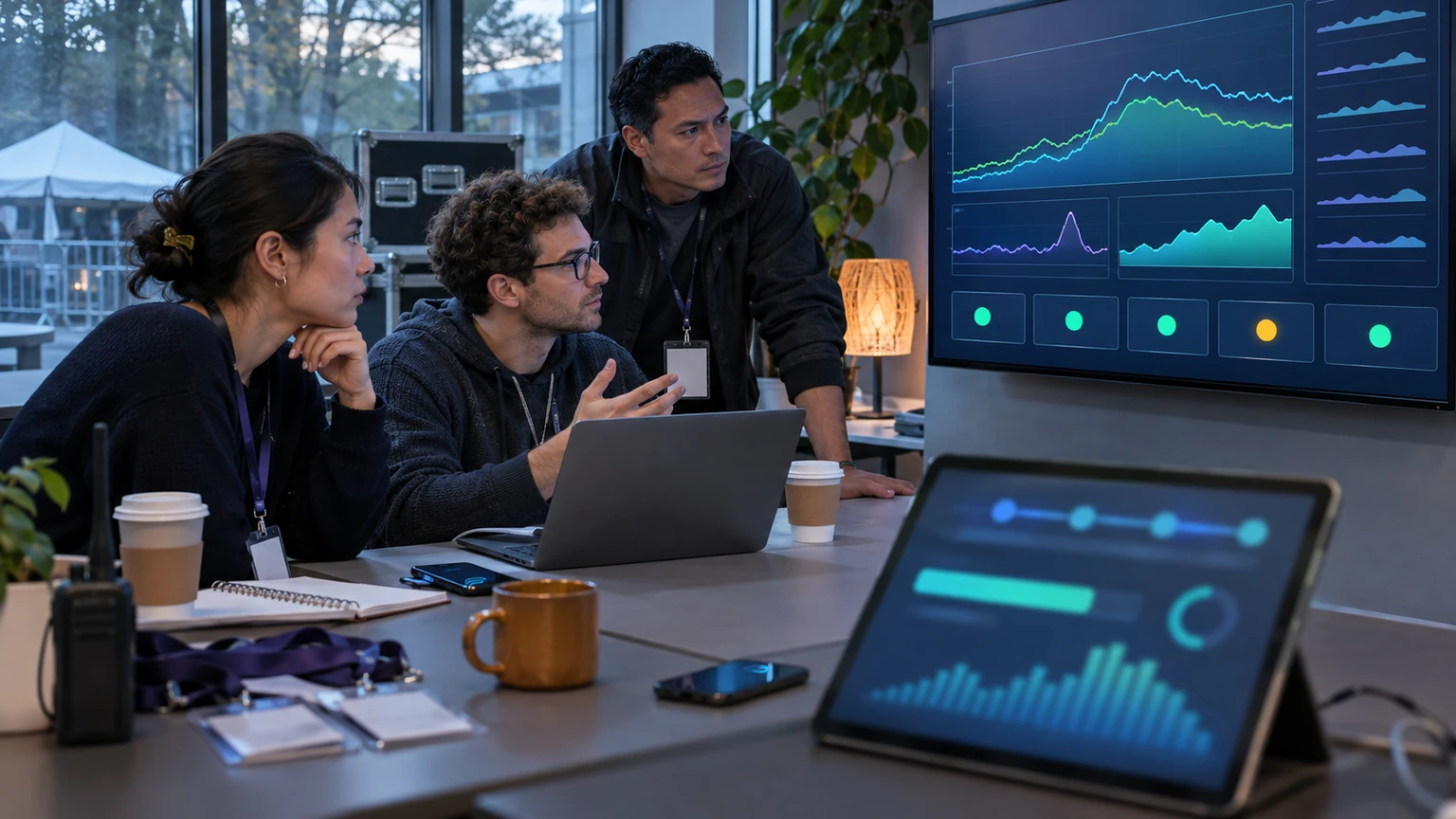

Regional trade shows do not need to wait for a market to fully mature before they respond to it.
When a public investment signal appears, smart organisers treat it as a planning input.
In this case, the relevant signal is the Jordan–EU Investment Conference and the prospect of new opportunities linked to Aqaba, especially across green energy, industry, and logistics.
That matters for regional trade shows because investment flows often shape who wants to meet, what sectors need visibility, which sponsors become active, and where business development activity starts to concentrate.
What it does not prove on its own is that every regional event in the area will benefit automatically, that demand will appear evenly across all formats, or that sponsor budgets will move immediately.
Investment news is not an event strategy by itself. It is a market signal that helps organisers decide where to place focus, partnerships, and commercial effort.
Why this matters for event operations
Trade shows sit close to real commercial activity.
When capital starts moving into a region or sector, events can become one of the first places where that movement turns into meetings, partnerships, procurement conversations, and public market positioning.
For organisers, that has direct operational consequences:
- sector mix may need to change
- sponsor outreach should become more targeted
- conference content may need new tracks or speakers
- buyer and delegate acquisition should focus on likely deal participants
- venue layout may need to reflect stronger interest in certain categories
- local institutional partners may become more relevant
If the event team reacts too slowly, others will define the market conversation first.
If the team reacts too broadly, the event can become vague and commercially weak.
What we can say, and what we cannot
From the available source signal, it is reasonable to say that the Jordan–EU Investment Conference points to increased attention around investment opportunity in Jordan, including Aqaba, and that green energy, industry, and logistics are relevant sectors in that discussion.
It is also reasonable to say that regional trade shows serving those sectors should review their positioning, sponsor pipeline, and programming in light of that signal.
What we cannot say from this source alone is:
- the exact value or timing of future deals
- which companies will definitely exhibit or sponsor
- that every event in the region will see higher attendance
- that demand will rise equally across energy, industrial, and logistics audiences
- that one conference signal guarantees near-term event ROI
That distinction matters. Good organisers should respond with targeted planning, not inflated assumptions.
The useful move is not to claim a boom. It is to design an event that becomes useful if investment attention turns into active market behaviour.
Start with the market map, not the event format
When organisers hear positive investment news, it is tempting to jump straight into launch ideas: a summit, a pavilion, a forum, an expo, a hosted buyer programme.
A better starting point is simpler: who now has a stronger reason to meet whom?
For a regional trade show tied to Aqaba-related opportunity, the market map may include:
- project developers
- infrastructure and logistics operators
- industrial suppliers
- energy solution providers
- government and economic development stakeholders
- investors and financing participants
- consultants, contractors, and service firms
Once that map is clearer, the event format becomes easier to design.
This helps organisers avoid a common mistake: building a broad “investment event” that sounds relevant but gives no group a strong reason to attend.
Where the clearest trade show opportunities may sit
1. Green energy showcase and deal support
If green energy is gaining visibility in the region, organisers can create more than a branding opportunity.
A practical event approach would focus on supplier discovery, project dialogue, and partner matching.
That can mean:
- exhibitor zones organised by energy use case
- sessions built around project delivery, not only policy talk
- private meeting schedules for developers, funders, and suppliers
- site-linked programming when relevant
The goal is to move from general sustainability language to actual commercial relevance.
2. Industry and manufacturing positioning
Industrial growth stories often create demand for highly practical exhibitions.
Organisers should think about equipment, systems, compliance, operations, supply chain resilience, and workforce capability, depending on the event scope.
That matters because industrial audiences usually respond better to specificity than to broad regional optimism.
If the event promise is too abstract, exhibitors may question lead quality.
3. Logistics and corridor-focused events
Logistics is often one of the most event-ready sectors when a region gains investment attention.
That is because logistics conversations quickly translate into visible business needs: movement of goods, port activity, warehousing, trade routes, customs support, technology, and last-mile coordination.
For organisers, this can support:
- stronger B2B meeting programmes
- more defined sponsor categories
- content that attracts both public and private stakeholders
- clearer ROI language for exhibitors
How sponsor targeting should change
One of the biggest opportunities in an investment-linked event cycle is better sponsor targeting.
Many trade shows still sell sponsorship as visibility first.
In a market shaped by fresh investment attention, sponsors often care more about access, relevance, and timing.
That means organisers should segment sponsor outreach by likely commercial role.
For example:
- sector sponsors: energy, industrial, and logistics firms wanting category leadership
- market-entry sponsors: companies seeking regional introductions or brand presence
- ecosystem sponsors: banks, consultants, legal firms, insurers, and infrastructure service providers
- institutional sponsors: public bodies, development agencies, and trade promotion organisations
Each group should receive a different commercial pitch.
A bank does not buy for the same reason as an equipment supplier. A logistics operator does not measure value the same way as a government partner.
Programme design should follow transaction logic
Event content works best when it reflects how business actually gets done.
If the market signal is investment-led, then the programme should help attendees understand where projects, procurement, partnerships, and policy support may intersect.
That does not require overclaiming.
It requires structure.
Useful programme elements may include:
- sector briefings tied to green energy, industry, and logistics
- case-led panels instead of generic future-of-industry sessions
- investor and operator roundtables
- regional supply chain discussions
- practical sessions on market entry, partnerships, and delivery risk
The strongest trade show programmes reduce uncertainty for attendees. They help people understand whether the opportunity is real for them, and what next step to take.
What organisers should do with attendee strategy now
Attendance growth will not come from a wide message alone.
It should come from targeted audience building.
Teams should review whether their outreach lists reflect the sectors now receiving attention. They should also check whether the event website, sales materials, and outbound messaging clearly explain why this event is timely.
Practical questions include:
- which buyers or decision-makers are most likely to become active
- which exhibitors need this market signal explained in commercial terms
- which associations or local partners can help validate the event
- whether the event is attracting regional operators or only general interest
- what proof of relevance the market will expect before committing
This is especially important for regional events that want to move upmarket. Investment attention can raise expectations quickly.
Operational changes worth making early
If organisers decide to lean into the opportunity, a few operational moves matter more than cosmetic rebranding.
- update exhibitor categories so they match the sectors drawing attention
- rewrite sponsorship inventory around access and business outcomes
- identify speakers who can discuss projects, delivery, and regional execution
- build meeting formats that support investors, suppliers, and operators
- prepare sales teams with sector-specific talking points
- review venue flow if certain categories may need stronger visibility
These are not dramatic changes, but they are often the difference between an event that feels current and one that feels late.
Where teams should be careful
There are also clear risks.
Organisers should be careful not to overstate certainty, overexpand the event scope, or market the show as if investment outcomes are already secured.
Common mistakes include:
- launching a broad event without a clear buyer-seller logic
- assuming policy attention immediately becomes exhibitor demand
- building sponsorship packages around hype rather than access
- treating all infrastructure-related sectors as one audience
- adding content tracks faster than the team can support them well
Evidence-aware planning is more credible. It also tends to sell better.
What good looks like
A strong regional trade show response to new investment flows is usually focused, not oversized.
It has a clear sector lens. It knows which commercial relationships it is trying to enable. It gives sponsors a reason to be there beyond logos. It gives exhibitors confidence that the audience is relevant. It gives attendees enough market context to justify the trip.
Most of all, it connects public investment attention to practical event design.
What this means for event teams
The Jordan–EU Investment Conference is a useful signal for regional organisers watching Aqaba and adjacent sectors.
For trade show teams, the opportunity is not simply to announce a themed event. It is to use that signal to sharpen audience targeting, sponsor strategy, programme structure, and commercial positioning across green energy, industry, and logistics.
That is how regional events become more than spectators to investment flows. They become part of the business infrastructure around them.