When executive leaders at large trade show operators talk about adapting event technology, the most useful takeaway is rarely a single tool. It is the operating mindset behind the decision.
In this case, public coverage pointing to leadership perspective from Informa Markets, featured by Trade Show News Network, is a useful industry signal. But it should be read carefully. A public interview can show priorities and direction without giving event teams full visibility into the internal workflows, procurement choices, staffing models, or performance data behind them.
That still leaves organizers with a practical question: what can smaller teams, venue partners, and event producers learn from how major trade show leaders approach event tech change?
The real lesson from large operators is not that they use more technology. It is that they tend to connect technology decisions more closely to delivery realities.
Why this matters
Large trade shows face pressure at scale. They manage more stakeholders, more handoffs, more audience types, and more operational risk. That makes their technology decisions worth watching, even when the public detail is limited.
For organizers, those signals matter because the same basic pressures often appear at every size:
- attendees expect smoother journeys
- exhibitors want clearer value and cleaner follow-up
- internal teams need fewer manual workarounds
- venues need tighter coordination
- sponsors want more measurable visibility
- leadership wants better reporting on what actually worked
The scale differs. The operating logic does not.
What “adapting event tech” should mean in practice
Adapting event tech does not simply mean buying newer platforms or adding digital layers to an existing show.
In operations, it usually means reviewing where the current event journey creates friction, then changing the process, toolset, or handoff so the event runs more cleanly.
That can involve:
- simplifying registration flows
- improving exhibitor onboarding
- making attendee communications more relevant
- supporting better on-site navigation and information access
- capturing stronger post-show data
- reducing manual duplication between teams
If the technology does not improve one of those outcomes, adoption becomes harder to defend.
Start with operating problems, not innovation language
One of the clearest lessons event teams can take from executive leadership at large organizers is to avoid treating technology as a branding exercise.
Operationally, the best starting point is not, “What new tech should we launch?” It is, “Where is the event experience or delivery model repeatedly breaking down?”
For example, that may mean:
- badge pickup congestion at peak times
- late exhibitor asset submission
- poor adoption of planning tools before the event
- too many pre-show support requests
- limited visibility into sponsor or exhibitor engagement
- slow post-event reporting
Once the problem is named clearly, the tech conversation improves. Teams can evaluate fit, rollout effort, and likely return much more realistically.
Strong event tech adoption usually starts with a painful workflow, not a shiny demo.
Use scale thinking, even if your event is smaller
Large trade show leaders often think in repeatable systems because inconsistency becomes expensive at scale. Smaller organizers can borrow that discipline.
Even if you run one flagship event or a modest portfolio, it helps to ask:
- which processes are rebuilt every edition without good reason
- where staff rely on undocumented workarounds
- which attendee messages create the same confusion every cycle
- which exhibitor tasks are always completed too late
- where data has to be cleaned manually after the event
Those are signs that the issue is not only execution. It is system design.
Keep the attendee and exhibitor journeys separate
One common mistake in event tech planning is assuming one digital approach serves every audience equally well.
Large trade shows do not operate that way because the needs are too different.
Attendees usually need:
- a clear reason to register
- simple confirmation and planning information
- help discovering content or exhibitors
- smooth arrival and navigation
- timely updates while on site
Exhibitors often need something else:
- structured onboarding
- deadlines and task completion guidance
- profile and asset management
- logistics coordination
- lead handling and post-show follow-up support
If both groups are pushed through one generic communication and platform strategy, friction increases on both sides.
Adoption matters more than feature count
Executive leaders at large operators tend to think beyond acquisition. They have to. A platform that looks capable but is poorly adopted creates cost without enough operational gain.
That is a useful discipline for any organizer.
When reviewing event tech, ask practical questions such as:
- who will own rollout internally
- how much training is realistically possible
- which users must adopt it for the project to succeed
- what happens if exhibitors or attendees ignore it
- which manual fallback process will still be needed
- how success will be measured within one event cycle
These questions often matter more than the product roadmap.
Where large-show lessons are most useful
Registration and check-in
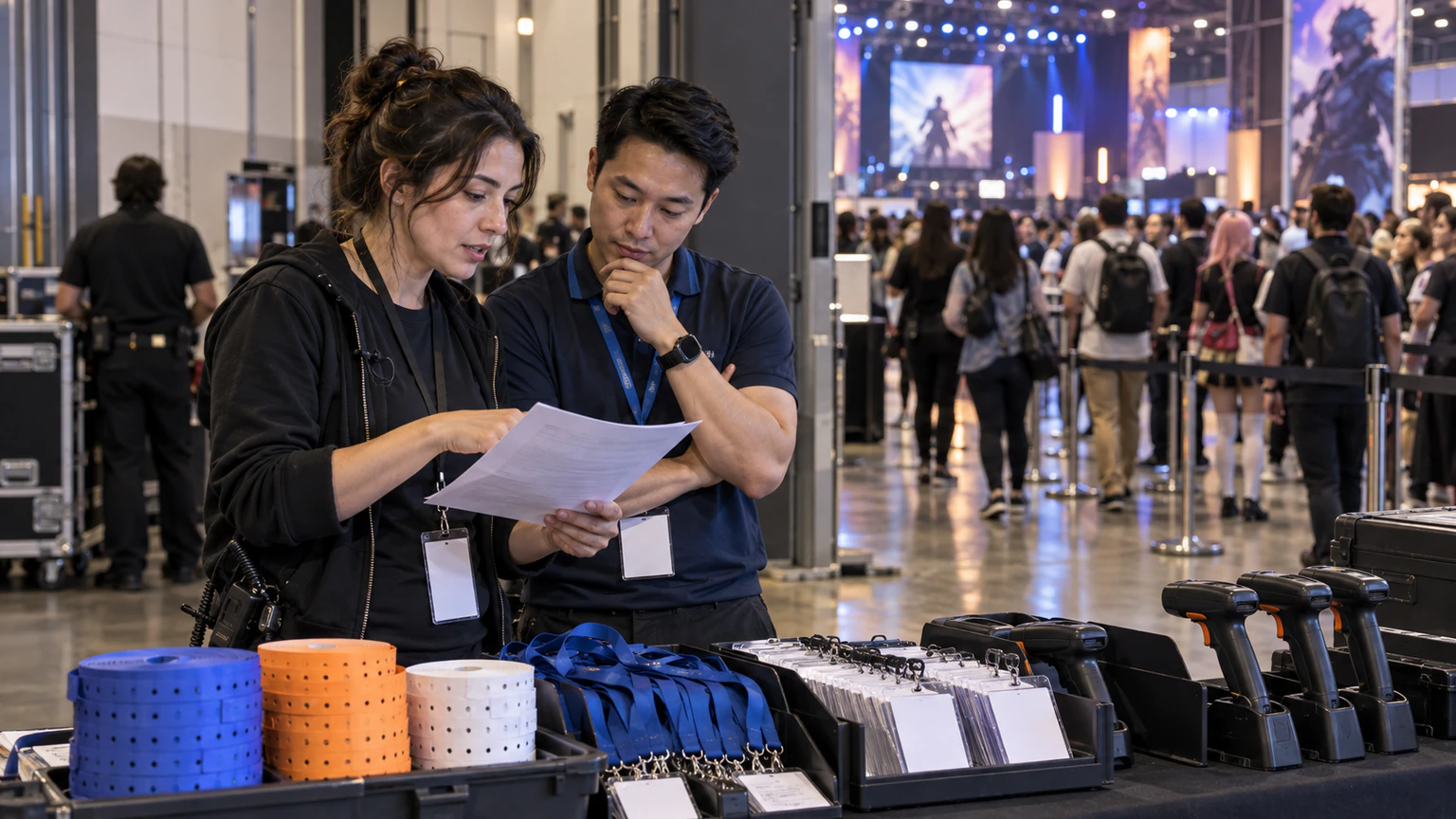
This is one of the easiest places to connect technology decisions to real operational outcomes. Faster throughput, cleaner records, and fewer exceptions can affect both attendee satisfaction and staffing pressure.
If you are adapting technology here, measure basics first: completion rates, abandonment points, exception cases, badge reprint volume, and queue times.
Exhibitor operations
Large trade shows are heavily shaped by exhibitor readiness. That makes exhibitor workflows a high-value area for improvement.
Practical focus areas include task deadlines, asset collection, profile completeness, service order clarity, and lead follow-up preparation.
If exhibitors struggle with the process, account teams will absorb the pain manually.
Pre-show communications
Leadership at major operators often speaks broadly about customer experience. For event teams, that should translate into clearer communication timing, better segmentation, and fewer generic sends.
A strong pre-show flow helps reduce confusion before it reaches support desks and venue staff.
Post-show reporting
Tech adaptation should also improve what teams can review after the event. If leadership wants better decisions next cycle, reporting must move beyond top-line attendance.
Useful review areas include:
- where engagement was strongest
- which exhibitor tools were actually used
- what support issues repeated
- which deadlines slipped most often
- which parts of the attendee journey created avoidable friction
How venue partners should read this
Venue teams can also learn from how large trade show operators adapt event tech, especially where digital systems affect physical operations.
That includes:
- entry flow design
- wayfinding and information points
- connectivity requirements
- service desk placement
- staff coordination during peak periods
- real-time communication during schedule or floor changes
The lesson is simple: event technology should not be planned in isolation from the venue. If the digital plan changes how people arrive, move, queue, or ask for help, venue operations need to be involved early.
Stay careful with public executive interviews
Executive interviews are useful, but they have limits.
They often highlight strategic intent more than implementation detail. They may not cover budget tradeoffs, failed pilots, adoption resistance, data issues, or the amount of manual work still required behind the scenes.
That does not make them unhelpful. It means organizers should use them as directional input, not as proof that a certain approach will work unchanged in another event context.
A better use of leadership commentary is to extract practical questions for your own team.
A simple review framework for event teams
If you want to turn high-level executive signals into useful action, review your next event against five questions:
- What recurring workflow problem are we trying to fix?
- Which audience is most affected: attendees, exhibitors, sponsors, staff, or venue teams?
- What behavior needs to change for the technology to help?
- What operational metric will tell us if it worked?
- What fallback process do we need if adoption is weaker than expected?
This keeps the conversation grounded in delivery, not just ambition.
What this means for event teams
The most practical takeaway from executive leadership at large trade shows is not to copy scale. It is to copy discipline.
Watch how major operators frame technology around customer experience, exhibitor value, and operating efficiency. Then translate those themes into the workflows that matter most at your own event.
For most teams, the next step is not a broad digital overhaul. It is choosing one or two friction-heavy processes, improving them with clear ownership, and measuring the result honestly.
That is usually how durable event tech adoption starts.