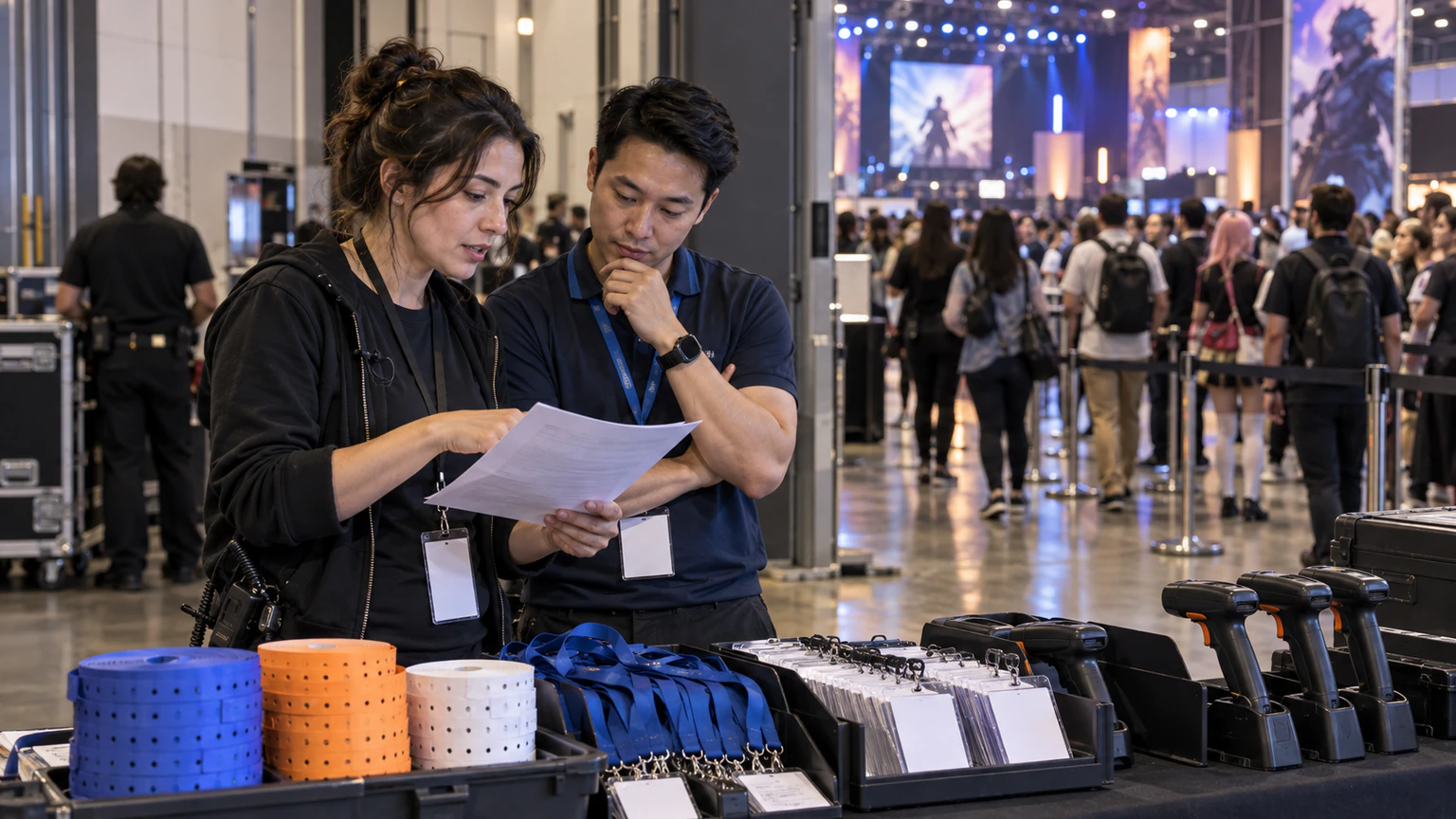
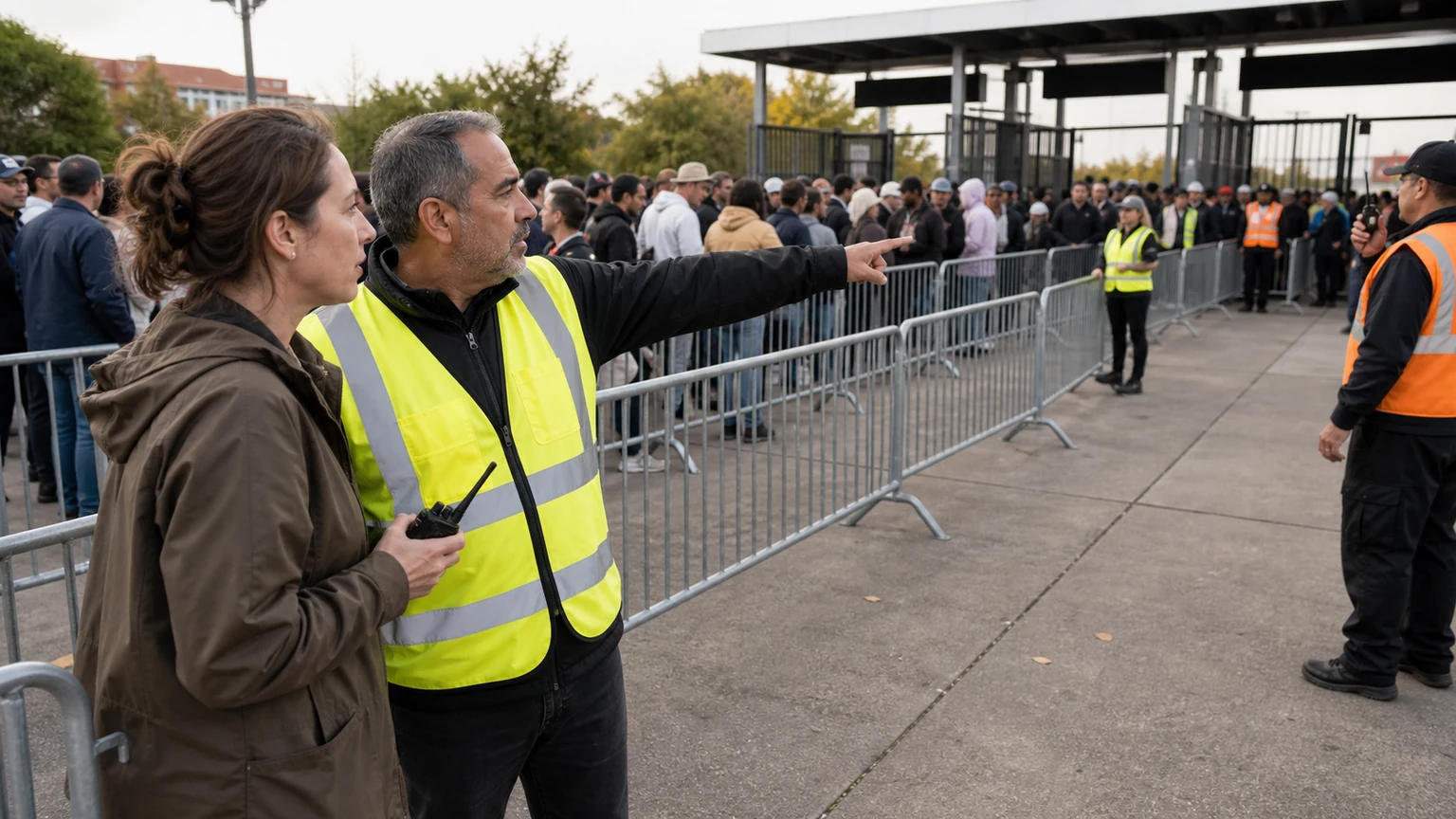
A recent reported death linked to crowd crush conditions at a Raksha Bandhan saree event is a hard reminder of how quickly a gathering can become dangerous when demand, space, and control measures fall out of balance.
For organizers, venue teams, and safety leads, the useful question is not only what went wrong at one event. It is what operational gaps tend to create crush risk, and what can be done before gates open, while crowds build, and if conditions start to deteriorate.
Crowd crush incidents are rarely caused by one single failure. They usually emerge from a chain of smaller breakdowns: poor entry design, unclear communication, unmanaged surges, weak queue control, insufficient staffing, blocked exits, or a mismatch between expected and actual turnout.
Crowd safety is not just a security issue. It is an event operations issue, a layout issue, a communications issue, and a decision-making issue.
Why this matters
Any event that involves free distribution, limited stock, religious or community significance, celebrity presence, timed access, or strong emotional urgency carries elevated crowd pressure.
That includes more than concerts or festivals. Risk can also rise at:
- community giveaways
- holiday and religious gatherings
- ticket releases and box office activations
- public brand events
- political or civic gatherings
- charity distributions
- school or family-focused events
The operational mistake is assuming that a non-commercial or community event is automatically low-risk. In practice, perceived scarcity and unclear access rules can create dangerous crowd behavior very quickly.
What usually goes wrong before a crush develops
Most crowd crush situations show warning signs before the worst point is reached.
Common precursors include:
- attendance demand exceeding planned capacity
- too many people arriving in the same short time window
- poor segregation between entry, waiting, and exit flows
- lack of barriers or badly placed barriers
- queues collapsing into unmanaged crowd mass
- last-minute messaging changes
- people pushing forward because stock, access, or time feels limited
- front-line staff unable to pause or slow intake
- no clear trigger for stopping the operation
By the time people are pressed chest-to-back and movement becomes involuntary, the problem is already advanced. The aim is to intervene much earlier.
A practical playbook for reducing crowd crush risk
1. Start with a realistic demand assessment
Do not plan only for expected attendance. Plan for surge attendance.
If the event offers something limited, free, symbolic, or highly sought after, turnout may exceed registration assumptions. Build scenarios for normal, high, and extreme demand.
Ask:
- What is the maximum safe holding capacity for each area?
- What happens if turnout is 2x the expected figure?
- Will people bring additional family members or companions?
- Could social sharing increase attendance on the day?
- Is there any reason people may arrive much earlier than planned?
If the answer to those questions is unclear, the event needs stronger controls before opening.
2. Remove unnecessary scarcity signals
Crowd pressure rises when attendees believe they must push forward to avoid missing out.
Review every message that may increase urgency:
- first come, first served wording
- unclear stock availability
- limited-time collection windows
- inconsistent instructions from staff or social posts
- rumors at the queue line
Where possible, reduce uncertainty. If supply is limited, communicate clearly how allocation works, when access closes, and whether alternatives exist.
When people do not trust the process, they stop behaving like a queue and start behaving like a crowd.
3. Design for flow, not just attendance
A safe site plan is not only about fitting people into a space. It is about how they move through it.
Separate these functions wherever possible:
- approach routes
- queue formation areas
- screening or verification points
- distribution or entry points
- circulation lanes
- medical access routes
- emergency exits
Avoid layouts where waiting crowds face a single narrow pinch point without side relief. Compression builds fastest where there is strong forward pressure and no visible release path.
4. Put hard limits on area occupancy
Each zone should have a defined maximum operating capacity and a named person responsible for monitoring it.
Useful zones to define include:
- outer arrival area
- pre-queue holding area
- main queue lanes
- final access point
- distribution or collection area
- exit route
Once a zone reaches its threshold, the next inflow action should already be known: pause arrivals, redirect, meter access, or suspend distribution temporarily.
5. Build a timed and segmented entry model
If demand may spike, one mass arrival window is a risk multiplier.
Safer alternatives include:
- timed collection slots
- staggered neighborhood or group access
- token-based pickup windows
- separate lanes for different attendee types
- controlled batch release into the final area
The principle is simple: fewer people competing for the same point at the same time.
6. Assign crowd roles clearly
Not all event staff can manage dense crowd conditions. Role clarity matters.
At minimum, identify responsibility for:
- crowd monitoring
- queue control
- entry metering
- barrier oversight
- public announcements
- incident escalation
- medical coordination
- decision authority to pause or stop operations
If everyone assumes someone else will call for intervention, intervention usually comes too late.
7. Use simple trigger points for escalation
Teams need objective thresholds, not vague impressions.
Examples of operational triggers:
- queue extends beyond planned footprint
- barriers begin shifting or bowing
- people lose the ability to move independently
- shouting, distress, or falls are reported near the front
- exit routes are obstructed
- staff can no longer maintain lane integrity
- arrival rate exceeds release rate for a sustained period
For each trigger, define the action. That may mean slowing intake, opening overflow space, pausing distribution, calling additional support, or stopping the activity completely.
What to monitor in real time on event day
Crush risk management depends on live situational awareness.
Teams should monitor:
- crowd density in each zone
- speed of forward movement
- points where lanes merge
- arrival surges after announcements or social posts
- temperament changes in the waiting crowd
- whether attendees can still leave the line easily
- any trip hazards, obstructions, or broken barriers
It helps to run regular short check-ins between operations, security, and medical leads. In dense crowd environments, conditions can change in minutes.
How to communicate without increasing pressure
Messaging can calm or worsen the situation.
Good crowd communication is:
- frequent
- specific
- consistent across staff and signage
- honest about delays or pauses
- focused on what attendees should do next
Examples of useful messages:
- Please stay within marked lanes.
- Entry is being paused briefly to reduce crowding ahead.
- Everyone already inside the queue area will be processed.
- Please use the side exit if you do not wish to continue waiting.
- Additional instructions will be given in five minutes.
Avoid ambiguous reassurances if the team cannot support them operationally.
What to do if crowd pressure starts building
If signs of compression appear, speed matters, but so does control.
- Pause inflow into the pressured zone.
- Stop any messaging that encourages more people to advance.
- Open relief space or lateral release routes if available.
- Deploy experienced staff to pressure points, not just to visible entrances.
- Use clear public address instructions to reduce forward pushing.
- Prioritize anyone who has fallen, is distressed, or is trapped at the front.
- Call medical support early, not after collapse.
- If pressure does not ease quickly, suspend the activity.
Continuing an operation while hoping the crowd will settle on its own is one of the highest-risk choices an organizer can make.
A short pre-event crowd safety checklist
- Demand scenarios reviewed, including worst-case turnout
- Maximum safe capacities set for each zone
- Entry, holding, service, and exit flows mapped separately
- High-risk pinch points identified and redesigned where possible
- Barriers, lanes, and emergency access routes checked
- Timed or segmented access model considered
- Staff roles assigned and briefed
- Escalation triggers written down
- Medical and emergency response contacts confirmed
- Public messaging templates prepared for delays, pauses, and closure
- Go or no-go authority clearly assigned
A short live-operations checklist
- Monitor density continuously at known pressure points
- Track whether inflow is exceeding throughput
- Keep exit and emergency routes clear
- Use frequent, consistent announcements
- Escalate at early warning signs, not after panic
- Pause operations if staff lose crowd control
- Record timeline and decisions for post-event review
Common mistakes to avoid
- assuming community events are low-risk by default
- planning for average turnout only
- treating queue length as the main metric instead of density and pressure
- using too few trained staff at key transition points
- combining entry and exit routes
- continuing distribution after warning signs appear
- relying on ad hoc instructions instead of pre-agreed triggers
- failing to give one person authority to stop the operation
What this means for event teams
Every organizer hopes a safety plan will never be tested under real pressure. But crowd crush risk is exactly the kind of issue that requires disciplined preparation before the atmosphere becomes urgent.
The lesson from incidents like the reported Raksha Bandhan event is not only that crowd density can become deadly. It is that operational details, capacity limits, entry design, staffing, and communication all shape whether early warning signs are caught in time.
For event teams, the practical standard should be simple: if demand may surge, build the plan as if the crowd will test it.
That means using clear checklists, pre-agreed escalation points, and a delivery model that can slow down safely when conditions change.