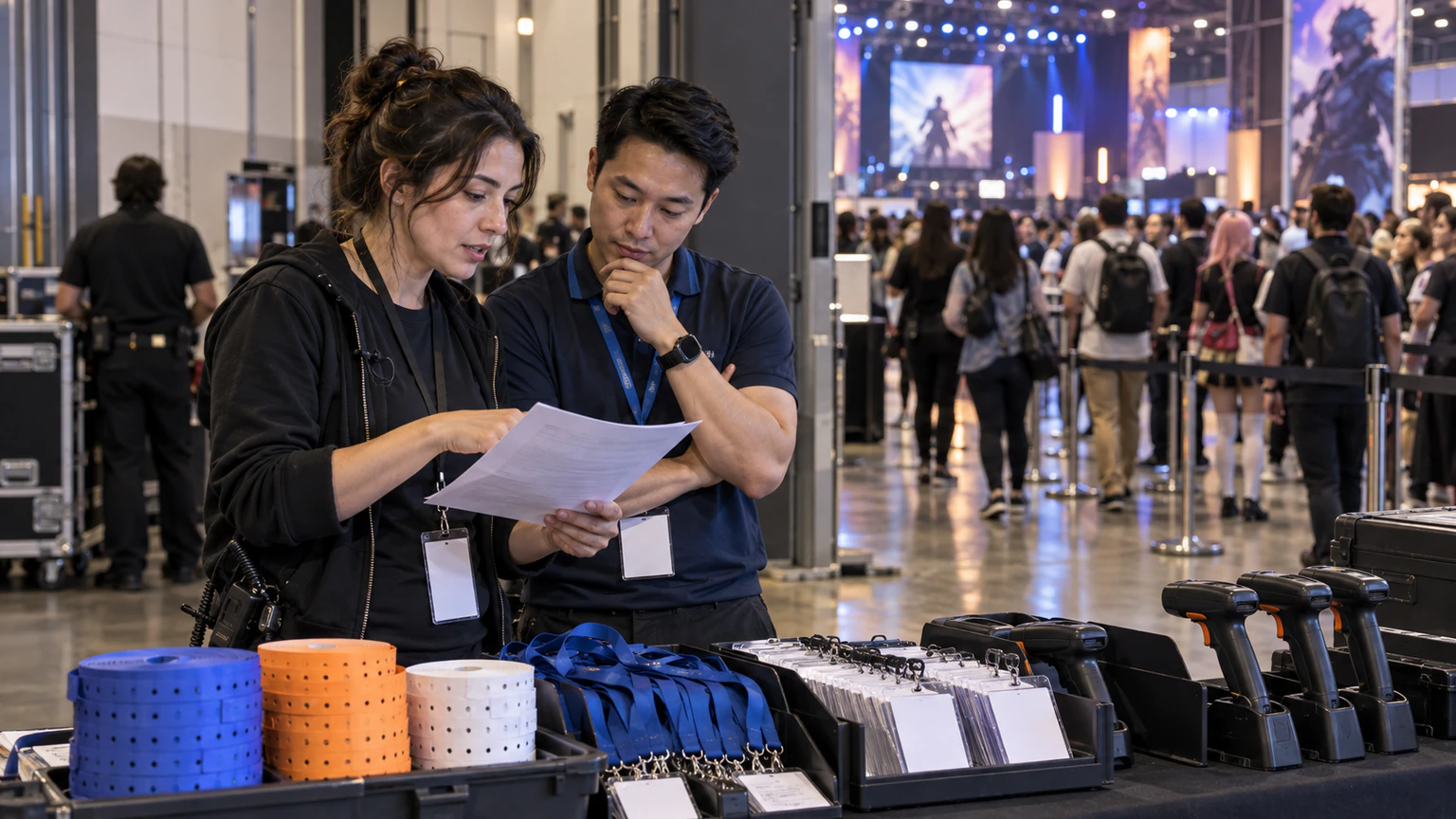
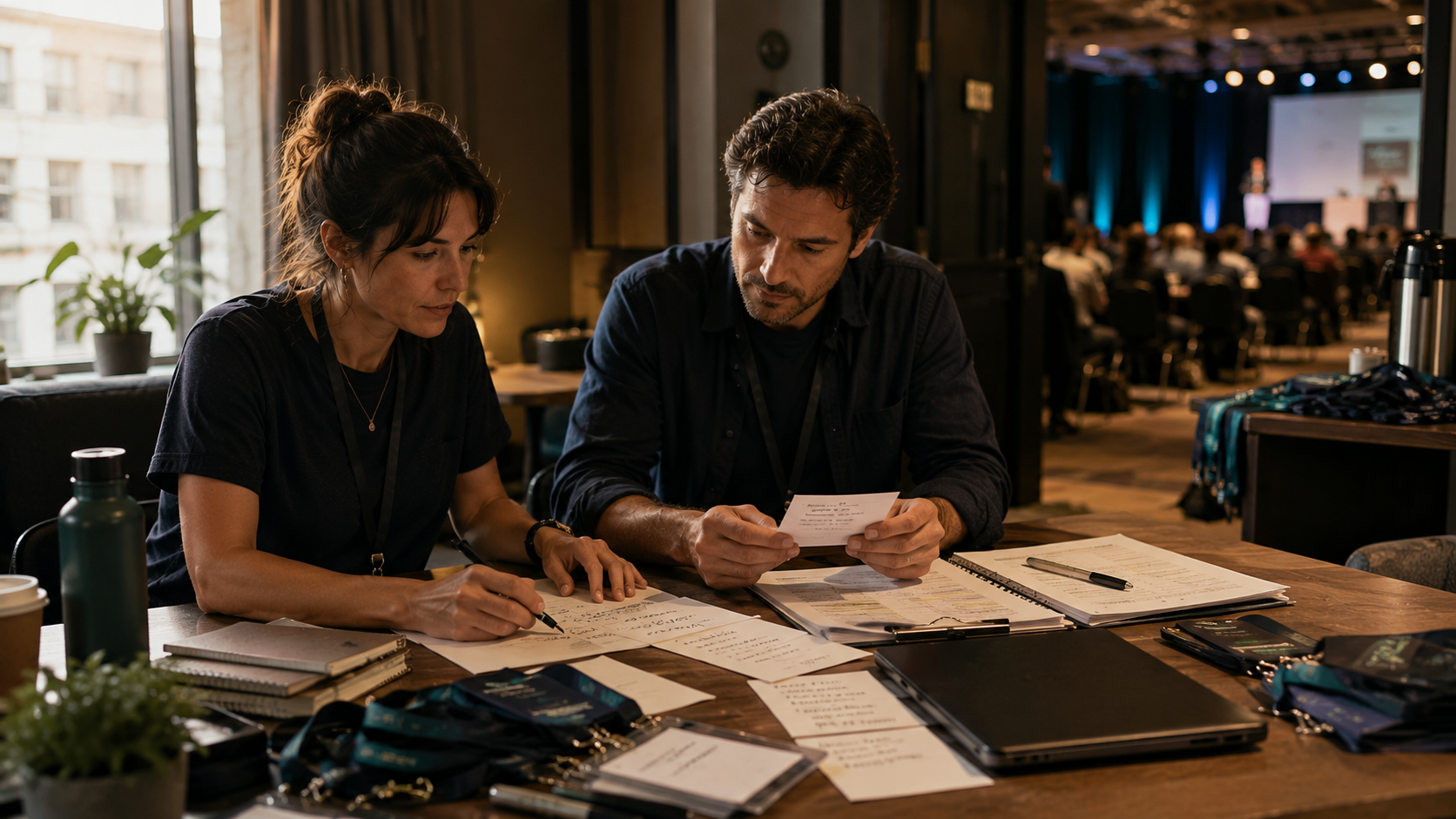
Most event teams talk about the first 48 hours after the event as the key window for follow-up.
That is true, but it is also a little generous.
Because if your team waits until everyone gets home to figure out what happened, some of the useful detail is already gone.
The better approach is simple: capture the important stuff during the event, then use the next 48 hours to review, assign, and act on it.
The post-event scramble usually starts during the event, not after it.
Why 48 hours is already late
By the time the event ends, a few things have already started slipping:
- staff remember the headline, but not the exact operational issue
- session takeaways get mixed with general impressions
- good participant feedback gets buried under vague summaries
- verbal decisions never make it into a shared event record
This is why so many teams end up with a nice recap doc and very little that changes for the next event.
The problem is rarely a lack of effort. It is timing.
If registration, agenda, check-in, feedback, and reporting are all spread across different places, the team spends the first two days reconstructing the event before it can learn from it.
If those pieces stay tied to the same event workspace, the review starts from a cleaner record.
A better model: capture live, review fast
Think of post-event work in two phases.
Phase 1: During the event
Capture what matters while people still have context.
- keep the agenda accurate as sessions change
- use the check-in flow that matches the event, self, staff-led, or mixed
- collect feedback while the session is still fresh
- preserve session notes where they should be visible
- log staff observations before they turn into fuzzy memory
Phase 2: Within 48 hours after
Turn captured context into decisions and next steps.
- review session-level takeaways
- separate observations from decisions
- assign owners and deadlines
- export the reporting stakeholders will ask for later
That is a much better use of 48 hours. Not rebuilding the story, but acting on it.
What to capture in the moment
You do not need a huge framework. You need a repeatable one that staff can actually use on event day.
For each important session, capture five things:
- What was planned: the session the agenda said would run.
- What actually happened: changes, delays, format shifts, or delivery issues.
- Participant response: what people reacted to, asked about, or stayed engaged with.
- Operational note: anything the team should remember next time.
- Follow-up signal: whether this needs a decision or action later.
This works better than writing one big summary called “event learnings.” Big summaries usually flatten the useful detail.
If you only capture one general event recap, the loudest session wins and the useful nuance disappears.
Why session-level feedback matters
General event feedback is helpful, but it often arrives too broad to guide real changes.
Session-level feedback is usually more useful because it stays closer to what participants actually experienced.
That is why feedback should not live as a separate afterthought. It should sit next to the agenda and event record you are already reviewing.
In Bewitt, organizers can collect feedback inside the event workspace, alongside agenda management, participant activity, and reporting. That makes it easier to review reactions in context instead of reading isolated answers in a separate system.
It also helps the team ask better questions:
- Which sessions created the strongest response?
- Which formats worked better than expected?
- Where did participants need clearer information?
- Which agenda items need to change next time?
Capture decisions before they become folklore
Every event creates a few moments like this:
- “We should move this workshop earlier next time.”
- “That registration question was missing.”
- “This session needed staff-led check-in, not self check-in.”
- “Sponsors needed a clearer visibility path.”
Those are useful only if they become visible decisions, not just things people remember hearing.
A simple rule helps here:
- Observation: something you noticed
- Decision: something the team agreed to keep, change, or test
- Action: something assigned to a person with a deadline
That distinction stops the post-event review from becoming a landfill of half-decisions.
What this looks like in Bewitt
Bewitt is useful here for a practical reason: it keeps core event operations tied to the same event record.
Depending on the event setup and enabled modules, organizers can work from one workspace that includes:
- registration and participant access
- custom registration fields, where enabled
- agenda management
- session notes behavior based on per-agenda-item settings
- check-in setup and check-in activity
- feedback collection
- reporting and exports
That does not replace human judgment. It does reduce the usual tool-switching and cleanup work that makes post-event review harder than it needs to be.
It also helps participants return to one event place during the event itself, instead of chasing updates across links, docs, and messages.
A practical event-day to post-event workflow
During the event
- Keep the agenda updated if sessions change.
- Use the check-in behavior that fits the event flow.
- Collect feedback while the session is still fresh.
- Capture staff notes close to the moment they happen.
- Mark which sessions need real follow-up.
Within 24 hours
- Review the final agenda as it actually ran.
- Check participant and check-in records for obvious gaps.
- Review feedback in session context.
- Group key takeaways by agenda item, not by memory.
Within 48 hours
- Separate observations, decisions, and actions.
- Assign owners and deadlines.
- Export reports for stakeholders.
- Update the next event plan while the lessons are still clear.
Do not wait for the final report to learn
A final report is useful. But it should not be the first time the team tries to make sense of the event.
The best post-event reviews are usually built from small captures made during the event itself: fresh feedback, accurate agenda context, real check-in activity, and notes recorded close to the moment.
That is how you avoid the usual pattern of “we know there were good takeaways somewhere.”
Final thought
The first 48 hours after an event still matter.
They are just better used for decisions and follow-up than for reconstruction.
If you capture the important signals in the moment, the post-event window becomes much more useful. And if registration, agenda, check-in, feedback, and reporting already live in the same event workspace, the whole process gets a lot less messy.
If you want to see how Bewitt handles registration, agenda, check-in, feedback, and reporting in one event workspace, you can Book a Demo or start an event.