A strong industry debate can do more than fill a headline slot.
It can sharpen the conference theme, bring policy and commercial tensions into the open, and give attendees something more useful than a sequence of polite speeches.
Recent reporting on the LAAC annual conference, where Festus Keyamo, Allen Onyema, and Wale Babalakin were set to lead an industry debate, is a useful reminder of what organizers are often trying to achieve with these sessions: visibility, relevance, and serious discussion.
But a high-profile debate only works when the operating model is as disciplined as the speaker lineup.
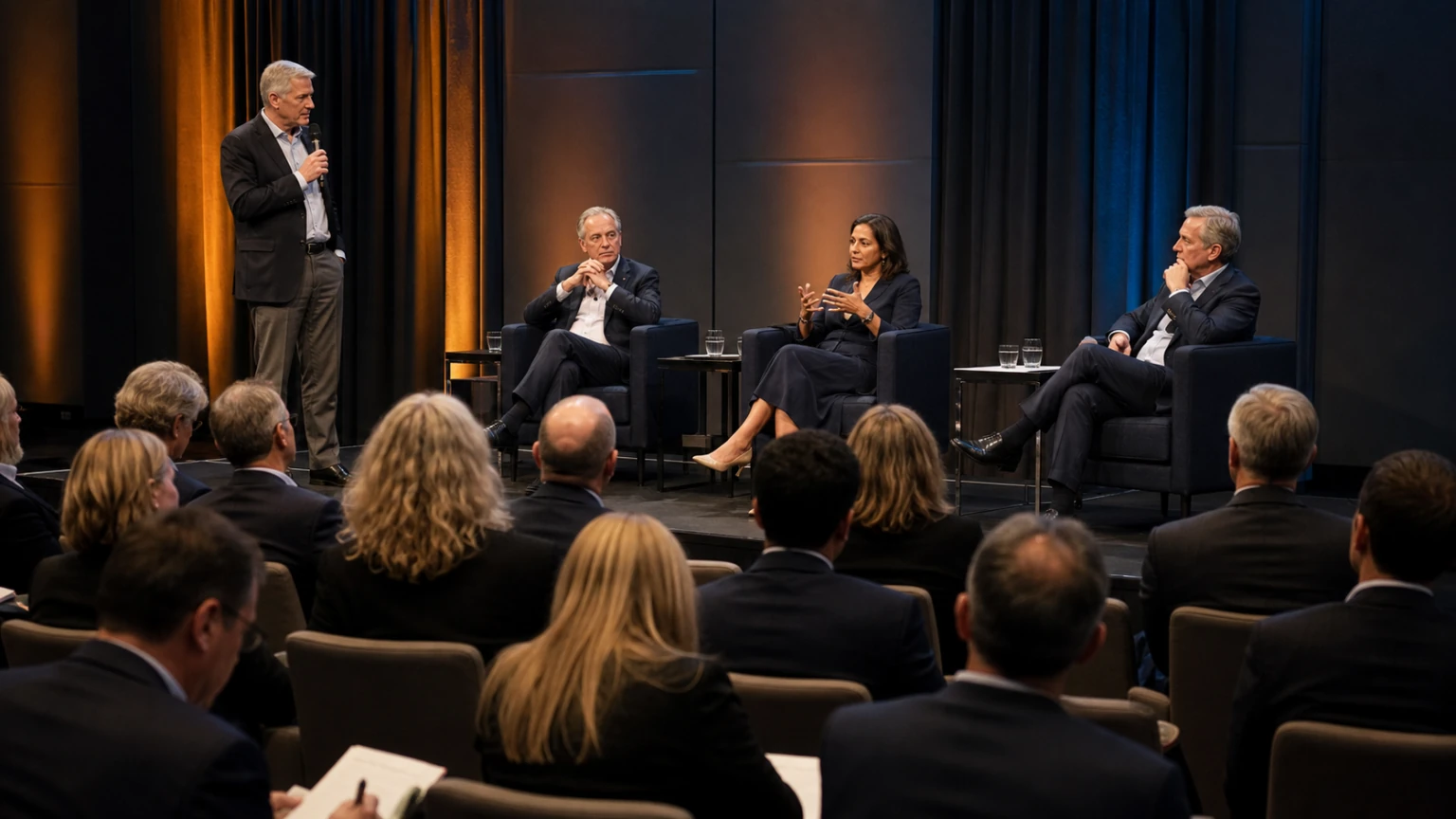
A major debate session should not feel like three keynote speeches sharing one stage. It should feel structured, balanced, and worth attending live.
Why this matters
Conference audiences are increasingly selective about which sessions deserve their time.
If an event promotes an industry debate, attendees usually expect a few things:
- clear disagreement or contrast in perspective
- practical implications for the sector
- strong moderation
- tight timing
- something they can take back to work
When those conditions are missing, the session can drift into broad statements, repeated talking points, or status-driven speeches that never really become a debate.
That hurts more when the speakers are senior. Expectations are higher, and the audience notices weak structure quickly.
What makes a debate session credible
Credibility comes from design, not just speaker prestige.
A practical debate session usually depends on five things:
1. A real issue, not a vague theme
“The future of the industry” is too broad. A better framing names a tension the audience already cares about, such as regulation versus growth, access versus profitability, or infrastructure versus demand.
If the topic is too general, the speakers will naturally default to safe commentary.
2. Distinct viewpoints
A debate needs contrast. That does not always mean conflict, but it does mean the panel should not be made up of people who all approach the issue from the same role or incentive structure.
3. A moderator with authority
The moderator is not there to distribute microphones politely. They are there to shape the session, manage time, test claims, and keep answers relevant to the audience.
4. A clear running order
Without structure, a debate can become unbalanced quickly. One speaker dominates, another goes long, and the audience Q&A arrives too late or not at all.
5. An outcome for attendees
The best debate sessions leave the audience with a clearer understanding of trade-offs, likely next steps, and practical implications.
If attendees cannot say what was clarified, challenged, or decided, the session probably created attention without creating value.
Choose the right debate format
Not every high-profile discussion should use the same panel structure.
Here are practical formats organizers can use.
Format 1: Moderated policy debate
Best for senior figures, public policy topics, trade associations, and leadership conferences.
Typical structure:
- 5-minute moderator setup
- 3 to 4-minute opening view from each speaker
- 25 to 30 minutes of moderated exchange
- 10 to 15 minutes of audience questions
- 2-minute closing takeaway from each speaker
This works well when the issue has public interest, reputational sensitivity, or regulatory implications.
Format 2: Proposition debate
Best when you want sharper contrast and a memorable framing.
Example structure:
- motion or proposition stated clearly
- one speaker supports it
- one speaker opposes it
- one speaker gives a balancing or implementation view
- audience questions test the arguments
This format gives the audience a clearer lens, but it requires speakers to accept a firmer framing in advance.
Format 3: Case-led industry response panel
Best when the audience needs practical application more than headline tension.
The moderator starts from a live issue, recent development, or operating challenge, then asks each speaker how their part of the sector would respond.
This format is especially useful when you want executives to move beyond opinion and talk about action.
Format 4: Fireside-plus-debate hybrid
Best when one participant is especially senior and protocol or scheduling requires a softer start.
The moderator begins with a short one-to-one segment, then expands into a wider debate with the rest of the panel. This can help settle the room while still creating a more dynamic second half.
Build the session around one core question
Before speaker outreach, define the central question the session must answer.
Good examples usually:
- name a real sector tension
- matter to operators, not just commentators
- allow disagreement without becoming personal
- connect to conference goals
Test the question internally by asking: would an attendee repeat this to a colleague after the event?
If not, the framing may be too abstract.
How to brief high-profile speakers properly
Senior speakers need clarity early.
That does not mean scripting them heavily. It means reducing ambiguity about what kind of session they are joining.
Your speaker brief should cover:
- the exact debate title
- the purpose of the session
- who else is participating
- the moderator's role
- whether opening remarks are expected
- the length of those opening remarks
- likely discussion areas
- how audience questions will be handled
- what the organizer wants attendees to leave with
One common mistake is inviting big names first, then designing the session later. That often produces a weak format because the structure gets built around status rather than audience value.
Coordinate the speakers, do not just confirm them
Once the panel is set, run a short coordination process.
This can include:
- a pre-event moderator call
- individual prep calls with each speaker or office
- agreement on major topic areas
- confirmation of arrival, protocol, and backstage timing
- alignment on what is on or off the record, if relevant
The goal is not to eliminate spontaneity. The goal is to prevent avoidable surprises that damage flow.
For high-profile sessions, even small ambiguities can become on-stage friction. A speaker may expect a keynote slot, object to the order of questions, or arrive assuming there is no audience Q&A.
Those are preventable problems.
What the moderator should prepare
A good moderator prep document is usually more useful than a long concept note.
It should include:
- the session objective in one sentence
- short background on each speaker
- the opening setup
- the first three questions
- likely tension points
- bridging questions if answers become repetitive
- priority audience questions
- time warnings and closing sequence
Moderators should also prepare redirection lines for common panel problems:
- when one answer runs too long
- when a speaker avoids the question
- when two panelists agree too broadly
- when the room needs a practical example
In operational terms, the moderator is part editor, part traffic controller.
Protect the running order
Debate sessions are highly vulnerable to schedule slippage.
If the previous item overruns, the discussion becomes compressed, which usually means audience questions are cut first. That is often the part attendees value most.
To protect the session:
- avoid placing it after a segment that regularly overruns
- build a controlled stage reset
- seat speakers before the room fills if protocol requires it
- give the moderator visible time cues
- agree in advance what gets shortened if time is lost
Do not assume a high-profile panel can absorb delay gracefully. Senior speakers often have tighter arrival and departure windows than the rest of the agenda.
Plan the room for discussion, not just prestige
Room setup affects debate quality more than many teams expect.
Useful questions to ask:
- Can attendees hear clearly without audio lag?
- Is the panel layout conversational or overly formal?
- Can the moderator make eye contact with all speakers easily?
- Will audience microphones move fast enough?
- Is there a clear route for late arrivals that does not disrupt the front rows?
If the session is meant to feel serious and participatory, the room should support that. Overly ceremonial staging can make open exchange harder.
Audience Q&A needs filtering and control
For industry debates, audience questions can be the most valuable part of the session. They can also be the least efficient if unmanaged.
A practical model is to collect questions in more than one way:
- live microphones in the room
- written cards for formal settings
- pre-submitted questions from registrants
- moderator-selected prompts based on session goals
The moderator or stage team should avoid allowing long audience speeches disguised as questions.
A simple instruction helps: one question, short context, no second speech from the same participant unless invited.
Measure whether the debate actually worked
High attendance is not enough.
If you want the session to improve year over year, measure it against specific outcomes.
Useful indicators include:
- room occupancy at start and end
- drop-off before Q&A
- number of audience questions submitted
- percentage of questions answered live
- post-session feedback scores
- qualitative comments on relevance and moderation
- social or press pickup, if media visibility matters
- whether the discussion generated follow-up meetings or working groups
For association conferences and leadership events, one of the best tests is simple: did the session help move a sector conversation forward, or did it just showcase who was on stage?
A practical pre-event checklist
- Define the debate question clearly
- Choose a format that fits the issue
- Confirm distinct speaker perspectives
- Brief the moderator early
- Align opening remarks length
- Prepare a timed run-of-show
- Confirm arrivals, escorts, and backstage flow
- Set the audience Q&A method
- Assign one owner for session operations
- Agree what success will be measured against
Common mistakes to avoid
- calling it a debate when no real difference in viewpoint exists
- booking too many speakers for the time available
- letting opening remarks consume half the session
- using a moderator who cannot challenge senior panelists
- failing to brief speaker offices on format and timing
- cutting audience questions first when the schedule slips
- judging success only by applause or photos
What this means for conference teams
High-profile industry debates can be one of the most valuable sessions in a conference programme, especially when the topic touches regulation, investment, infrastructure, access, or sector leadership.
They can also be one of the easiest formats to get wrong because prestige can hide weak design until the room is live.
The most effective organizers treat the session as an operational product. They define the purpose, shape the discussion, brief the participants well, and protect the audience experience from drift.
Final thought
A serious debate session should help attendees understand what is changing, why it matters, and where the pressure points really are.
That is what makes the format worth doing.
High-profile names may attract the audience. Clear structure, disciplined moderation, and practical takeaways are what make them stay to the end.