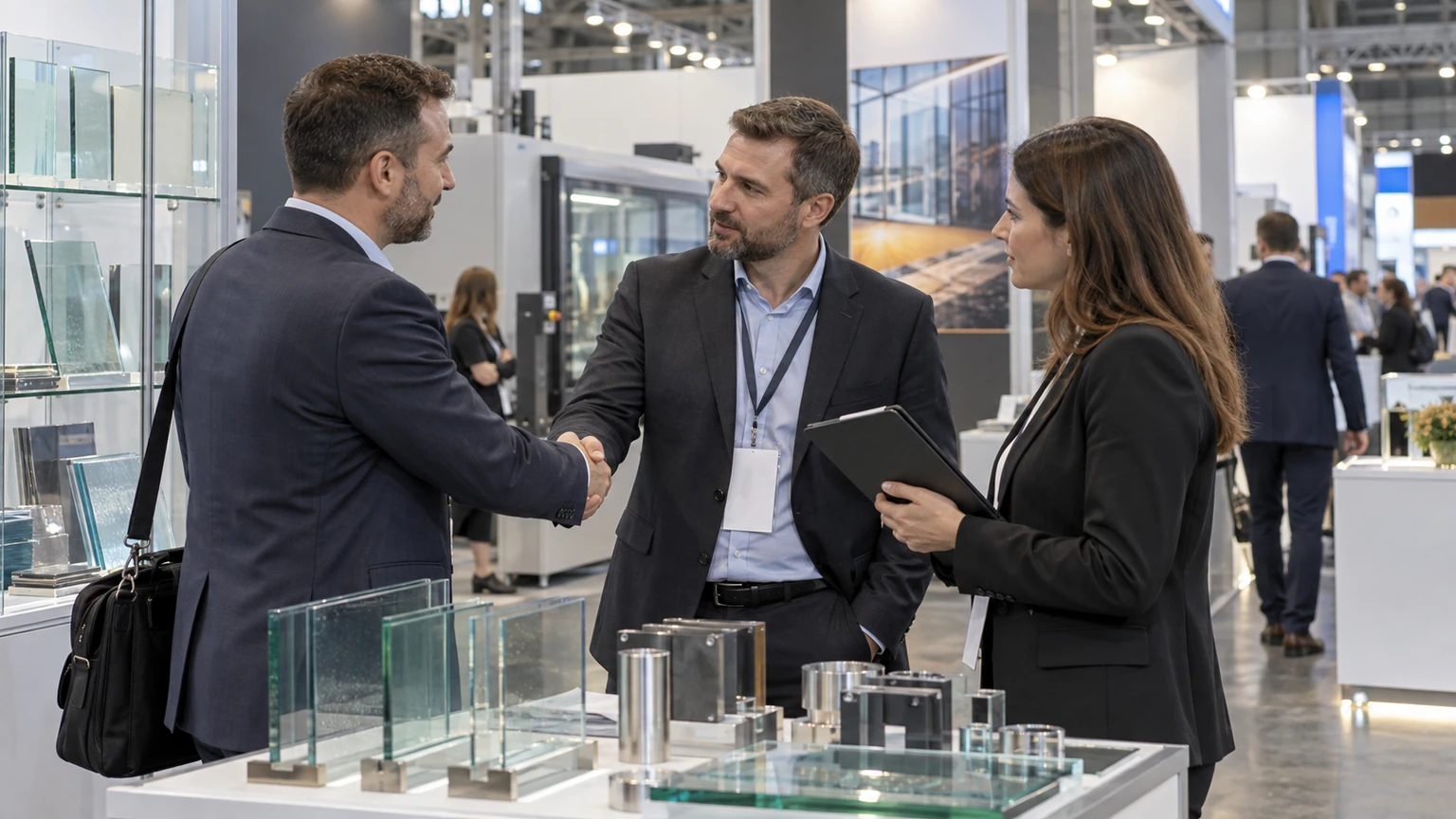
Public reporting around trade show strategy in the glass sector, including discussion tied to GlassBuild America, is a useful prompt for organizers, exhibitors, and venue teams.
The main lesson is simple: a strong presence at an industrial expo is not only about having a stand in the hall. It is about converting attendance, visibility, and industry positioning into measurable business outcomes.
That matters for Bewitt users hosting glass, manufacturing, and other industrial events where buying cycles are longer, products are more technical, and exhibitor expectations are often tied to lead quality rather than raw footfall.
At industrial trade shows, presence creates the opportunity. Structure creates the return.
Why this matters
Manufacturing and sector-specific expos usually operate differently from more general consumer events.
Exhibitors often arrive with clear commercial goals:
- meeting distributors or buyers
- showing technical innovation
- building regional market visibility
- supporting channel partners
- testing demand in a new segment
- maintaining industry credibility through attendance
That means event value is rarely judged by crowd volume alone. It is judged by whether the show helps the right people find each other, meet efficiently, and continue the conversation after the event.
What public signals like this actually suggest
When industry organizations or exhibitors emphasize trade show presence strategically, the takeaway for event teams is not that every company wants the same thing.
It is that serious exhibitors usually treat a major expo as part sales channel, part market signal, and part relationship platform.
For organizers, that creates a practical challenge. The event has to support all three jobs at once.
For example, an exhibitor may want:
- pre-arranged buyer meetings
- strong booth discovery on site
- clear product category visibility
- support for launches or demonstrations
- evidence for internal ROI reporting after the show
If the event only performs well in one of those areas, the exhibitor may still feel the show underdelivered.
Do not confuse visibility with performance
Industrial expos often place a lot of emphasis on scale, branding, and floor presence. Those things matter, but they are not enough on their own.
A busy stand can still produce weak outcomes if conversations are unqualified, notes are poor, or follow-up stalls.
Likewise, a more focused stand with fewer but better meetings may deliver stronger ROI.
The right metric for an industrial exhibitor is usually not “How many people came by?” but “How many relevant commercial conversations moved forward?”
What organizers can do before the show
The most useful ROI support usually starts before build-up begins.
Organizers can improve outcomes by making participation easier to plan and easier to target.
1. Improve exhibitor discoverability
Industrial buyers often search by product capability, application, region, or use case. Simple exhibitor lists are not always enough.
Event teams should make sure exhibitors can be found in ways that reflect how attendees actually evaluate suppliers.
- group exhibitors by sector or product category
- highlight new technology or launch areas clearly
- make company profiles consistent and easy to compare
- surface relevant suppliers before attendees arrive on site
2. Support meeting intent early
Many valuable expo meetings should not depend on chance booth traffic.
Where possible, event teams should encourage attendees and exhibitors to identify targets and request meetings before the show opens.
This is especially important for industrial sectors where the right contact may only be available for a narrow time window.
3. Help exhibitors prepare for realistic outcomes
Not every exhibitor is attending for immediate orders. Some are there for distributor conversations, specification influence, partner discussions, or market reconnaissance.
Organizers should avoid pushing a one-size-fits-all success model. A better approach is to help exhibitors define what a good outcome looks like for their business.
What exhibitors should tighten operationally
If organizers want stronger renewal and sponsor confidence, they should encourage exhibitors to run their trade show presence more deliberately.
Staffing
One common mistake is treating the stand as a rota problem instead of a sales operation.
For technical sectors, exhibitors usually need a mix of people:
- someone who can open conversations quickly
- someone who understands the product in detail
- someone who can qualify commercial fit
- someone who owns follow-up after the event
That does not always mean a larger team. It means a clearer role plan.
Lead capture discipline
Industrial events often generate fewer but higher-stakes leads than broader expos. That makes data quality more important.
Exhibitors should leave every meaningful conversation with a clear record of:
- who the contact is
- what problem they are trying to solve
- what product or capability interested them
- how urgent the opportunity is
- what next step was agreed
If that information is missing, post-show follow-up becomes guesswork.
Demo and message clarity
Technical buyers usually do not need a theatrical pitch. They need a fast understanding of relevance.
A better booth conversation often starts with a short qualification step, then moves into the most relevant proof point, application, or case example.
That saves time for both sides and increases the chances of a useful next meeting.
How event platforms can help without overcomplicating the show
For industrial expos, software adds the most value when it removes friction from planning, discovery, and follow-up.
In practical terms, event teams should focus on digital support that helps with:
- structured exhibitor listings
- meeting scheduling
- agenda planning
- contact and lead organization
- post-event reporting
The goal is not to digitize every interaction. It is to make important interactions easier to find, easier to schedule, and easier to continue after the show.
That is often where event ROI becomes more visible to both exhibitors and organizers.
What venue and operations teams should watch on site
Venue execution also affects exhibitor return, especially in manufacturing and product-led events.
Small operational issues can weaken commercial performance quickly:
- poor wayfinding to key sectors
- noise that disrupts technical conversations
- weak dwell time in product zones
- bad timing overlap between sessions and exhibition peaks
- congested service points that pull attendees off schedule
These are not cosmetic issues. They shape whether buyers can use their time well.
For industrial shows, floor layout and traffic logic should support purposeful movement, not just visual density.
A simple ROI model for industrial expo teams
When event teams review performance, it helps to separate vanity signals from business signals.
A practical review model may include:
- number of qualified meetings per exhibitor
- share of meetings booked before the event
- buyer attendance in priority segments
- engagement with targeted exhibitor categories
- speed and completeness of post-show follow-up
- exhibitor satisfaction tied to lead quality, not just traffic
This creates a more credible picture than relying only on total attendance or general satisfaction scores.
Stay evidence-aware
It is important not to overread a single public trade show story.
One industry signal cannot prove the full strategy of every exhibitor, association, or event. It can, however, highlight a broader reality that many industrial event teams already know: participation decisions are becoming more deliberate, and ROI expectations are becoming more operational.
That is why organizers should treat strategic exhibitor presence as a workflow design question, not only a sales question.
What this means for event teams
If you host glass or manufacturing expos, the opportunity is clear.
Build the event so exhibitors can do three things well: get discovered, meet the right people, and follow up with discipline.
That sounds straightforward, but many shows still underperform on one or more of those points.
The exhibitors who renew most confidently are usually not the ones who simply had the biggest stand. They are the ones who can point to qualified conversations, visible market relevance, and a clean path from the show floor to the next commercial step.
For organizers, that is the standard worth designing around.