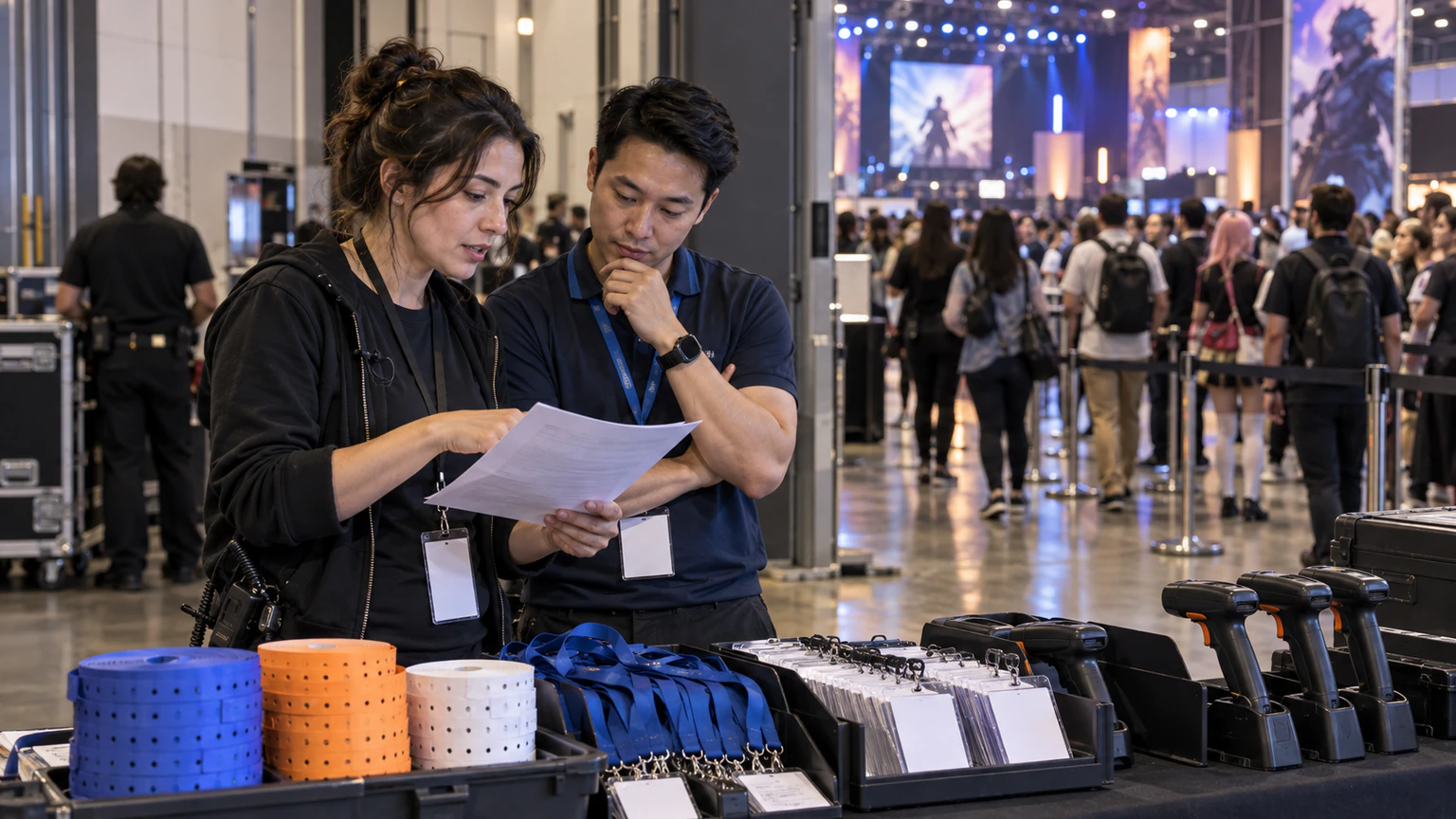
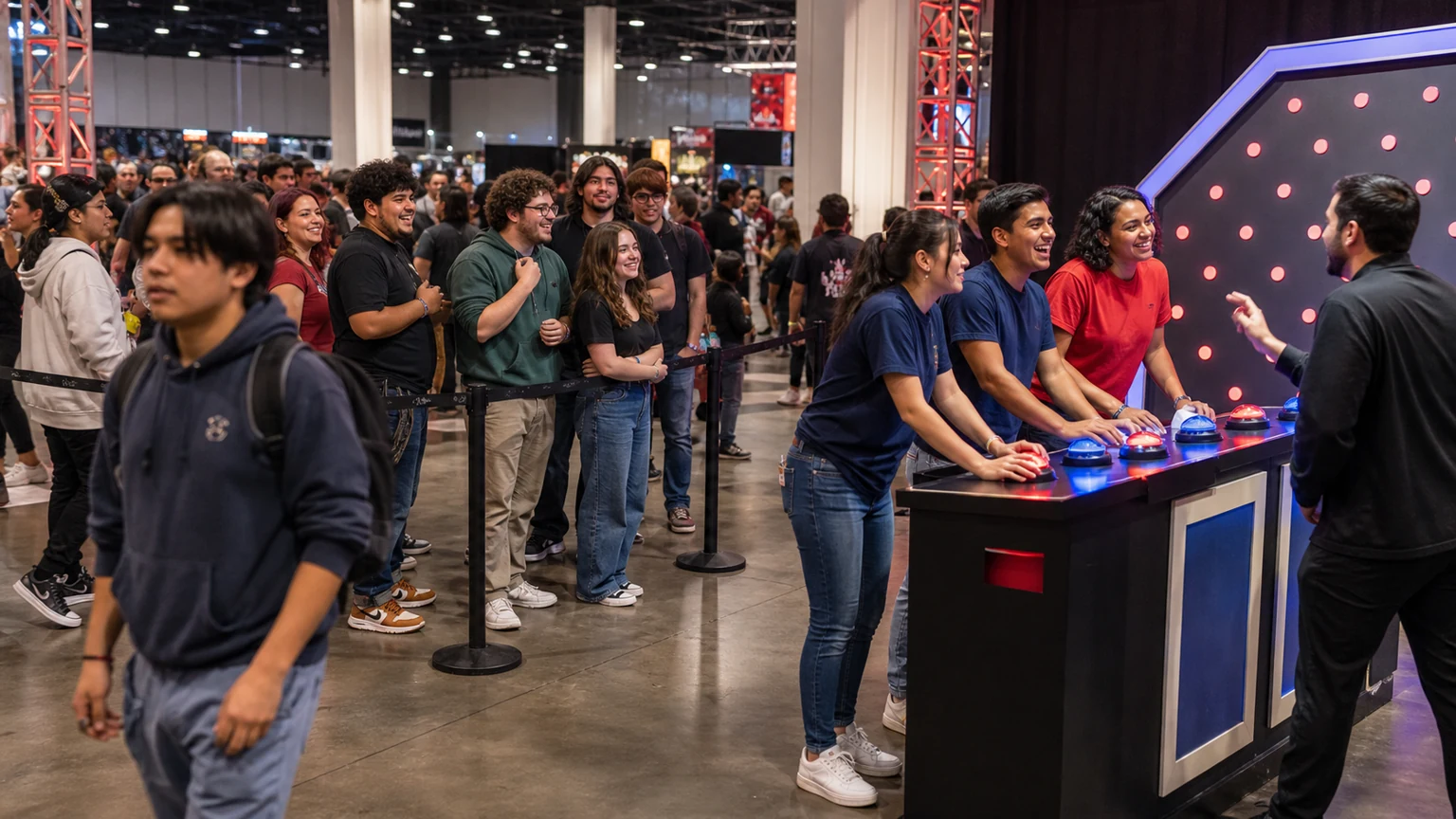
Reported activations around San Diego Comic-Con offer a useful planning lesson for organizers, festival producers, and brand teams. The headline is not just scale. It is segmentation.
From badge-holders to superfans, the mix reportedly included training quarters, surprise game shows, auction houses, and carnival-style experiences. That matters because each format appears to meet a different audience need, not just deliver more spectacle.
For event teams, that is the real takeaway. Strong activations are usually not built for a single generic attendee. They are built for different types of attendees, with different motivation, available time, willingness to queue, and desired level of participation.
The most effective activation plan is often not one big idea. It is a set of smaller experience choices designed for distinct attendee segments.
If you are planning a conference, expo, fan event, or public brand experience, SDCC-style patterns can help sharpen how you map activations to people, flow, and measurable outcomes.
Start with behavior, not broad demographics
Event teams often begin segmentation with age, job title, or ticket class. Those can help, but they do not tell you enough about how attendees will actually use an activation.
A more practical starting point is behavior:
- who wants a quick drop-in experience
- who is willing to queue for something exclusive
- who wants to watch rather than participate
- who wants shareable moments
- who wants deeper immersion
- who is there mainly because they already love the property or brand
The reported SDCC mix is useful because those formats naturally separate by behavior. A carnival-style footprint attracts casual exploration. A themed training environment invites immersion. A surprise game show creates appointment energy. An auction-style format speaks to scarcity, status, and collector interest.
Those are not interchangeable experiences. They serve different attendee mindsets.
Design for at least four activation segments
Most event teams can simplify their planning by grouping activations into a few clear audience types.
1. The casual passerby
This person may not have planned their stop in detail. They are responsive to visibility, energy, low commitment, and fast payoff.
Good fits include:
- walk-up moments
- photo-friendly set pieces
- short games or challenges
- light branded interactions with minimal instructions
Operationally, this segment needs clear signage, quick throughput, and low staff explanation time.
2. The committed fan
This attendee is ready to spend more time for a more rewarding experience. They want detail, exclusivity, and a sense that the activation understands the fandom.
Good fits include:
- deep theming
- story-led environments
- limited-capacity sessions
- structured participation with a payoff
This is where training-quarter style experiences become relevant. They signal that the attendee is entering a world, not just sampling a booth.
3. The collector or status-driven guest
Some attendees are motivated by rarity, priority access, or the chance to secure something few others can get.
Formats with auction, drop, or premium-access logic can work for this group, but only when rules are clear and queue management is disciplined.
For operators, this segment raises the most pressure around fairness, inventory communication, and crowd control.
4. The audience participant
Not everyone wants a self-guided activation. Some want a hosted moment with live energy. Surprise game shows and timed stage interactions fit this segment well because they create a social experience, even for people who are mostly watching.
This segment is useful because it can turn a crowd into both participants and spectators at once.
Segmentation improves when you define what kind of participation each audience segment wants, then build the activation around that behavior.
Match activation format to dwell time
One of the clearest practical lessons from large fan events is that not every attendee can or should be asked for the same time commitment.
Before approving an activation concept, ask a simple question: how long is this experience really asking from the attendee?
That includes:
- decision time
- queue time
- briefing time
- participation time
- exit and reset time
When teams ignore that, they create avoidable mismatch. A casual guest is pushed into a long process they did not want. A superfan gets a shallow experience that feels disposable. Both outcomes weaken results.
A better activation mix usually includes:
- quick-entry, quick-exit touchpoints
- mid-depth experiences for people with 10 to 20 minutes
- higher-commitment anchor moments for people willing to invest more time
This is often the difference between an activation area that looks busy and one that actually serves different attendee types well.
Use access rules as a segmentation tool
The SDCC context also highlights a practical point about badge-holders and broader public audiences: access level shapes activation design.
Some experiences should reward event credentials, timed booking, or prior commitment. Others should stay open enough to widen reach and create street-level energy.
For organizers, that means access should be planned deliberately, not added late.
Useful access models include:
- open access for broad awareness
- timed entry for predictable throughput
- priority access for select ticket types or invited groups
- capacity-controlled sessions for premium experiences
Each model sends a different signal. Each also creates different staffing, scanning, line management, and expectation-setting needs.
If access logic is vague, the attendee experience usually suffers first.
Build different success metrics for different segments
A common mistake in activation reporting is using one success metric for everything. Large attendance counts may look impressive, but they do not tell the full story.
A carnival-style attraction and a limited immersive training environment should not be judged the same way.
Instead, measure against the job each activation is meant to do.
Practical metric examples
- Casual, high-volume activations: footfall, participation rate, average queue time, completion rate, social sharing prompts
- Immersive fan experiences: dwell time, timed-entry fill rate, satisfaction, repeat visitation, staff-assisted interaction volume
- Scarcity or premium formats: conversion, inventory sell-through, queue abandonment, fairness complaints, arrival pacing
- Hosted audience moments: crowd size, session turnover, participation rate, schedule adherence, audience retention
These are operations metrics as much as marketing metrics. They show whether the concept was matched to the segment in a workable way.
Plan the handoffs between discovery, queue, and participation
Big activations often fail in the transition points, not in the concept itself.
An attendee sees the experience, decides to join, enters a line, waits for instructions, participates, and exits. Every one of those handoffs can add friction.
If you are segmenting activations well, those handoffs should differ by audience type.
For example:
- a casual experience should need almost no explanation
- a fan-deep immersive environment may justify longer pre-briefing
- a live hosted moment needs visible schedule cues
- a scarcity-driven experience needs strong expectation management before people commit to the queue
In other words, segmentation should shape operations, not just creative design.
What smaller events can borrow from SDCC patterns
You do not need Comic-Con scale to use these ideas. The transferable lesson is structure.
Even a modest conference or regional festival can build an activation plan with distinct layers:
- one easy-entry experience for broad participation
- one deeper experience for highly interested attendees
- one scheduled live moment that creates buzz and gathering energy
- one access-controlled or limited-capacity element for exclusivity
This can work for sponsor zones, fan conventions, B2B expos, venue pop-ups, or public-facing side events.
The key is to avoid making every activation do everything at once.
A simple review framework for event teams
Before launch, review each activation against a few practical questions:
- which attendee segment is this primarily for
- what level of time commitment does it require
- is it optimized for throughput, immersion, exclusivity, or spectacle
- what access rules apply
- what operational bottleneck is most likely
- how will success be measured for this specific format
If the answers are unclear, the activation may still be interesting creatively, but it is not ready operationally.
Final thought
The reported SDCC activation mix is a reminder that attendee segmentation works best when it becomes physical. Not just a CRM label, not just a messaging audience, but a real design choice in what people can do, how long it takes, and what kind of payoff they receive.
That is the useful lesson for event teams. Segment first, then design formats, access, staffing, and metrics around those segments. When that alignment is strong, activations feel more relevant to attendees and more manageable for operations.