Reports of a 2026 AI conference reaching new records in scale are a useful prompt for event organizers, venue teams, and expo operators.
The headline is not just about popularity. In event operations, scale changes the planning model. A conference that becomes materially larger does not simply need more space. It needs different assumptions about movement, security, staffing, sponsor delivery, and failure points.
That matters especially for large tech conferences, where attendee flows are uneven, agendas shift quickly, sponsor expectations are high, and peak moments can create pressure in multiple parts of the venue at once.
When event scale changes, the risk is not only crowding. It is relying on last year's operating model for a very different event.
For Bewitt readers, the practical question is simple: what should change in venue planning and security when a conference starts operating at a bigger scale?
Scale is an operations issue before it becomes a venue issue
Teams often begin with a familiar question: can the venue hold the audience?
That is necessary, but it is not enough.
A venue can be technically large enough and still be operationally strained if the event creates:
- heavy arrival surges in short time windows
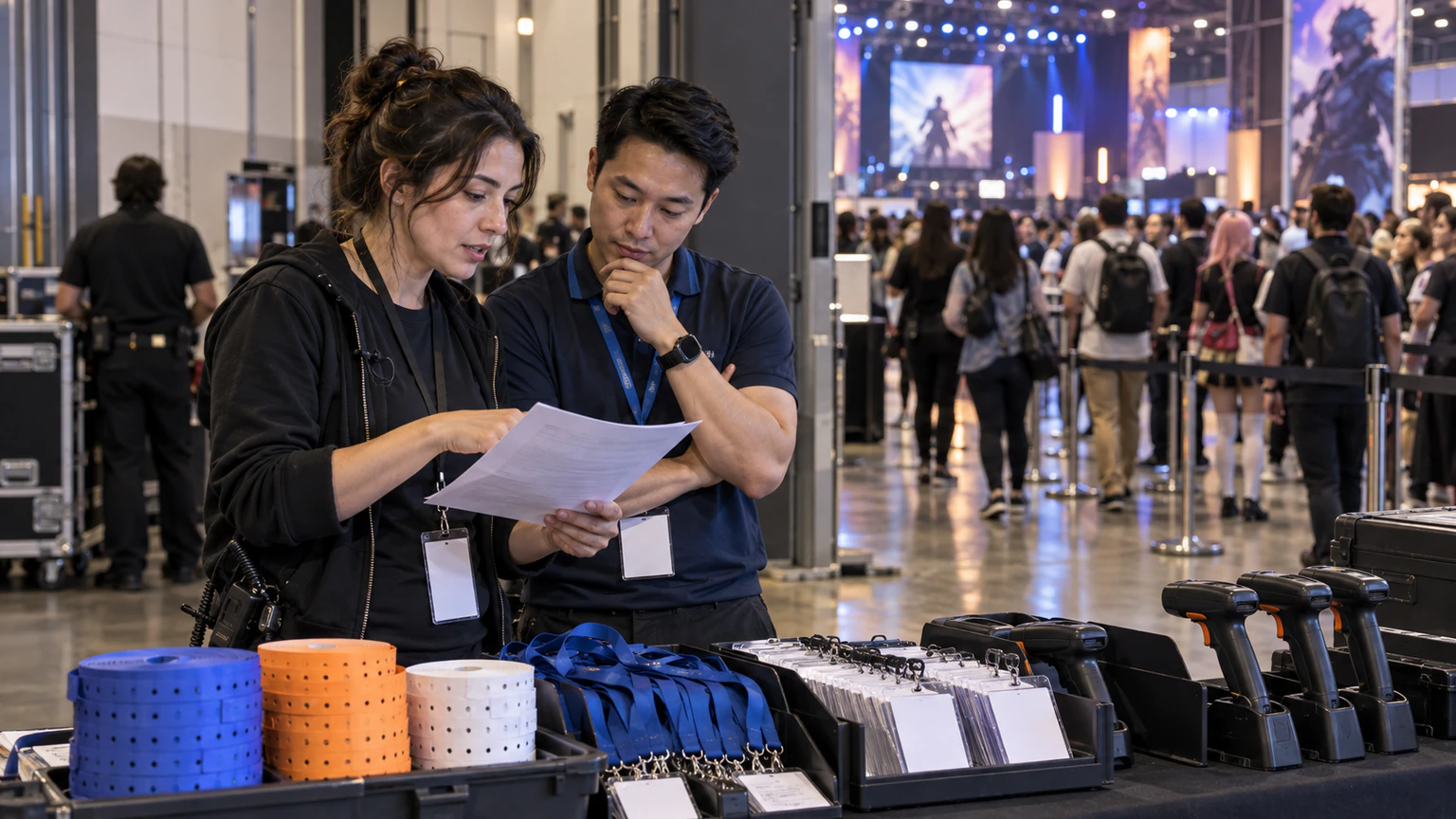
- too many badge pickup points concentrated in one area
- session turnover that overwhelms corridors and escalators
- exhibition traffic that blocks access routes
- VIP, media, speaker, and general attendee flows crossing each other
- security checks that slow entry at the wrong moments
At larger scale, the planning question shifts from capacity to circulation. You are no longer just fitting people into a building. You are designing how they move through it safely and predictably.
Start venue planning with peak-load moments
Not all event hours are equal. Large conferences usually fail at the peaks, not the averages.
Before confirming layouts and staffing, map the highest-pressure moments:
- first arrival of the day
- pre-keynote entry windows
- session changeovers
- lunch release periods
- end-of-day expo traffic
- VIP and speaker access before major appearances
These moments affect queue design, barrier placement, staffing positions, security posture, and cleaning turnaround.
If your attendee forecast grows, revisit each of these periods separately. A layout that works at steady flow may fail badly when thousands of people converge on one entrance, one hall, or one food service zone.
Big events are usually won or lost in transitions: arrivals, changeovers, and releases.
What should change in venue planning at larger scale
1. Entry design
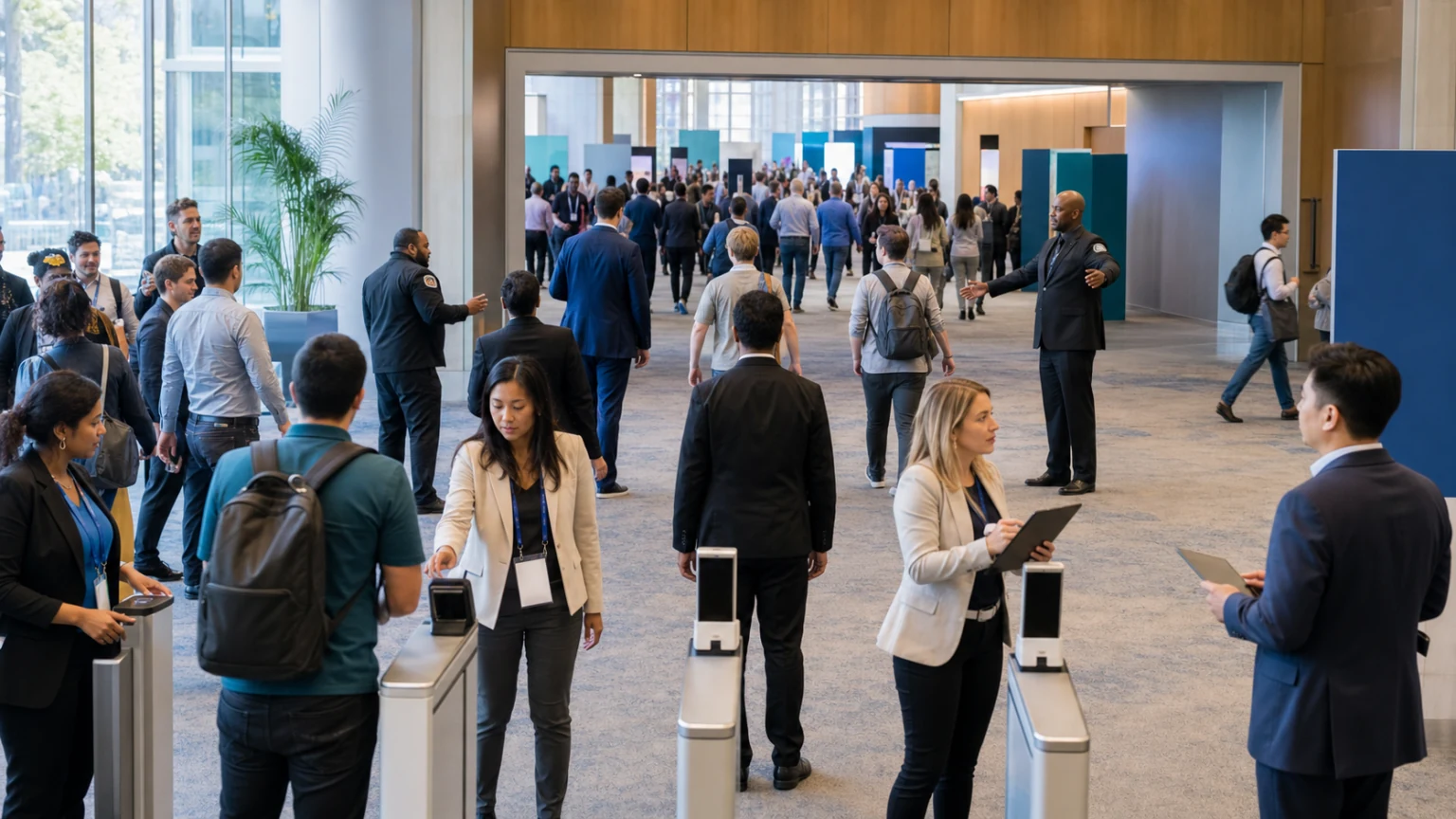
Entry is not only a registration question. It is a security and attendee experience question at the same time.
At larger scale, teams should review:
- how many people can be processed per entrance zone
- whether badge pickup and security screening should be separated
- where queues can expand without blocking other functions
- whether VIP, speakers, exhibitors, and staff need different access paths
- how weather exposure affects waiting areas outside the venue
A calm arrival experience often depends less on one fast process and more on reducing collisions between multiple processes.
2. Hall and corridor circulation
Large tech conferences often concentrate demand around keynotes, headline sessions, product demos, and major sponsors.
That means planners should identify choke points early:
- narrow corridors between expo and session spaces
- stairs or escalators feeding main rooms
- food stations near major traffic routes
- networking features placed too close to entry or exit paths
- queues for popular activations spilling into circulation space
If a sponsor activation is likely to draw a crowd, treat it like an operational feature, not just a sales placement. Its position can affect safety and flow for the whole floor.
3. Session access control
At bigger scale, session seating becomes a flow-management problem. Even when rooms are compliant on paper, demand spikes can create unsafe or frustrating crowd behavior near doors.
Teams should define:
- who monitors room capacity in real time
- how oversubscribed sessions are handled
- how late arrivals are redirected
- what signage and staff messaging will be used when rooms are full
- whether buffer space is available outside major sessions
This is especially important for tech conferences where keynote attendance and breakout popularity can vary sharply.
4. Back-of-house separation
As conferences grow, more people need access behind the scenes: production crews, caterers, security staff, exhibitors, speakers, and venue operations teams.
If back-of-house routes are weak, staff and service traffic can leak into attendee areas and create avoidable disruption.
Review loading, storage, staff access, green rooms, control points, and service corridors as part of the main planning model, not as a late-stage technical detail.
Security planning needs to match the event profile, not just the headcount
Bigger attendance matters, but security planning should also reflect the kind of event you are running.
Large tech conferences often bring a mix of public visibility, executive attendance, media presence, sponsor assets, and high-value equipment. That can change the security posture significantly.
Operationally, teams should assess:
- how screening will work without creating unsafe entry queues
- which areas need controlled access beyond general admission
- how exhibitor build and breakdown periods will be secured
- what asset protection is needed for demo zones and sponsor equipment
- how incident escalation will work between organizer, venue, and contracted security
The key is coordination. Security cannot operate as a parallel stream. It needs to be integrated into registration planning, floor design, staffing plans, and communications.
Why sponsor operations become more complex at scale
Large conferences do not only get more attendees. They often attract more sponsors, larger booths, more branded activations, and more executive hospitality.
That creates pressure in several areas:
- loading and dock scheduling
- exhibitor move-in timing
- power and connectivity demand
- crowd management around activations
- brand approval and signage consistency
- VIP hosting and access control
For planners, the important shift is to treat sponsorship delivery as part of the venue operations model. A popular activation can affect queueing, noise, sightlines, security staffing, and nearby session access.
If the sponsor footprint grows with the event, the operations plan must grow with it too.
AI-enabled processes can help, but they do not remove the fundamentals
Large AI conferences naturally raise interest in AI-enabled event processes. That can be useful when it reduces manual handling and helps teams respond faster.
For venue planning and security, the practical value is usually in areas such as:
- faster consolidation of attendee and access data
- clearer visibility into registration changes before the event
- better coordination of communications when plans shift
- cleaner reporting after the event
But teams should stay disciplined. Technology can support decision-making, yet it does not replace physical planning for crowd movement, staffing coverage, security checks, or contingency routes.
The more the event grows, the more important it becomes to get the physical operating model right first.
Questions event teams should ask before signing off the venue plan
If a conference is scaling up, these are good questions to bring into venue and security reviews:
- Where are the likely pressure points during peak arrival and release times?
- Which attendee groups need separate access paths?
- What happens if one major session exceeds expected demand?
- Can sponsor activations create queues that interfere with circulation?
- Who owns the live decision-making if crowd conditions change?
- How will organizer staff, venue teams, and security communicate during incidents?
- What parts of last year's layout are being reused without being retested?
These questions help move the discussion beyond square footage and into live operability.
Keep the planning model realistic
One common mistake at fast-growing events is assuming scale can be managed through incremental adjustments alone.
Sometimes that is true. Sometimes it is not.
If attendance, exhibitor volume, or public visibility has changed substantially, planners may need to redesign the flow model, split functions across zones, increase controlled access points, or reset staffing assumptions completely.
Growth is positive. But growth without operational redesign usually shows up as longer queues, stressed teams, blocked circulation, and security plans that look adequate until the busiest hour arrives.
Final thought
Reports of record-setting AI conference scale are interesting for the industry, but the more useful lesson is operational.
When a conference gets bigger, venue planning and security should become more deliberate, not just larger. The goal is not simply to accommodate more people. It is to move them safely, serve them predictably, protect the event environment, and keep the experience workable for attendees, sponsors, speakers, and staff.
That is what scale really means in event operations.