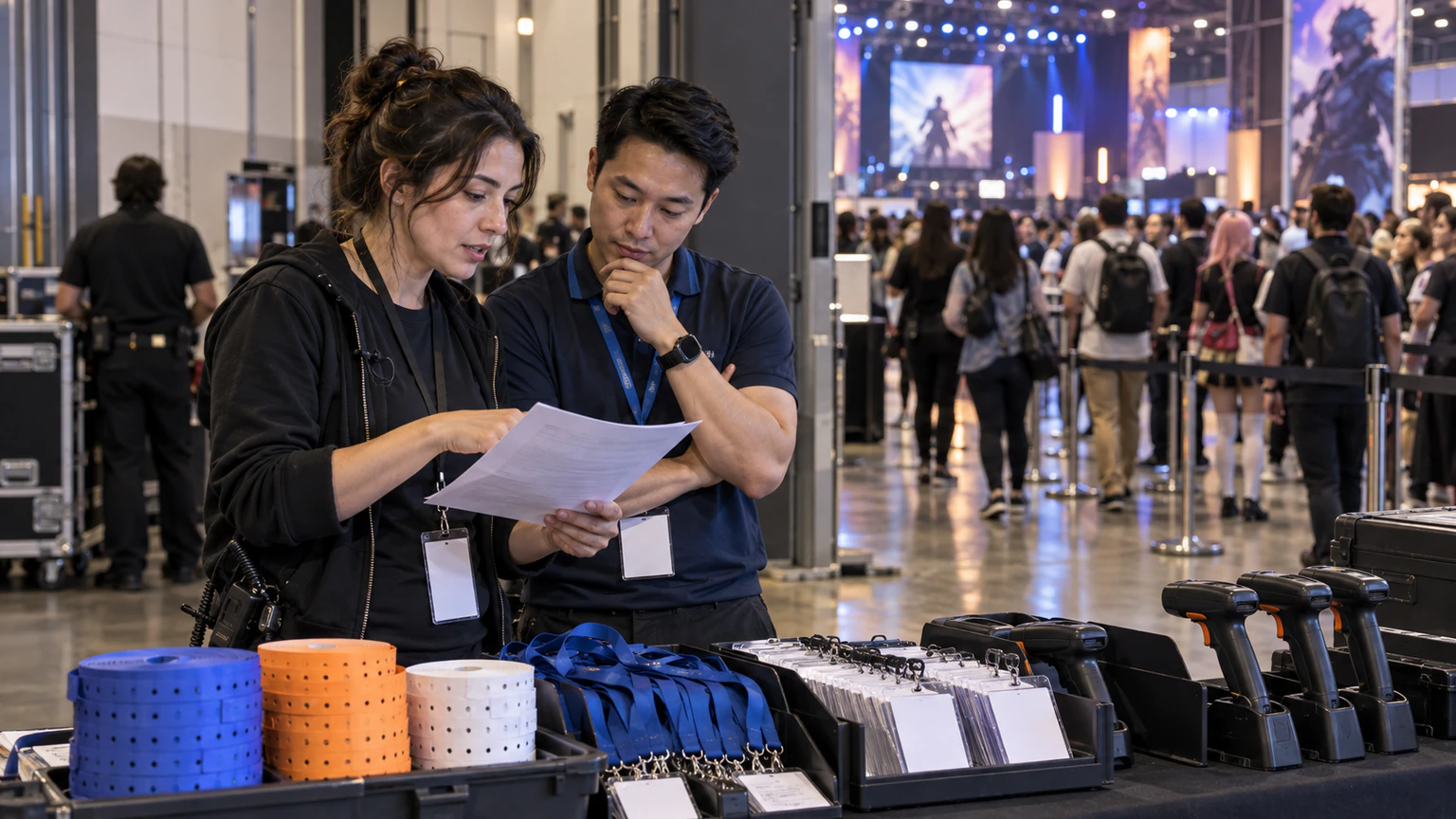
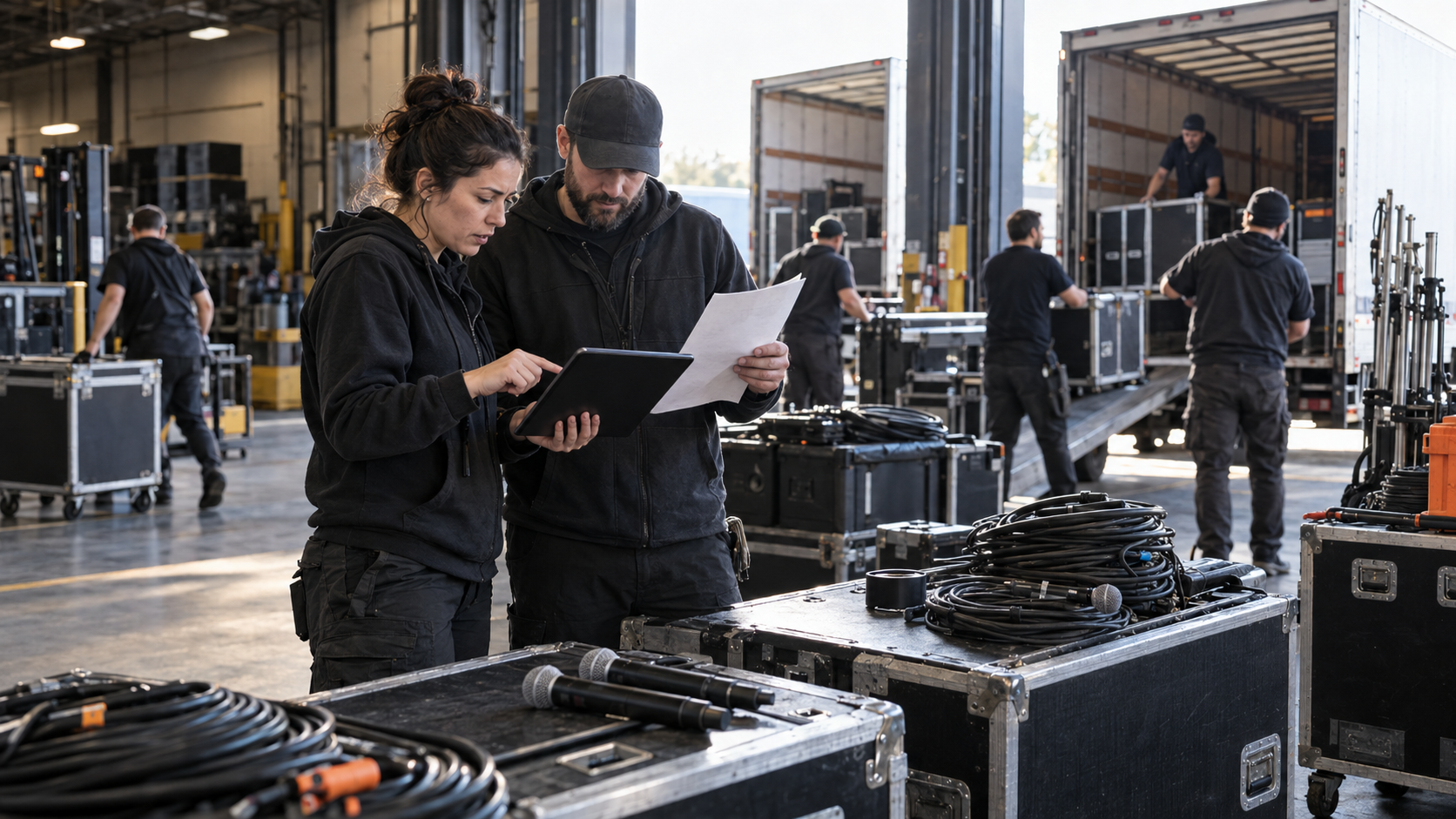
Peak season exposes the real limits of an event rental operation.
When festivals, conferences, and venue calendars tighten at the same time, demand does not just rise. It compresses. The same inventory, transport windows, warehouse teams, and on-site crews have to support more events with less margin for error.
Recent industry coverage pointing to rising demand for event technology rental is best treated as a market signal, not a complete operating dataset. Even so, the underlying pattern is familiar to organizers and rental partners: busy seasons put the most pressure on planning quality, asset visibility, and turnaround speed.
Peak season problems rarely begin on show day. They usually begin weeks earlier, when teams commit inventory and timelines without enough operational slack.
Why this matters
For organizers, rental stress shows up quickly in the form of substitutions, late changes, tighter install windows, and higher coordination load.
For rental providers, the challenge is broader. They have to balance utilization with reliability across multiple overlapping jobs.
That makes peak season less about finding more gear at the last minute and more about controlling the basics well:
- forecasting demand early
- understanding which items are true bottlenecks
- sequencing prep, dispatch, and returns cleanly
- keeping status data current
- communicating changes before they become site issues
If those disciplines are weak, even a well-stocked fleet can feel unavailable.
The pressure points that grow fastest in busy periods
Not all rental categories become difficult at the same rate. In peak season, the most strained items are often the ones that are expensive, specialized, or needed across many event types.
That can include AV packages, displays, networking gear, staging support equipment, power distribution, and other event technology assets that are hard to replace on short notice.
Operational pressure usually builds in five places:
- inventory availability across overlapping dates
- warehouse prep and quality control time
- transport scheduling and route efficiency
- crew allocation for load-in, support, and strike
- return inspection, turnaround, and redeployment
A fleet may appear fully booked because of one true choke point inside that chain, not because every asset is gone.
Start planning from peaks, not averages
Many teams plan from average event volume. Peak season punishes that habit.
It is more useful to plan from your busiest collision points: the weeks when several large jobs overlap, when the same equipment category is committed across multiple builds, or when venue access windows force simultaneous dispatch and returns.
For organizers, that means asking rental partners practical questions earlier:
- which items are likely to be constrained first
- when final quantities need to be locked
- what substitutions are realistic if demand spikes
- whether install timing affects availability
- which add-ons are easiest to source later, and which are not
For rental operators, peak planning should center on load concentration, not just total order count.
Two moderate events and one large festival in the same 72-hour window can create more strain than a higher monthly total spread evenly.
Know your critical inventory, not just your total inventory
Total fleet size is a weak planning number on its own.
What matters more is which assets are most likely to limit fulfillment. These are the categories that should be tracked with extra care during busy periods.
A practical approach is to separate assets into three groups:
1. High-demand, hard-to-replace equipment
These items need the earliest commitment and the closest availability control.
2. Standard items with flexible substitution options
These can absorb some demand swings if the core spec still works for the event.
3. Low-risk accessories and replenishable support items
These still matter, but they should not consume the same planning attention as constrained core gear.
This kind of prioritization helps teams avoid a common mistake: managing everything at the same level of urgency.
Build more discipline into reservation and hold logic
Peak season gets messy when inventory is tied up by soft holds, unclear approvals, or outdated assumptions.
That is why reservation discipline matters. Teams need to know what is confirmed, what is provisional, and what is effectively unavailable because it is committed elsewhere in the workflow.
Useful operating habits include:
- setting clear deadlines for quote acceptance and final counts
- reviewing provisional holds regularly
- flagging conflicts early, before transport and labor are booked
- tracking changes to quantity, timing, and venue access in one place
- making ownership of approval decisions explicit
Software can help here when it keeps rental status, scheduling, and operational notes visible to the right teams. The value is not abstraction. It is fewer surprises.
Turnaround time is part of capacity
In peak periods, capacity is not just the number of units you own. It is also how quickly those units can be checked, repaired if needed, repacked, and sent out again.
That makes return processing a frontline planning issue.
If returned equipment sits too long before inspection, teams lose time twice: once on the inbound side and again when the next event needs dispatch confirmation.
Rental operators should look closely at:
- how quickly gear is scanned or logged back in
- how damage or missing components are flagged
- whether cleaning, charging, and testing workflows are sequenced properly
- which items create the longest reset time before redeployment
- how exceptions are escalated when the next booking is close
For organizers, this is one reason late scope changes can be difficult in busy seasons. Availability may depend on turnaround quality, not just stock on paper.
Transport planning deserves earlier attention
Rental success is often judged on whether equipment arrives on time. That can make transport seem like a final step. In reality, it should be part of capacity planning from the start.
During peak season, dispatch timing becomes harder because deliveries, collections, and crew movements stack up around the same event windows.
Practical questions to settle early include:
- what the real loading and unloading windows are
- whether the venue has access restrictions or shared dock pressure
- which jobs require dedicated vehicles or special handling
- how far apart same-day sites are
- where schedule buffer is still possible
A fleet can have the right equipment and still fail the event if logistics sequencing is too tight.
Standardization helps when volume rises
Peak season is not the best time to discover that every event spec is slightly different in avoidable ways.
One of the simplest ways to reduce strain is to standardize common packages where possible. That does not mean forcing every event into the same template. It means reducing unnecessary variation in equipment bundles, prep steps, labeling, and support requirements.
Standardization can improve:
- warehouse picking speed
- crew familiarity
- testing consistency
- spare-part readiness
- substitution decisions when pressure rises
For recurring event formats, this can make a major difference across a full season.
Organizers should discuss substitution rules before they are needed
Substitutions are not always a sign of poor planning. Sometimes they are the realistic response to compressed demand. The problem starts when nobody has agreed in advance what can change and what cannot.
Before peak dates, organizers and rental partners should align on:
- which equipment specs are non-negotiable
- which alternatives are acceptable if inventory tightens
- how any changes will be approved
- what effect substitutions may have on setup, power, or layout
- who needs to be informed on site
This keeps last-minute decisions operational rather than emotional.
Where software workflows help most
Peak season does not necessarily require more systems. It requires clearer workflows.
Rental-management and event-operations software is most useful when it helps teams keep the moving parts connected:
- asset availability and status
- booking and scheduling visibility
- changes to event requirements
- crew and delivery coordination
- on-site issue tracking
- handover notes between sales, warehouse, logistics, and event teams
The goal is simple: reduce the gap between what was sold, what was prepared, what was dispatched, and what the site team expects to receive.
That is especially important when many events are live at once and informal updates stop being reliable.
A simple peak season checklist for organizers
If you rely on rented event technology during a busy season, review these points early:
- Lock critical equipment categories as early as possible.
- Confirm venue access times in writing.
- Identify which items have no acceptable substitute.
- Separate must-have scope from nice-to-have additions.
- Ask when quantity changes become risky.
- Clarify support responsibilities during install and live hours.
- Plan for strike and return timing, not just load-in.
What this means for event teams
Peak season demand is not only a sales opportunity for rental fleets. It is a test of coordination.
Organizers who treat equipment planning as an early operational workflow, rather than a late procurement task, usually get better outcomes. Rental providers that stay disciplined on inventory visibility, turnaround, and scheduling are better placed to scale without promising more than they can reliably deliver.
The market signal is clear enough: event technology rental demand rises when festival and conference activity rises. The practical response is also clear. Protect the basics, identify the true bottlenecks, and build workflows that hold up when the calendar gets crowded.