When a trade show reaches a 30-year milestone, event teams should pay attention.
That kind of longevity usually signals something more durable than a strong venue, a good sponsor list, or a familiar brand. It suggests the event has kept producing useful industry connections over time.
A recent headline about the SEMA MPMC Media Trade Conference marking 30 years of building motorsports industry connections is a useful prompt for organizers. Even without treating one headline as a complete operating blueprint, the underlying lesson is clear: long-running trade shows survive because networking is designed, maintained, and renewed.
Enduring trade shows do not simply gather people in the same building. They create a reliable environment where industry relationships can keep compounding.
For event operators, that raises a practical question: what does it take to support networking value not just for one edition, but across decades?
Why long-running trade shows deserve a closer look
Some events are built around novelty. Others become institutional because they solve a recurring industry need.
In specialist sectors such as motorsports, manufacturing, or technical B2B markets, that need is often very specific:
- meeting qualified buyers, suppliers, media, and partners
- keeping up with category changes
- maintaining relationships between annual cycles
- finding a neutral place for introductions and deal flow
- bringing established players and newer entrants into the same ecosystem
If an event keeps doing that well, people return. If it stops doing that well, history alone will not save it.
That is why longevity is operationally interesting. It suggests the show has protected trust in the attendee experience.
Networking at mature trade shows is rarely accidental
Attendees often describe great networking as organic. From an operations perspective, it usually is not.
Useful networking tends to come from structure:
- clear attendee segmentation
- credible reasons for the right people to attend
- agenda formats that create conversation points
- time and space designed for meetings
- simple ways to identify who is who
- repeatable rituals that help people reconnect year after year
That matters even more at technical or high-velocity trade shows, where attendees may have limited time and very specific goals.
If the event experience is too noisy, too vague, or too fragmented, the value of attending drops quickly for experienced participants.
What changes when an event serves the same industry for decades
A mature trade show has a different job from a first-year event.
It must serve returning participants who already know each other, while still making the event useful for first-timers. It must protect tradition without becoming stale. It must help exhibitors and partners justify attendance repeatedly, not just once.
That creates a distinct operational balancing act.
Organizers of long-running trade events usually need to think about networking in at least three layers:
1. Relationship maintenance
Many attendees are not coming to make only brand-new contacts. They are coming to continue existing business conversations efficiently.
2. Relationship discovery
The event still needs ways for participants to meet new people, new suppliers, new media contacts, or emerging brands.
3. Ecosystem visibility
Attendees need a fast read on who matters, what is changing, and where attention is moving in the market.
If one of those layers is missing, the show becomes less useful over time.
The older an event gets, the less it can rely on novelty and the more it must rely on operational clarity.
Practical lessons for organizers building long-term networking value
Whether your event is in year one or year thirty, several habits tend to matter.
Protect attendee quality
Long-term networking value depends heavily on who is in the room.
That does not always mean making the event exclusive. It means being deliberate about attendee mix. If the right exhibitors, buyers, press, partners, and technical stakeholders stop seeing each other there, the networking reputation erodes.
Operationally, that can affect:
- registration categories
- approval workflows
- invitation strategy
- badge labeling and participant identification
- VIP or hosted-buyer handling
When attendee categories are sloppy, networking quality often becomes sloppy too.
Design the schedule around meeting behavior
Many trade events talk about networking while accidentally scheduling against it.
Common mistakes include overfilling the agenda, compressing breaks, placing key sessions too close together, or scattering relevant participants across too many simultaneous formats.
A networking-oriented trade show should review:
- whether meetings have believable time windows
- whether breaks are long enough to be useful
- whether major content blocks support, rather than interrupt, deal-making
- whether attendee traffic patterns help the right groups cross paths
This is simple, but often underestimated. Networking needs time, not just intention.
Make participant identity legible
At specialist trade shows, attendees often want to know three things quickly: who someone is, what company they represent, and why a conversation may be relevant.
If badges, directories, access lists, or event communications make that hard, introductions become slower and less confident.
Event teams should think carefully about:
- badge information and readability
- participant categories visible to staff
- how sponsors, media, buyers, and exhibitors are distinguished
- whether attendee records support useful segmentation before and after the event
Networking works better when relevance is easier to spot.
Support repeat attendance without making newcomers feel peripheral
One risk in long-running industry events is that they can become too inward-looking. Veterans know the routines. Newer attendees may feel they arrived late to an established club.
Organizers can reduce that risk by creating light structure for onboarding, such as:
- first-timer guidance before the event
- clear orientation to the attendee mix
- simple networking recommendations by role
- hosted introductions or themed meetups
- staff trained to help participants navigate the room
This matters because a decades-old event still needs its next generation of regulars.
The operational systems behind good networking
Networking is often discussed as if it were purely social. In practice, it depends on systems.
Event teams should be able to trust their operating basics:
- registration data is accurate
- participant categories are usable
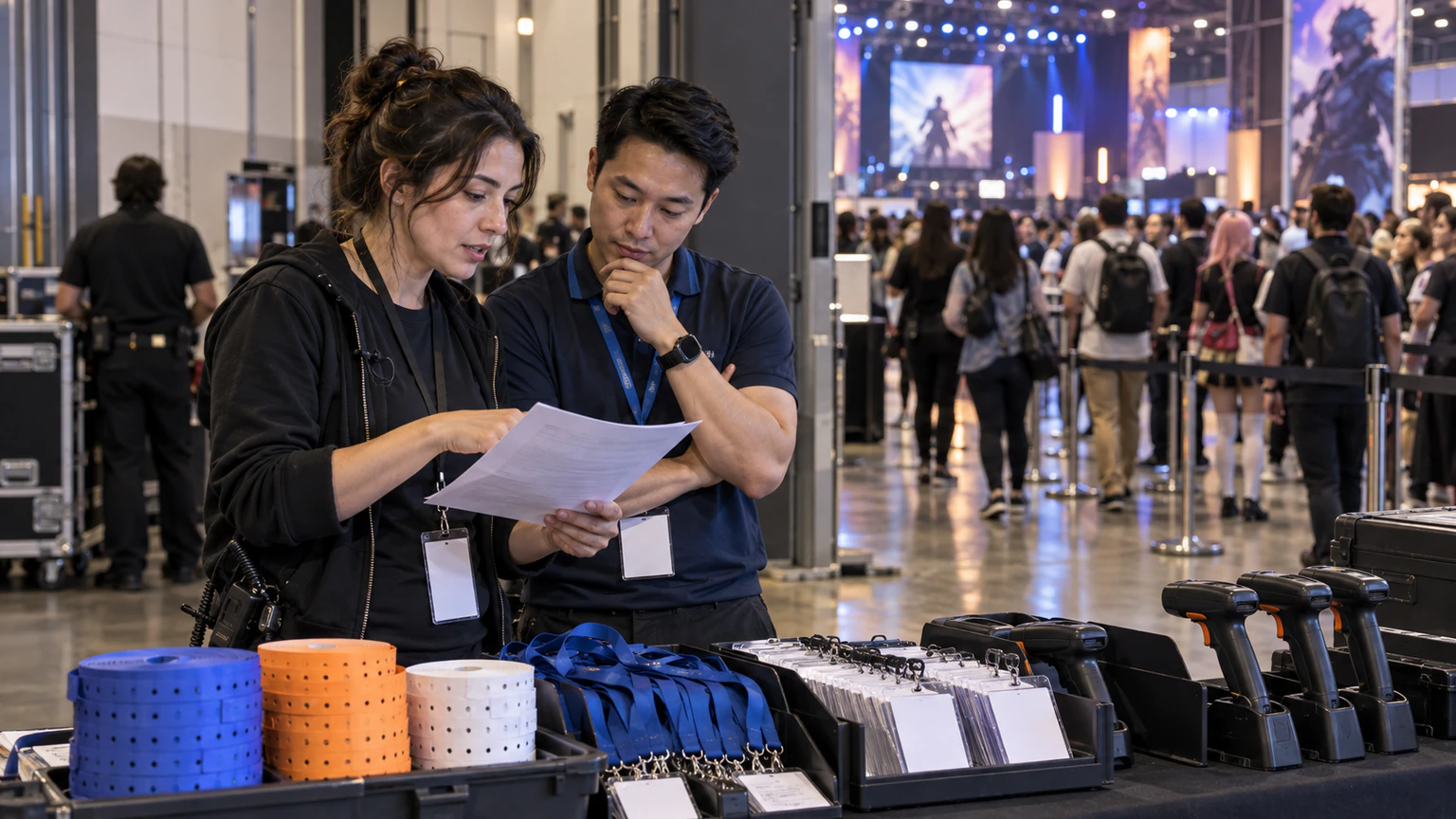
- check-in is fast enough that first meetings are not delayed
- agenda updates are current
- staff know where to direct different attendee types
- post-event reporting helps measure who actually showed up
None of this sounds glamorous. All of it affects whether people feel the event is a productive place to invest time.
At long-running trade shows, these basics become even more important because expectations rise with reputation. Returning attendees compare this year not just to competitors, but to the event's own history.
What exhibitors and associations can learn from mature shows
The lesson is not only for organizers.
Exhibitors at established trade conferences should think beyond booth presence and ask how they support relationship continuity. Associations should ask whether their programming reinforces the real meeting needs of the community.
Useful questions include:
- Are we giving our team enough structure to meet the right people?
- Do we know which attendee groups matter most to us?
- Are we treating media, buyers, members, and partners differently where needed?
- Do we have a follow-up plan strong enough to justify attendance next year?
Trade show networking value is shared. Organizers create the environment, but participants also shape whether the ecosystem stays worth returning to.
A simple review framework for event teams
If you want to assess whether your event is building long-term networking value, review it in five parts:
- Audience quality: Are the right people attending in the right proportions?
- Meeting design: Does the schedule create real space for useful interaction?
- Information clarity: Can participants quickly understand who is present and what is happening?
- Operational reliability: Do registration, check-in, staffing, and communications support confidence?
- Return logic: Is there a clear reason for participants to come back next year?
If several of those answers are weak, the event may still be busy, but its long-term networking engine may be less healthy than it appears.
Final thought
A 30-year trade show milestone is not just a branding achievement. It is an operational signal.
Some events last because they keep helping industries reconnect efficiently, year after year, through formats participants trust. That kind of trust is built through attendee quality, schedule design, clear information, and disciplined event delivery.
For organizers, the takeaway is straightforward: if you want networking to remain valuable over decades, treat it as an outcome of event operations, not as a happy byproduct of having a crowd.