Not every event revenue opportunity needs to look like a sponsorship package or a larger ticket price.
Sometimes the more useful question is this: what on-site experience would attendees, guests, or visitors actually pay for, queue for, photograph, remember, and talk about afterwards?
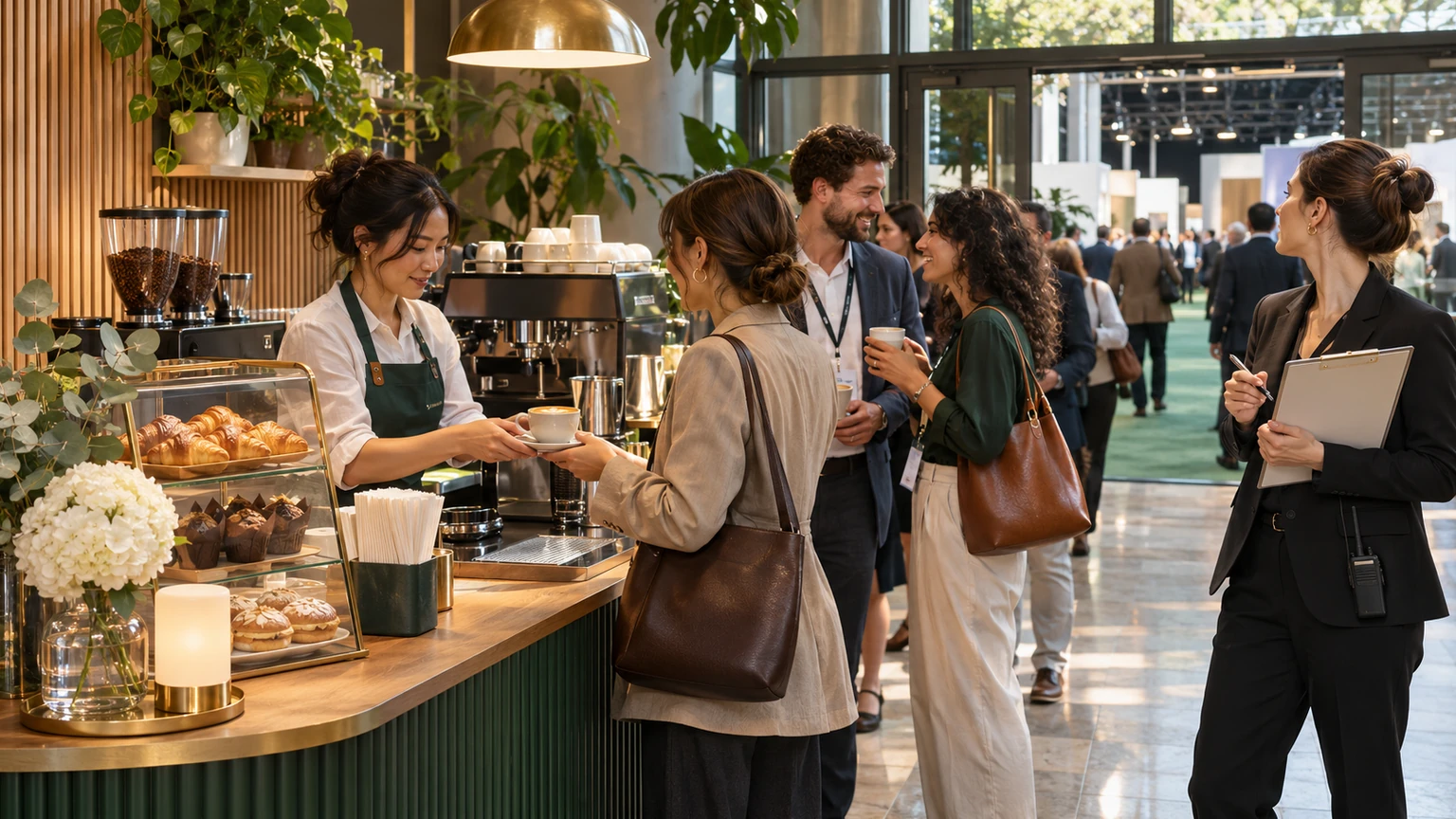
The source idea behind this article points to reported examples including Black Truffle Windows, Christmas in October, and the MacKenzie-Childs Café. The safe signal for event teams is not that one format is guaranteed to work. It is that coffee-house pop-ups and premium activations continue to attract attention as experiential revenue plays.
For organisers, venues, and brand partners, the practical challenge is turning that attention into something commercially useful and operationally manageable.
A premium activation only becomes a revenue stream when the experience, staffing, space, and commercial model work together.
Why this matters for event operations
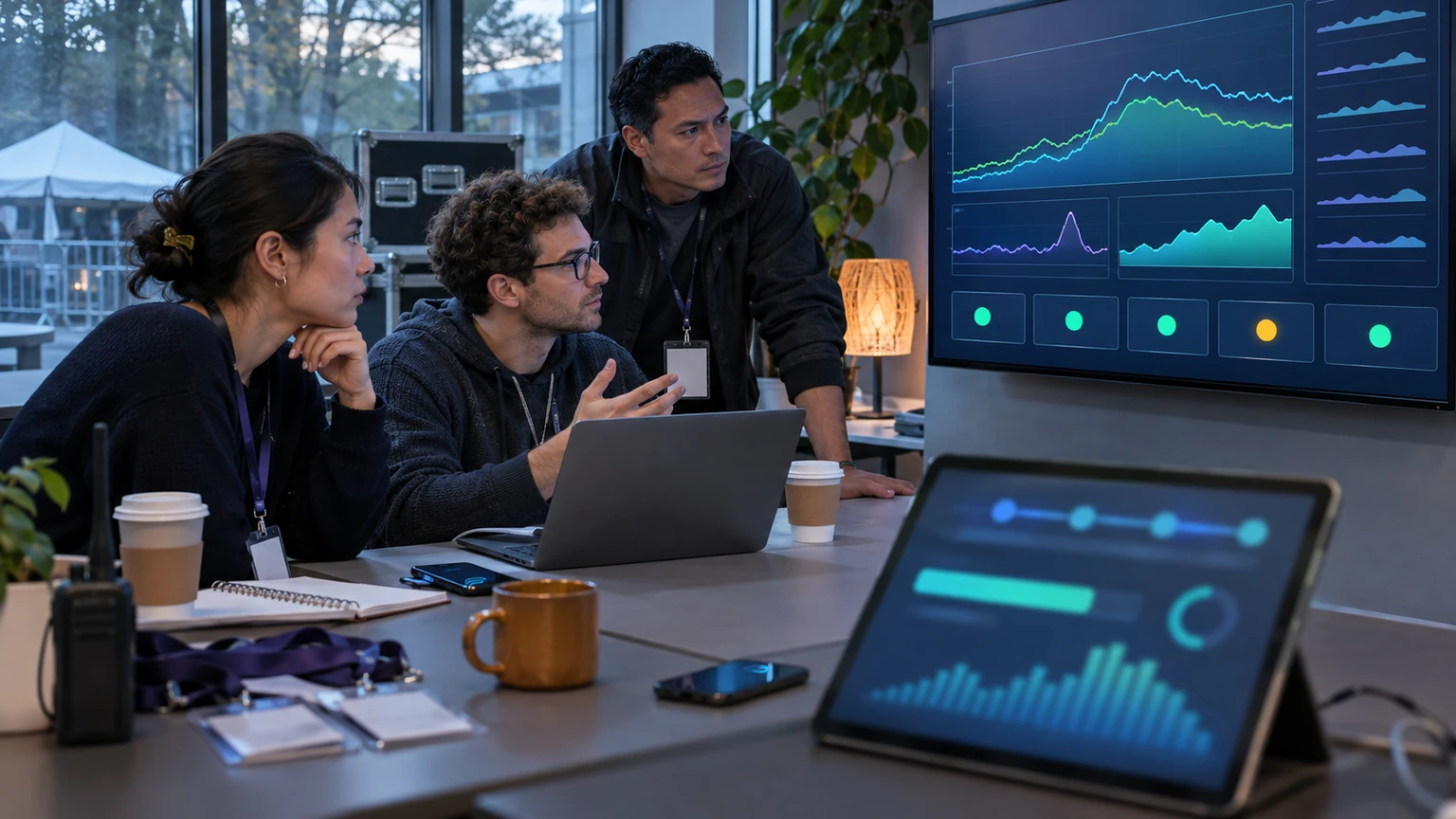
Pop-ups and branded cafés can look like marketing ideas first. In practice, they are operating models.
If the concept is strong but the delivery is weak, teams usually feel it quickly:
- queues build in the wrong places
- service slows during peak periods
- footfall blocks nearby exhibitors or entrances
- stock runs out too early
- brand expectations rise beyond what the set-up can deliver
- revenue underperforms because the experience was not priced or packaged clearly
That is why event teams should treat premium activations as commercial units with a service design, not as decorative add-ons.
What the public signal tells us, and what it does not
From the source idea provided, the confirmed signal is narrow but useful: experiential concepts such as coffee-house pop-ups and premium activations are appearing in public coverage as noteworthy brand and event experiences.
That is enough to support a grounded discussion about how these formats may function as event revenue opportunities.
What this does not confirm on its own is:
- the exact commercial results of the examples mentioned
- which pricing model was used in each case
- that every event audience wants a café-style activation
- that premium positioning automatically leads to profit
- that a visually strong concept is easy to run on site
That distinction matters. An attractive activation can still fail commercially if the audience fit, throughput, or partner model is wrong.
Evidence-aware organisers should treat high-profile activation examples as market signals, not plug-and-play templates.
Why these activations can create revenue at events
The appeal is straightforward. A well-placed café or premium pop-up can do more than fill space. It can combine spend, sponsorship value, dwell time, and social visibility in one format.
Depending on the event model, revenue may come from several directions:
- direct attendee spend on food, drink, or exclusive items
- brand partnership fees tied to ownership of the experience
- space rental or concession arrangements
- premium ticket inclusions or VIP upgrades
- cross-promotion with exhibitors, retail partners, or local vendors
Not every event should pursue all of these. The point is to define the revenue logic before approving the concept.
Start with audience behaviour, not aesthetics
Many premium activations get approved because they look distinctive in a deck. That is not enough.
The stronger starting point is audience behaviour:
- Will people realistically stop here?
- Do they have enough dwell time to use it?
- Are they likely to spend on impulse, plan purchases, or expect inclusion?
- Does the event already have food and beverage habits that this concept fits?
- Will the activation attract the right segment, not just any traffic?
A business conference with short breaks, a consumer exhibition with long browse periods, and a premium shopping event may all respond differently to the same concept.
If attendee flow does not support pause-and-spend behaviour, the activation may photograph well but trade poorly.
Choose the right revenue model early
One of the most common mistakes is discussing the build before agreeing how the activation makes money.
In practice, event teams should decide whether the pop-up is primarily:
- a direct sales unit
- a sponsor-funded experience
- a concession partnership
- a premium hospitality feature
- a hybrid model with shared upside
Each option changes how success should be measured.
A sponsor-funded café may be justified by visibility, guest engagement, and content value. A sales-led pop-up needs margin, volume, and service speed. A VIP add-on needs perceived exclusivity and operational consistency.
If the model is unclear, ownership becomes unclear too.
Space planning matters more than most teams expect
Café-style activations are spatially demanding. They need more than a good backdrop.
Before confirming the idea, teams should assess:
- queueing space
- service counters and back-of-house needs
- power, water, waste, and cleaning requirements
- seating or standing zones, if relevant
- sightline impact on nearby stands or sponsor areas
- delivery access and restocking routes
- noise and smell impact on the wider event environment
These details shape both the guest experience and the commercial return. Poor placement can suppress spend, create friction with exhibitors, or push staffing costs up.
Premium only works when service quality matches the promise
Premium positioning creates operational pressure. If the brand story suggests craft, indulgence, exclusivity, or design-led hospitality, the delivery has to feel deliberate.
That usually means tighter control over:
- staff briefings
- presentation standards
- menu or product simplicity
- peak-time service procedures
- stock forecasting
- cleanliness and reset speed
In other words, the more elevated the promise, the less room there is for messy execution.
This is especially important when the activation is tied to a premium retail or lifestyle brand. Guests may judge the entire partner relationship through a very short service interaction.
How organisers should evaluate brand fit
Not every sponsor should run a café, and not every café concept deserves sponsor support.
A better filter is to ask whether the activation helps all sides at once:
- the attendee gets a useful or enjoyable experience
- the brand gets meaningful association and visibility
- the organiser gets revenue or stronger event value
- the venue can support delivery without operational strain
If one side benefits while the others absorb the complexity, the model is usually fragile.
Good brand fit is often less about category and more about coherence. The experience should feel natural within the event environment, not forced in for novelty alone.
What organisers should prioritise first
For teams exploring this category, a simple priority order helps:
- Define the commercial goal.
- Check audience fit and likely demand.
- Assess venue constraints and service requirements.
- Choose the partner model and responsibilities.
- Limit the concept to something the team can actually operate well.
That sequence matters. Starting with design references or trend examples usually leads to avoidable rework.
Where teams should be careful
These activations can create value, but they also carry predictable risks.
- Overbuilding for the audience size: a premium set-up with weak footfall is expensive theatre.
- Underestimating service throughput: long waits can reduce spend and hurt the wider event experience.
- Ignoring nearby stakeholders: exhibitors and venue teams may be affected by crowding, waste, or diverted traffic.
- Confusing buzz with revenue: a busy-looking activation does not always produce strong commercial results.
- Making the offer too broad: simpler menus and clearer purchase paths are often easier to run profitably.
What good looks like
A strong event pop-up or branded café usually feels easy from the guest side and tightly managed behind the scenes.
People can understand what it is, why it is there, how to use it, and what makes it worth their time or money. Staff can serve consistently. Partners know what success means. The surrounding event does not suffer.
Most importantly, the activation fits the event's pace. It supports dwell time where dwell time is useful, and it moves quickly where speed matters.
What this means for event teams
Coffee-house pop-ups and premium activations are worth attention because they sit at the intersection of revenue, experience, and partnership value.
But they should not be treated as automatic wins or copied blindly from headline examples. The operational questions come first: who is it for, how does it earn, what does it require, and can the event deliver it well?
If organisers can answer those questions clearly, a premium activation can become more than a nice feature. It can become a practical revenue stream with a stronger role in the event model.