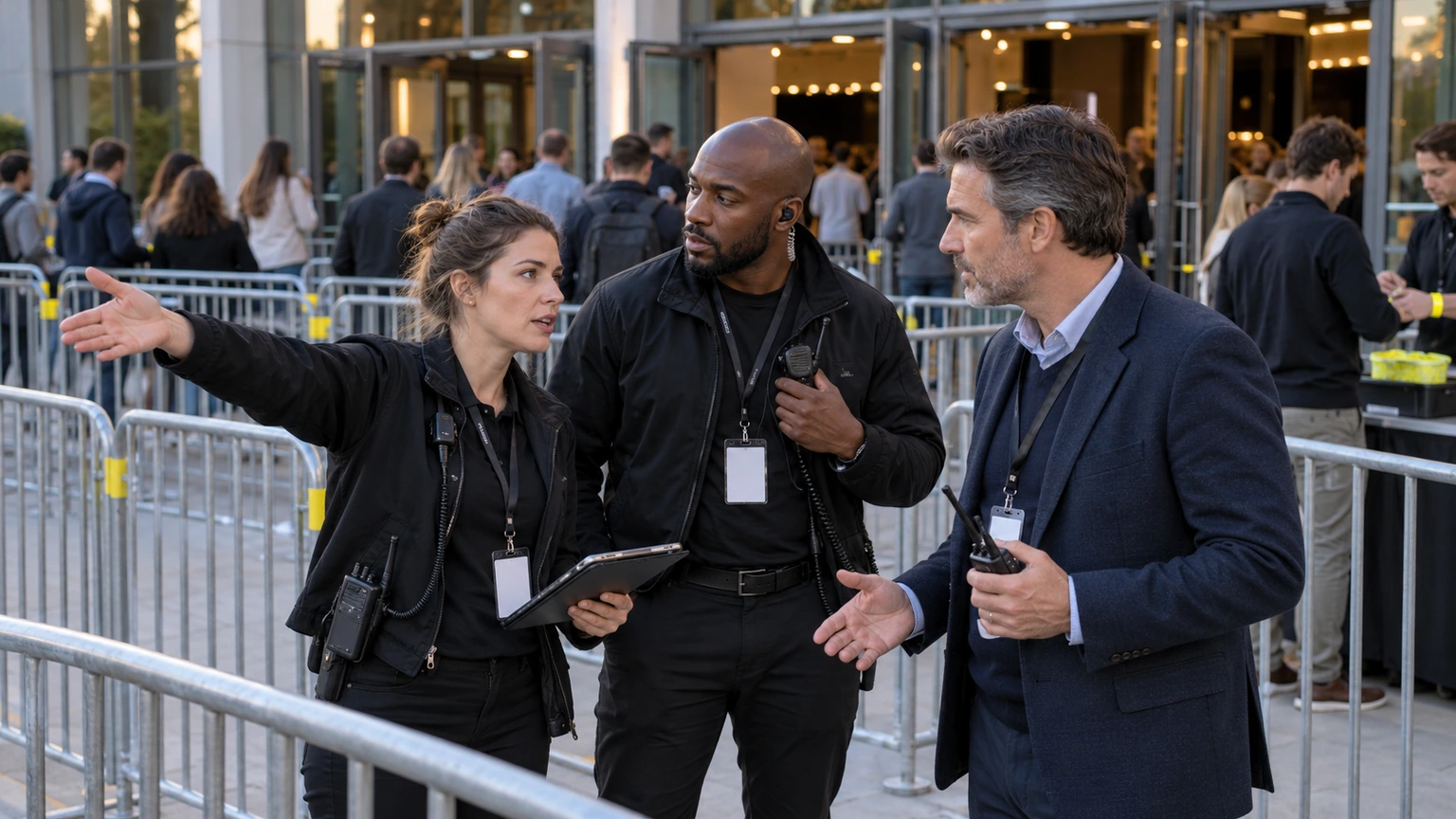
Crowd safety is one of the clearest areas where event operations, venue readiness, and partner quality meet in real time.
A useful public signal here is the reported partnership between AEV and Showsec around crowd management. That matters because it highlights how seriously venues, organisers, and security specialists are treating the need for structured crowd planning rather than reactive incident handling.
For event operations teams, security leads, and venue managers, the practical question is not whether crowd management matters. It is how to evaluate the right mix of technology, partners, procedures, and accountability before live pressure exposes weak points.
Good crowd management is rarely one tool or one contractor. It is an operating system made up of planning, communication, staffing, visibility, and decision-making under pressure.
Why this matters for event operations
Most event failures around crowd flow do not begin with a dramatic incident. They start with smaller operational gaps: poor ingress design, unclear queue ownership, weak radio discipline, limited visibility on congestion, bad timing between programme moments, or slow escalation when a space begins to fill.
That is why crowd management should be assessed as a cross-functional operating issue. It affects:
- entry and exit planning
- queue design and supervision
- security staffing and deployment
- communications between organisers, venues, and contractors
- response to surges, bottlenecks, or changing conditions
- attendee confidence and perceived safety
At busy conferences, exhibitions, festivals, sports-adjacent events, and public activations, these pressures can shift quickly. A plan that looks fine on paper may still fail if roles are unclear or if situational awareness is weak on the ground.
What the public signal tells us, and what it does not
From the source idea provided, the confirmed signal is narrow but useful: AEV has reportedly teamed up with Showsec in a crowd management partnership.
That is enough to support a grounded discussion about why partner ecosystems matter in crowd safety, and how event teams should assess vendors more carefully.
What this does not confirm on its own is:
- which exact technologies are being deployed
- how responsibilities are divided between venue teams and security partners
- what operating model is used across different event formats
- what measurable safety or flow outcomes have already been achieved
- whether the partnership changes training, reporting, or live escalation procedures in a specific way
That distinction matters. The announcement signals strategic importance. It does not justify assuming one exact setup, one exact product stack, or one proven result.
Evidence-aware planning starts with the visible signal that crowd management is being prioritised, then tests each vendor and workflow against real site conditions.
What event teams should evaluate first
1. Risk profile before tools
Before comparing vendors, define the event's crowd risk profile. A large seated conference, a standing concert, a city-centre fan zone, and a trade show with timed keynote surges do not create the same demands.
Start with practical questions:
- Where are the likely pressure points?
- When do peaks happen?
- Which attendee groups behave differently?
- Where could queues spill into unsafe or disruptive areas?
- What happens if weather, transport, or programme timing changes attendance patterns?
If this foundation is vague, vendor selection often becomes too feature-led and not operationally grounded enough.
2. Decision visibility during live operations
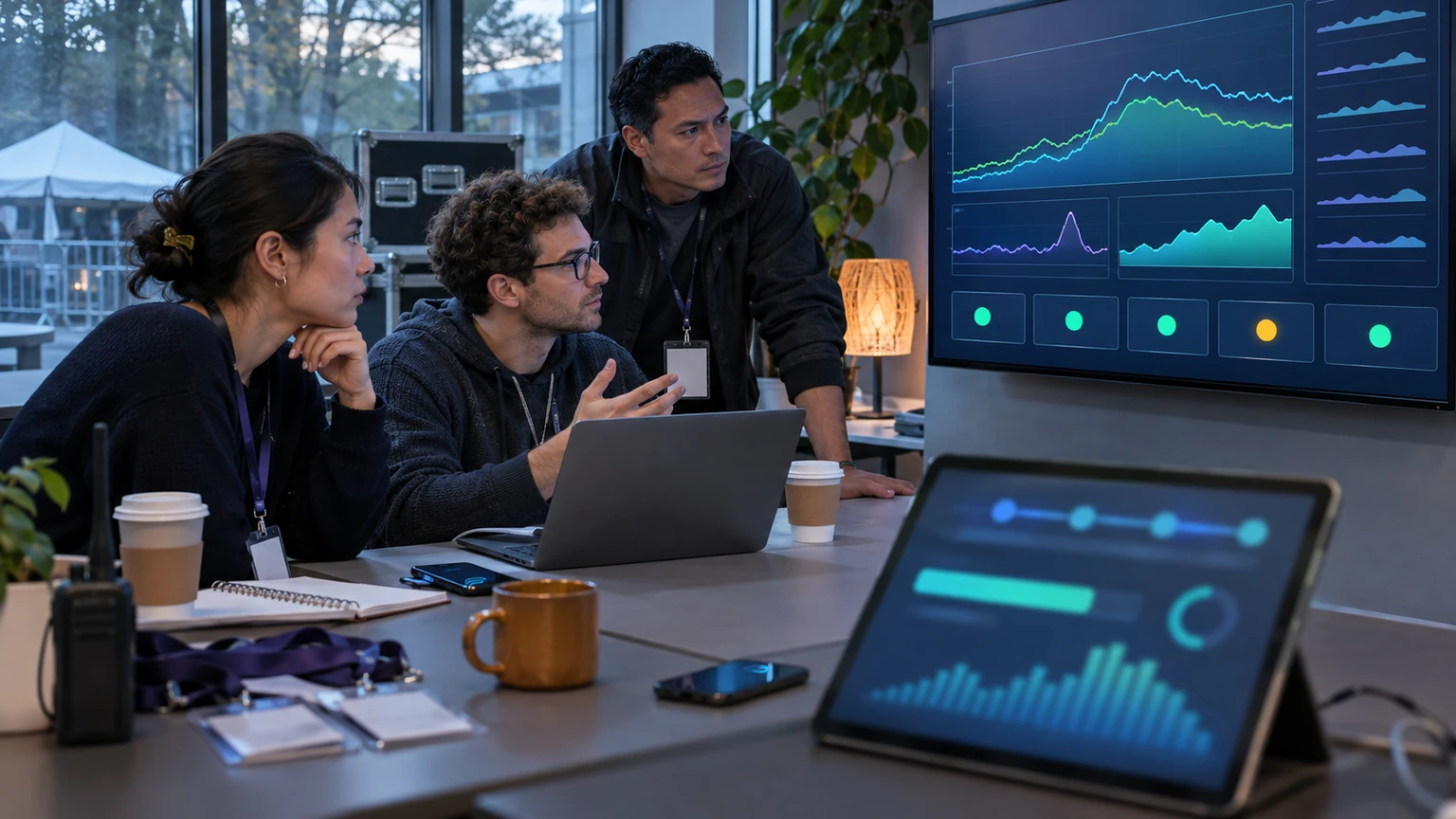
Crowd management tools are only useful if they help teams see what matters early enough to act. Whether the input comes from staff reports, control room processes, sensors, ticketing data, CCTV review, or radio updates, the real test is response value.
Ask vendors and partners:
- What signals indicate rising congestion?
- How are issues escalated?
- Who sees what, and how fast?
- Can frontline teams act without waiting for too many approvals?
- How are false alarms or ambiguous reports handled?
The goal is not more dashboards for their own sake. It is faster, clearer decisions.
3. Operational fit with the venue and event format
A crowd management setup that works in one venue may not transfer well to another. Event teams should assess how well a partner understands route widths, holding areas, gate layouts, emergency egress, transport interfaces, and neighbouring public space.
This is especially important when responsibility is shared across:
- the organiser
- the venue
- the security contractor
- stewarding teams
- local authorities or external responders
If roles overlap without clear authority, confusion appears exactly when speed matters most.
How to compare crowd management partners more practically
Look beyond headline credibility
Brand recognition can be reassuring, but event teams still need to test how a partner will actually operate on their event. A strong partner should be able to explain not just capability in general terms, but how planning turns into live execution.
Useful areas to compare include:
- experience with similar event formats and crowd behaviour
- quality of pre-event planning and site review
- clarity of staffing structures and supervision
- incident escalation methods
- ability to coordinate with venue operations and production teams
- post-event reporting discipline
A partner that communicates clearly before the event usually performs better when conditions change during it.
Test the handoffs, not just the contract
Some of the biggest crowd management failures happen in the spaces between teams. For example, one group may notice growing density, but another group controls signage, access points, or announcements.
During evaluation, ask for practical examples of handoffs:
- Who closes or opens a route?
- Who authorises queue redirection?
- Who communicates with attendees?
- Who records the decision and reason?
- Who informs adjacent teams affected by the change?
If those answers are uncertain in a planning meeting, they will likely be worse during live pressure.
Check whether training is role-specific
Not everyone in the operation needs the same information. Control room staff, stewards, registration teams, security supervisors, and floor managers all need different decision cues.
Good partner ecosystems usually support training that reflects those differences. Generic briefings may satisfy a compliance step, but they do not always prepare teams for crowd behaviour on a real site.
Where technology can help most
Event teams should be careful not to frame crowd safety as a technology purchase alone. Still, some forms of technology can be valuable when they improve visibility, coordination, or response timing.
In practice, the most useful support often sits in areas such as:
- monitoring entry volumes and flow patterns
- supporting communication between operational teams
- tracking incidents and escalation status
- improving route clarity and attendee messaging
- creating cleaner records for debrief and future planning
The main question is simple: does the technology help the team act earlier, more clearly, or more consistently?
If not, it may add complexity without adding control.
Where organisers should be careful
Do not confuse security presence with crowd strategy
More personnel does not automatically mean better crowd management. Without defined deployment logic, communication standards, and route planning, extra staffing can still leave blind spots.
Do not assume data equals understanding
Even when teams have live information, they can still misread what it means. A queue is not just a line length problem. It may reflect credential checks, bag policy confusion, programme timing, nearby obstructions, or poor attendee information.
Do not separate crowd planning from programme planning
Crowd pressure often comes from event design decisions. Session release times, headline speaker locations, exhibition demos, catering placement, and transport scheduling all influence flow. If crowd planning begins too late, teams are left managing consequences rather than reducing causes.
Operational questions organisers should answer early
- What are the top three crowd pressure scenarios for this event?
- Where is crowd density most likely to build, and when?
- Which team owns each decision if conditions deteriorate?
- How will the organiser, venue, and security partner share live information?
- What attendee messages are pre-written for rerouting or delay situations?
- How will the team debrief and capture lessons after the event?
These questions are basic, but they often reveal whether the operating model is truly ready.
A practical checklist for evaluating crowd management vendors and partners
- Can they explain their approach for your specific event type?
- Do they understand the venue's real constraints and flow points?
- Are responsibilities clear across organiser, venue, and contractor teams?
- Can they describe escalation paths in plain operational terms?
- Do they show how technology supports decisions rather than replaces judgment?
- Is training tailored to different on-site roles?
- Can they support both prevention and response?
- Is post-event reporting structured enough to improve the next event?
What good looks like
Good crowd management is usually quiet. Attendees move without confusion, queues stay legible, staff know who is in charge, messages stay consistent, and small issues are corrected before they become visible problems.
That outcome normally comes from disciplined preparation: the right partner mix, realistic scenario planning, clear communication structures, and tools that support action rather than distract from it.
What this means for event teams
The reported AEV and Showsec partnership is a useful reminder that crowd management is not a side function. It is a core part of event delivery, especially where attendance volume, public access, or programme surges create operational risk.
For organisers and venues, the practical takeaway is clear: evaluate crowd management vendors and technology as part of one joined-up operating model. Focus on visibility, decision rights, handoffs, and event-specific readiness.
That is usually where safer events are built, long before the doors open.