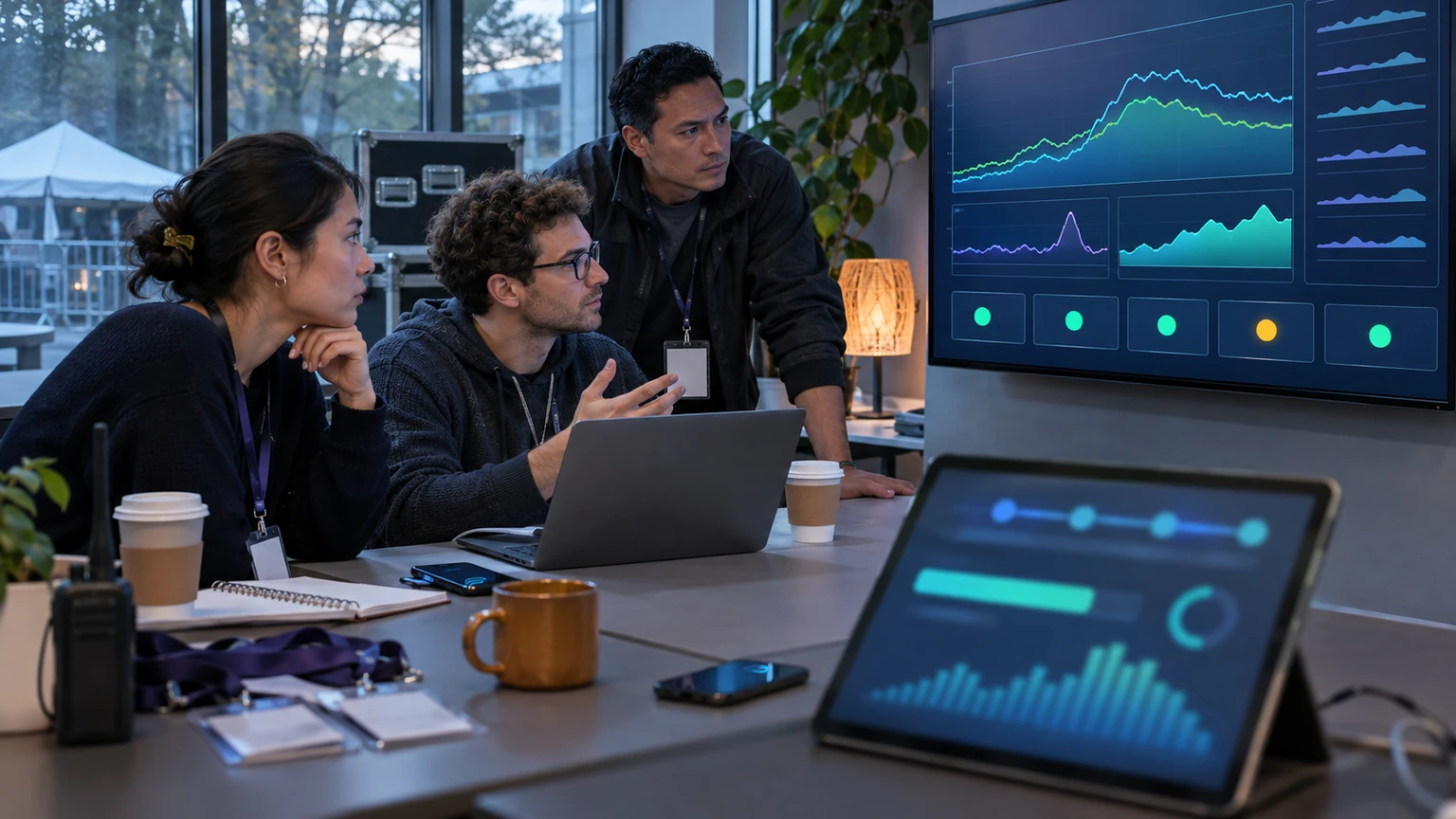
Event apps are often treated as service layers: agendas, maps, alerts, speaker profiles, and attendee messaging. But they can also become revenue touchpoints, especially when organisers want to present timely upgrades, add-ons, and sponsor-led offers inside the attendee journey.
A useful public signal here is the reported launch of an agentic platform by Grip, positioned to help grow revenue from events. That matters because it suggests stronger market interest in using AI-assisted workflows to support commercial outcomes, not just attendee engagement.
For organisers, exhibitors, and conference producers, the practical question is not whether automation sounds impressive. It is how automated upsell paths can be designed in event apps so they are relevant, well-timed, and operationally manageable.
An upsell path works best when it feels like useful guidance for the attendee, not an interruption added for the organiser.
Why this matters for event operations
Revenue decisions inside an event app affect more than sales. They also affect support demand, sponsor delivery, agenda access, attendee communication, and the handoff between digital actions and on-site execution.
If upsell flows are poorly planned, problems usually appear in familiar places:
- offers shown to the wrong audience
- confusing upgrade rules
- manual follow-up for changes that should be automatic
- support tickets about access, pricing, or entitlements
- sponsor placements that feel disconnected from attendee intent
- missed opportunities because prompts arrive too late
That is why upsell automation should be treated as an operating model decision, not just a feature idea.
What the public signal tells us, and what it does not
From the source idea provided, the confirmed signal is narrow but relevant: Grip has reportedly launched an agentic platform intended to help grow revenue from events.
That is enough to support a grounded discussion about how agentic platforms may influence event app monetisation, upsell design, and organiser workflow.
What this does not confirm on its own is:
- the exact product workflow used in every event app scenario
- which specific upsell triggers or channels are included
- what measurable revenue lift has already been achieved
- how much oversight organisers still need in setup and approval
- whether the same model suits conferences, expos, hosted events, and association meetings equally well
That distinction matters. A launch announcement is a real market signal, but it is not evidence for broad performance claims or assumptions about one standard automation model.
Evidence-aware event teams should use AI platform news to improve their commercial design, not to assume automation can fix a weak offer.
What an automated upsell path usually involves
In practical event terms, an upsell path is the sequence of moments where an attendee, exhibitor, or sponsor is offered something additional that matches their likely needs.
Inside an event app, that could include:
- ticket or pass upgrades
- paid access to premium sessions or workshops
- sponsored recommendations
- meeting-related add-ons
- enhanced exhibitor or partner visibility
- post-registration offers tied to role or interest
An agentic approach suggests more automation around deciding when to surface those offers, to whom, and in what context. But even if the technology becomes more capable, the commercial logic still needs to come from the organiser.
Start with the commercial journey, not the prompt
Many teams start by asking where to place an upgrade button. The better question is where a commercial offer naturally fits within the attendee journey.
Map the flow first:
- What has the user already done?
- What are they likely trying to do next?
- Which offer would genuinely help them at that moment?
- What happens operationally if they accept?
- Who owns fulfilment, support, and reporting?
For example, an attendee browsing a full event schedule may be more receptive to a workshop upgrade than someone still trying to find check-in details. Timing matters because relevance determines whether a prompt feels useful or intrusive.
Where agentic automation could help most
1. Segmenting offers more precisely
Not every attendee should see the same commercial path. A first-time attendee, hosted buyer, VIP guest, expo visitor, and exhibitor representative may all require different treatment.
A more automated system may help organisers apply segmentation logic consistently, such as:
- role-based offers
- pass-type restrictions
- interest-based recommendations
- timing linked to registration stage or in-app behaviour
- sponsor-backed offers relevant to specific content or categories
The operational advantage is not only revenue potential. It is the reduction of irrelevant prompts that weaken trust in the app.
2. Triggering offers at more useful moments
Upsell value often depends on when the message appears. A general promotion sent to everyone at once may underperform compared with a prompt tied to an action the attendee has just taken.
Useful trigger points can include:
- after registration is complete
- when a user saves sessions in a premium track
- when an attendee views sponsor or exhibitor categories repeatedly
- before a deadline for limited-capacity add-ons
- during pre-event planning, rather than during live on-site confusion
The key is to keep the logic understandable. Organisers should be able to explain why a certain prompt appears and what happens after acceptance.
3. Reducing manual follow-up
One of the biggest operational costs in event monetisation is not the offer itself. It is the back-and-forth after someone says yes.
If an upsell path creates a paid change, access upgrade, sponsor lead route, or premium entitlement, teams need the process behind it to work cleanly. Otherwise the app creates demand that operations cannot fulfil efficiently.
Automation is most useful when it reduces repeat manual tasks such as:
- confirming eligibility
- applying access changes
- notifying the right team
- updating attendee status
- recording uptake for reporting
What organisers should design before activating automation
Before any agentic or AI-assisted layer is added, organisers should define the commercial rules in plain language.
That usually means agreeing:
- which offers exist
- who can see them
- when they appear
- what inventory or capacity limits apply
- whether approval is automatic or manual
- what support process exists if something goes wrong
Without that baseline, automation simply scales inconsistency faster.
Where event apps can create upsell value without overreaching
The strongest event app upsell paths are usually modest, clear, and connected to real attendee actions. They do not try to turn every screen into a sales opportunity.
In most cases, better practice looks like this:
- few offers, but better targeted
- clear wording on what the attendee gets
- simple acceptance steps
- visible confirmation after purchase or upgrade
- accurate entitlement updates inside the event experience
- easy fallback to human support when needed
This matters because event apps already carry a lot of functional responsibility. If monetisation overwhelms usability, teams may damage the very engagement they are trying to monetise.
Where organisers should be careful
There are several common risks when teams become excited about automated revenue paths.
- Over-personalisation without clarity: if attendees do not understand why they are seeing an offer, trust can drop.
- Weak fulfilment: selling access or upgrades is easy compared with delivering them reliably.
- Too many prompts: excessive commercial messaging can reduce app usefulness.
- Poor sponsor fit: sponsor-backed recommendations only work if they are relevant and clearly integrated.
- No review loop: if organisers do not monitor uptake, complaints, and drop-off points, the automation cannot improve safely.
In short, the commercial layer must stay accountable to the attendee experience and the event operations team.
A practical review model for event teams
If you are assessing whether to automate upsell paths in an event app, use a simple review model:
1. Confirm the offer
Is there something genuinely valuable to upsell, or are you trying to force revenue from weak add-ons?
2. Confirm the audience
Which attendee or exhibitor segments are most likely to benefit from that offer?
3. Confirm the trigger
At what moment in the journey does the offer make operational and commercial sense?
4. Confirm the fulfilment path
What systems, people, or approvals need to update once the offer is accepted?
5. Confirm the review metrics
How will you evaluate relevance, conversion, support impact, and delivery quality?
This approach keeps the focus on execution, not just technology language.
What good looks like
Good looks like an attendee receiving a relevant offer at a sensible moment, accepting it easily, and seeing the result reflected without confusion.
Good also looks like an organiser being able to answer basic operational questions quickly:
- Who saw the offer?
- Who accepted it?
- Did fulfilment happen correctly?
- Did support demand increase or decrease?
- Was the experience still useful for the attendee?
If those answers are unclear, the automation may be more ambitious than the operating model can currently support.
What this means for event teams
The reported launch from Grip is a sign that agentic platforms are entering the event revenue conversation more directly. For organisers, that does not mean every event app should suddenly become an automated sales engine.
It does mean the commercial journey inside event technology deserves more deliberate planning. Teams that can connect relevant offers, clear rules, and clean fulfilment may find real value in automation. Teams that skip the operational groundwork are more likely to create friction than growth.
Used well, automated upsell paths can support event revenue. But the winning factor will still be the same: a practical event model, designed around audience needs and delivered with operational discipline.