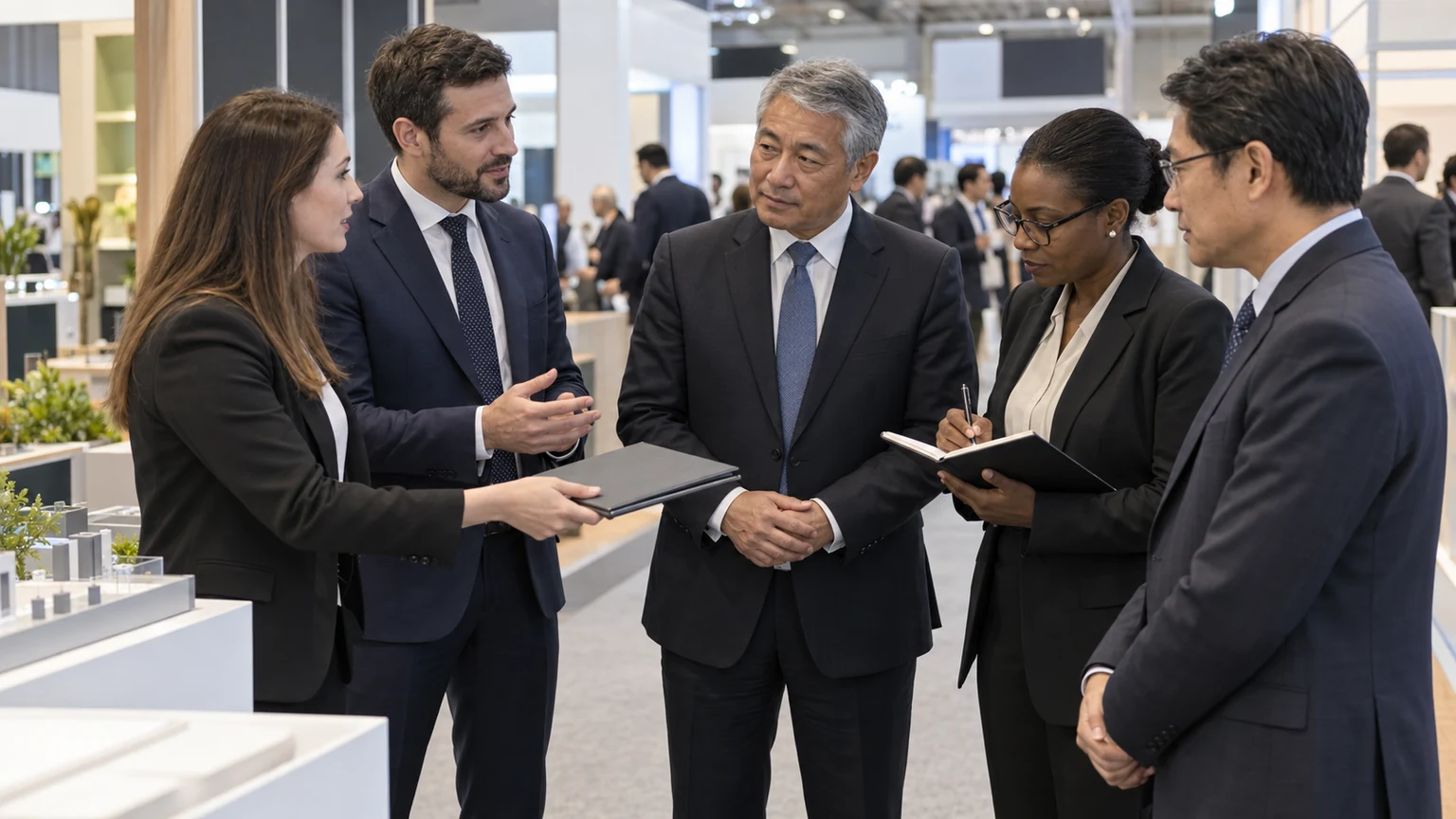
Official delegations can be some of the highest-value visitors at an international trade show.
They may represent government bodies, tourism authorities, trade agencies, chambers, or public-private missions exploring partnerships, investment, sourcing, or market access.
That creates obvious opportunity for exhibitors. It also creates a different operating environment from a normal stand conversation.
Recent public reporting about a parliamentary delegation exploring new tourism markets at a Paris trade show is a useful reminder of that dynamic. It shows why exhibitors and organizers should prepare for delegation engagement as a distinct workflow, not as standard footfall.
A delegation visit is not just a booth interaction. It is a compressed diplomatic, commercial, and reputational moment.
Why this matters
Many exhibitors say they want better ROI from trade shows, but delegation meetings often remain underplanned.
That usually leads to familiar problems:
- the wrong staff member handles the conversation
- key documents are not ready
- there is no clear follow-up owner
- compliance or protocol questions appear too late
- the visit produces visibility, but not commercial progress
For organizers, poorly managed delegation activity can also create friction across scheduling, security, exhibitor expectations, and hosted meeting logistics.
The fix is not complicated. It requires structure before, during, and after the event.
What makes official delegations different
Delegations often operate with tighter time windows, more stakeholders, and broader objectives than a typical buyer or prospect meeting.
One group may include policy representatives, advisors, trade officials, media, local hosts, and commercial participants. Not everyone in the group is there for the same reason.
That means exhibitors need to understand what kind of engagement is actually taking place.
Common delegation objectives may include:
- market familiarization
- investment exploration
- supplier discovery
- destination promotion
- government-to-business introductions
- industry relationship building
If an exhibitor treats all of these as the same type of sales meeting, the conversation usually stays too generic.
The strongest delegation outcomes come from matching the message to the mission, not from delivering a polished but broad pitch.
Start with qualification before the show
The best delegation ROI usually comes from work done before the event opens.
Exhibitors should try to learn:
- who is in the delegation
- which organizations they represent
- whether the visit is exploratory or transactional
- what sectors or themes matter most
- who has decision-making authority
- what outcomes would make the meeting successful
Organizers can help by creating clearer delegation profiles and, where appropriate, sharing structured meeting context with participating exhibitors.
Even a short briefing is useful if it helps exhibitors prepare the right staff, language, and materials.
Assign the right booth team, not just the available one
A common mistake is to route delegation visits to whoever happens to be at the stand when the group arrives.
That is risky.
Delegation engagement usually benefits from a deliberate staffing plan. Depending on the context, that may include commercial leadership, regional specialists, partnership managers, or someone who can speak confidently about delivery requirements in the relevant market.
For exhibitors, a simple coverage plan helps:
- one lead spokesperson
- one note-taker or follow-up owner
- one subject specialist available if needed
- one clear escalation path for commercial or legal questions
This is especially important when the discussion touches public procurement, destination partnerships, trade access, or regulated sectors.
Prepare a delegation version of the pitch
Most stands already have a standard event pitch. That is rarely enough.
A delegation-ready version should be shorter, more contextual, and easier to adapt across mixed audiences.
It should answer basic questions quickly:
- what the company does
- why it is relevant to this market or sector
- what partnership models are realistic
- what proof points can be shared credibly
- what the next step would look like
For tourism, destination, and cross-border trade settings, practical relevance matters more than presentation volume.
A concise briefing pack often works better than a heavy sales deck.
Be careful with claims, promises, and sensitivities
Delegation meetings can feel high-profile, which sometimes pushes exhibitors into overpromising.
That is where avoidable risk starts.
Keep claims grounded. Do not imply capabilities, approvals, partnerships, or market readiness that have not been validated. Be especially careful if the conversation touches timelines, government relationships, exclusive arrangements, or public-sector opportunities.
Useful internal checks include:
- which claims the stand team is allowed to make
- which topics require legal or executive follow-up
- which materials have been approved for external sharing
- which jurisdictions create additional compliance concerns
For organizers, this matters too. If delegation programming creates business introduction moments, exhibitors should understand the format and boundaries in advance.
Respect protocol without making the meeting stiff
Not every official visit requires formal ceremony, but delegation meetings usually benefit from better discipline than normal booth traffic.
That may include punctuality, name accuracy, proper introductions, and clarity on who should speak first.
Simple mistakes can weaken the interaction:
- misidentifying a delegate's role
- failing to brief booth staff on the visit order
- letting photographers or bystanders disrupt the conversation
- starting a product demo before understanding the group's purpose
Good protocol is really good preparation. It helps the meeting move smoothly and protects the exhibitor's credibility.
Think beyond the booth visit
Delegation ROI is rarely created in the first conversation alone.
The stand interaction should be treated as one stage in a longer path that may include introductions, follow-up meetings, partner screening, document exchange, and later market development.
Exhibitors should leave the meeting with a practical record of:
- who attended
- what they asked about
- which opportunities were discussed
- what was promised
- what follow-up is required
- who owns the next action internally
Without that, the value of a high-visibility visit fades quickly after the show.
How organizers can improve delegation outcomes
Organizers have a real role here, especially at international trade shows where official visits are part of the event story.
Useful support can include:
- structured meeting scheduling where appropriate
- basic delegation profiles for participating exhibitors
- clear run-of-show information for official visits
- private meeting space for more substantive conversations
- guidance on security, photography, and access control
- post-event reporting standards for hosted meetings
These are operational improvements, not cosmetic ones. They help exhibitors convert attention into measurable outcomes.
Do not ignore compliance and reputational risk
Official delegation engagement may trigger additional review depending on the sector, geography, or type of opportunity discussed.
That does not mean exhibitors should avoid these meetings. It means they should know when extra care is needed.
Areas worth checking internally may include:
- gift and hospitality rules
- anti-bribery and corruption policies
- sanctions and restricted-party screening
- public procurement restrictions
- data-sharing limits
- approval requirements for cross-border agreements
Even where no transaction happens on site, a casual conversation can still create expectations. That is why disciplined note-taking and internal follow-up matter.
A practical playbook for exhibitors
Before the show
- identify which delegations are expected
- prioritize the ones that fit your target markets
- prepare a short market-specific pitch
- brief your stand team on roles and boundaries
- approve materials and claims in advance
- set up a follow-up owner and response timeline
During the show
- confirm names, roles, and meeting purpose
- keep the conversation focused and relevant
- capture questions and commitments accurately
- move deeper discussions to a quieter setting if needed
- avoid vague promises made under pressure
After the show
- send a tailored follow-up quickly
- separate warm visibility from real opportunity
- route legal or compliance questions early
- book the next step while interest is still active
- review what actually converted
What good ROI really looks like
Not every successful delegation interaction ends in an immediate sale.
In many cases, value appears in stages: a qualified introduction, a market access conversation, a follow-up meeting with the right counterpart, or a better understanding of how public and private interests align in that market.
That is why exhibitors should measure more than booth traffic or photo opportunities.
Useful indicators may include:
- number of qualified delegation meetings
- follow-up response rate
- next meetings booked within 30 days
- opportunities advanced to review stage
- partners or agencies identified for market entry
Those signals are more meaningful than visibility alone.
What this means for event teams
Official delegations can raise the value of a trade show for exhibitors, organizers, and destination stakeholders alike.
But that value is not automatic.
It depends on preparation, meeting design, disciplined follow-up, and a realistic understanding of risk. Exhibitors that treat delegation visits as structured commercial moments tend to get more from them. Organizers that support those interactions with better context and workflow design make the whole event stronger.
In short, delegation ROI is usually built through process, not luck.