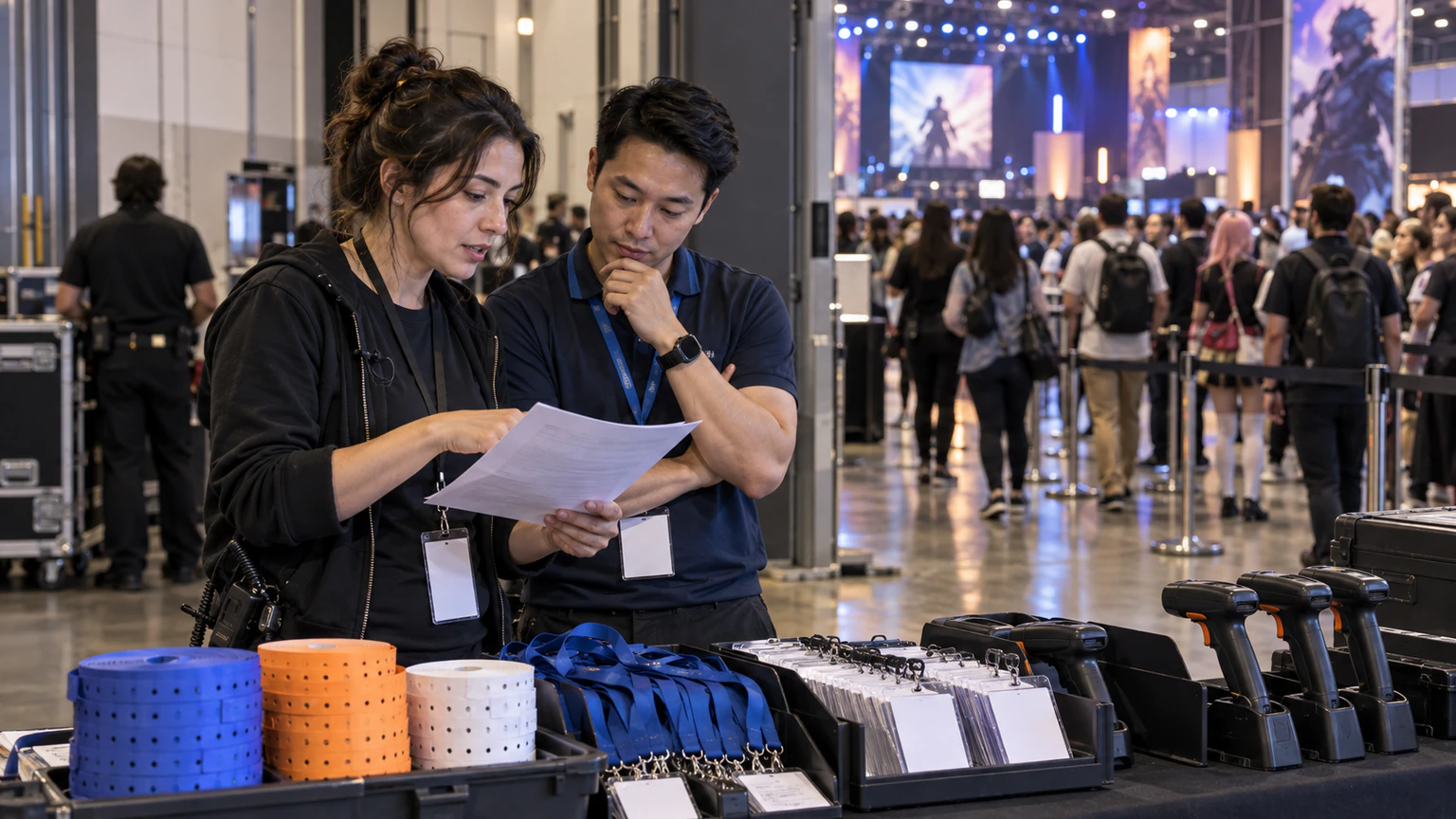

Packaging trade shows are built around practical commercial conversations: suppliers meeting buyers, machinery teams meeting plant operators, and packaging professionals comparing solutions in a short window of time.
That makes lead capture one of the most important workflows on the show floor.
It is also one of the easiest workflows to get wrong.
When exhibitors rely on paper notes, loose business cards, or unstructured conversations, good leads often become weak follow-up. Details get lost. Priorities blur. Sales teams return home with contacts, but not enough context to act quickly.
At a trade show, the lead is not just the contact. It is the context captured with it.
For packaging events, where conversations may involve specifications, production needs, materials, equipment, compliance, or distribution requirements, that context matters even more.
Why this matters
Industry events in packaging tend to attract attendees with defined business goals. They are often sourcing, benchmarking, comparing vendors, or exploring solutions for a real operational need.
That creates a good environment for exhibitors, but only if the handoff from conversation to record is handled properly.
In practice, exhibitors usually need to answer a few simple questions after each stand interaction:
- Who was this person?
- What company do they represent?
- What problem are they trying to solve?
- How serious is the opportunity?
- What should happen next, and when?
If an event app helps exhibitors capture that information consistently, the value of the show becomes easier to prove.
Where lead capture usually breaks down
Many exhibitor teams do not struggle because they lack interest at the stand. They struggle because floor activity is fast, uneven, and hard to document while conversations are happening.
Common problems include:
- staff collecting business cards without notes
- different team members using different qualification standards
- contacts being recorded twice
- urgent prospects mixed in with low-priority scans
- follow-up delayed until several days after the event
- post-show reporting that counts volume, but not quality
This is especially relevant at specialist B2B events. A packaging supplier may have ten useful conversations in an hour, but not all of them deserve the same next step.
Without a structured capture method, exhibitors leave with activity, but not always with usable pipeline data.
What an event app can improve on the show floor
An event app can support lead capture by giving exhibitors a more consistent way to record interactions while the event is still live.
The exact setup will vary by event, but operationally the biggest gains usually come from four areas.
1. Faster contact capture
The first improvement is speed. If stand staff can capture or log a lead quickly, they are more likely to do it properly between conversations.
This reduces the dependence on memory at the end of a busy day.
For organizers, that matters because a cleaner lead workflow improves exhibitor satisfaction. Exhibitors do not just want footfall. They want a usable record of who they met.
2. Better qualification
Simple lead capture is not enough. Exhibitors need a way to distinguish a casual visitor from a buyer with a live requirement.
A practical app workflow should encourage staff to capture short qualifying notes such as:
- product area of interest
- buyer role or influence level
- budget stage
- purchase timeline
- requested follow-up
- specific technical requirement
For packaging events, this is where commercial value improves. A lead connected to machinery replacement, sustainable materials, or production line changes needs more than a name and email address.
3. More consistent team behaviour
Exhibitor teams often include sales staff, regional reps, technical specialists, and managers. Not all of them capture information the same way.
If the event app supports a shared process, teams are more likely to classify leads consistently.
That makes post-show review easier. It also helps sales leadership compare results across staff members and stand shifts with fewer interpretation gaps.
4. Faster follow-up
Lead quality drops when follow-up is slow.
At most trade shows, attendees speak to multiple suppliers in the same category. If exhibitors wait too long, conversations become less distinct and competitors may reach out first.
The operational goal is simple: capture cleanly on-site, follow up while the conversation is still fresh.
Event apps can support that by helping exhibitors leave the venue with a more complete lead list, not a pile of partial notes to reconstruct later.
How organizers should design the lead capture workflow
Good exhibitor lead capture does not happen by accident. Organizers need to treat it as an operational workflow, not just a feature mention in the exhibitor manual.
A practical setup usually starts before the show opens.
Set expectations early
Exhibitors should understand:
- how lead capture works
- who on their team can use it
- what training or onboarding is available
- what data fields matter most
- how they access records after the event
If this information arrives too late, adoption suffers. Busy exhibitors rarely learn a new workflow well during build-up.
Keep the process short
Long forms reduce usage on the stand. The workflow should be brief enough for a live show environment.
That does not mean removing useful fields. It means prioritising the fields that support follow-up decisions.
A simple structure may include:
- contact identity
- company name
- interest category
- priority level
- short notes
- next action
Train exhibitor teams for the real floor environment
Training should not be limited to how to tap through a screen. It should explain how to use the tool during real stand activity.
That includes:
- when to log immediately
- when to capture minimal details and add notes later
- how to avoid duplicate entries
- how to assign urgency
- how to keep records useful for the wider sales team
Short, scenario-based guidance is usually more effective than long documentation.
What exhibitors should capture at packaging events
Lead capture fields should reflect the commercial reality of the sector.
At packaging trade shows, useful notes may include:
- whether the attendee is focused on materials, machinery, design, logistics, or sustainability
- whether the need is exploratory or tied to an active project
- site location or market served
- production scale or expected order volume
- regulatory or specification concerns raised during the discussion
- whether a demo, quote, or technical follow-up was requested
Not every event needs every field. The point is to align lead capture with the sales conversation exhibitors are actually having.
If the captured data is too generic, the post-event team still has to guess what mattered.
How to support exhibitors without overcomplicating the event
Organizers should be careful not to make lead capture feel heavier than it needs to be.
A practical support model often includes:
- a short pre-event guide for exhibitors
- a clear deadline for account setup or access
- a help point or support contact during move-in and show days
- simple instructions for retrieving leads after the event
- a reminder on good follow-up timing
This is less about technology promotion and more about exhibitor enablement.
If exhibitors feel confident using the workflow, they are more likely to see the event as commercially well run.
Common mistakes to avoid
Treating every scan as a qualified lead
Volume is not the same as value. Exhibitors need a way to separate general interest from sales-ready opportunities.
Adding too many required fields
If the process takes too long, stand staff will skip notes or postpone capture until details are forgotten.
Leaving onboarding too late
Exhibitors need time to brief their teams before arrival.
Ignoring post-show handoff
Lead capture is only useful if records can be reviewed and acted on quickly after the event.
Measuring success only by usage rate
High usage can look positive, but organizers should also care whether exhibitors found the captured leads usable and commercially relevant.
What organizers can evaluate after the event
To understand whether the lead capture process worked, organizers can ask exhibitors practical questions such as:
- Was the workflow easy to use on the stand?
- Did staff capture enough detail for follow-up?
- Were leads easy to access after the event?
- Did the process help prioritise prospects?
- What slowed teams down?
This kind of feedback is more useful than broad satisfaction scoring alone.
It helps event teams improve the exhibitor experience in operational terms, especially for future editions of specialist industry shows.
Final thought
Packaging trade shows create commercial value through focused conversations. The more structured the lead capture process, the more of that value survives after the hall closes.
For organizers, the opportunity is straightforward: make it easier for exhibitors to capture the right details, at the right moment, in a format their teams can use.
That is what turns stand traffic into follow-up that actually moves.