Portable booths are easy to dismiss as a small-exhibitor detail. In practice, they can affect floor planning, move-in timing, exhibitor support, signage standards, and the consistency of the on-site experience.
Recent trade show coverage around a 10x10 portable booth aimed at startups and smaller budgets is a useful reminder of what many exhibitors actually need: something affordable, fast to deploy, and realistic for a lean team.
For organizers, that matters because exhibitor experience is not only about premium builds and large sponsors. It is also about whether smaller exhibitors can arrive, set up, operate, and leave without unnecessary friction.
A portable booth is not just a product choice by an exhibitor. It is an operating variable for the event team.
Why this matters
Many shows depend on a mix of anchor exhibitors and smaller brands. Startups, first-time exhibitors, and budget-conscious teams often choose portable stands because they reduce cost and complexity.
That usually means a few practical things:
- faster load-in and load-out expectations
- simpler transport requirements
- lighter dependence on custom build crews
- less tolerance for confusing exhibitor instructions
- greater need for standardized support from the organizer
If the event operations model assumes every booth behaves like a custom build, smaller exhibitors may struggle more than they need to.
What portable booths change operationally
A 10x10 portable booth sounds simple, but it still affects the event plan.
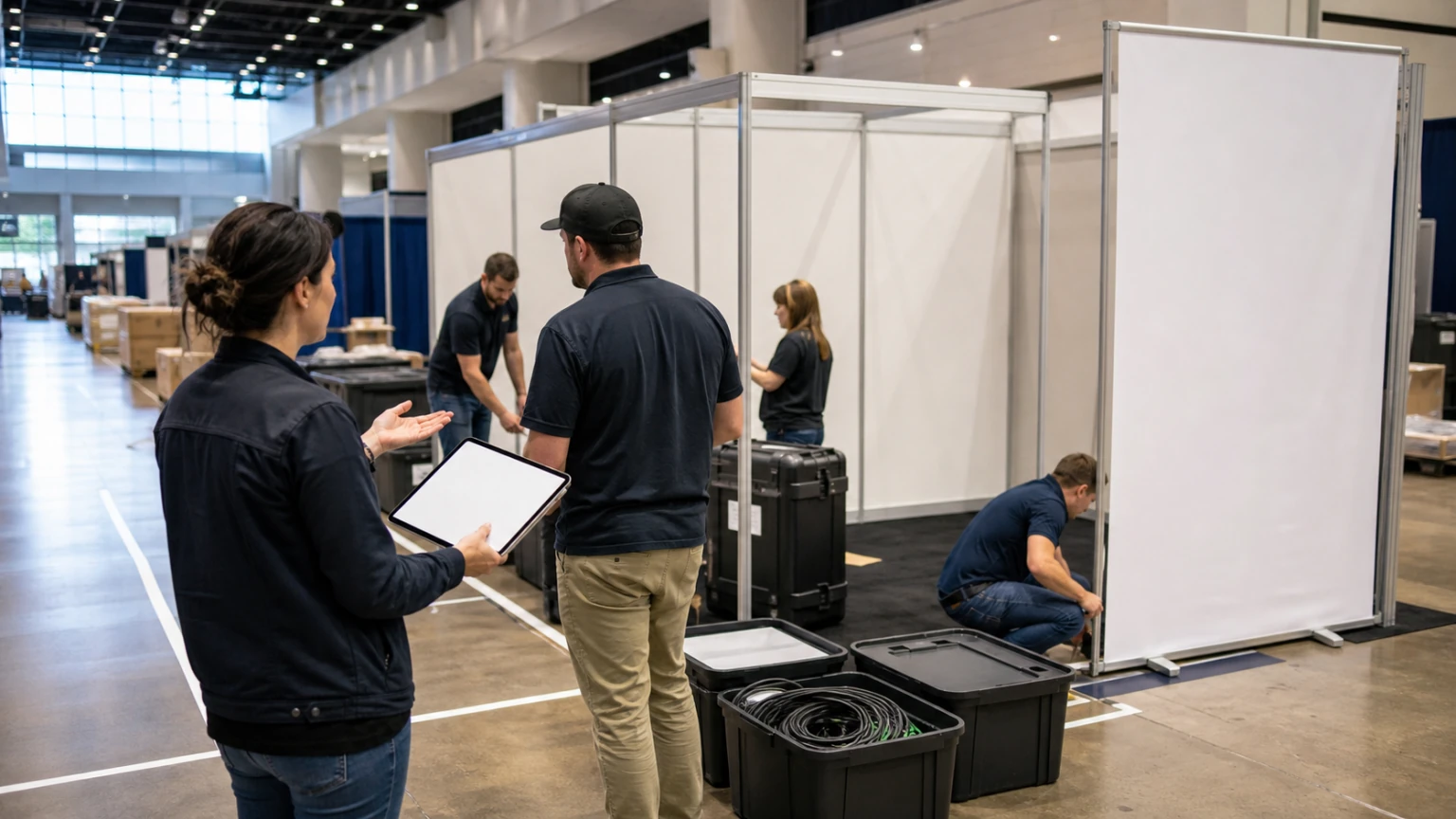
Portable setups tend to compress installation time. That can be helpful, but only if the organizer has clear rules on access windows, hall entry, waste handling, power ordering, and finishing deadlines.
They also create a different support need. Exhibitors using lower-cost displays may need more clarity up front, especially if they are new to trade shows.
An operations team should think about portable booths across four areas:
1. Space planning
Make sure the floor plan, height rules, setback rules, and sightline expectations are clear. Portable does not mean exempt from presentation standards.
2. Build timing
Quick deployment is valuable, but it should not lead to unmanaged arrivals or late finishing activity.
3. Exhibitor communications
Smaller exhibitors often rely heavily on the organizer's instructions. They need practical guidance, not generic manuals.
4. On-site support
Someone should own answers to common booth questions during move-in and show open.
The easier a booth is to assemble, the more important it becomes to remove confusion around everything surrounding the booth.
How to plan portable booths inside an event operations workflow
This is where an event operations suite such as Bewitt should be thought of as a coordination layer, not as decoration around the event.
The goal is simple: keep exhibitor information, deadlines, support messages, and operational ownership aligned in one working process.
Even without treating portable booths as a separate programme, organizers can structure their workflow around a few clear checkpoints.
Pre-sale and exhibitor onboarding
Start early by identifying which booth packages are most likely to attract smaller exhibitors. If portable 10x10 setups are common, the exhibitor journey should reflect that reality.
At minimum, the team should define:
- what is included in the stand space
- what the exhibitor must bring
- what branding limitations apply
- what services cost extra
- what setup window is allowed
- who to contact for exceptions
This reduces back-and-forth later and helps sales, operations, and exhibitor support stay aligned.
Exhibitor data and categorisation
Not every exhibitor needs the same operational treatment. Portable-booth exhibitors often have different needs from custom-build exhibitors.
That means the event team should be able to identify, at a minimum:
- first-time exhibitors
- portable-booth exhibitors
- custom-build exhibitors
- sponsors with additional branding rights
- exhibitors requiring extra services or approvals
Once that view is clear, communications and staffing can become more precise.
Move-in planning
Quick deployment only helps if the move-in schedule is controlled.
For portable booths, practical questions include:
- Can these exhibitors arrive in shorter time slots?
- Do they use a different entrance or unloading process?
- Are dollies, hand-carry access, or small vehicle rules clearly explained?
- Is there a deadline for empty packaging removal?
- Who checks that the booth remains within the contracted footprint?
These are small details, but they shape the exhibitor's first impression of the event.
Build a better exhibitor support pack
If portable booths are part of the exhibitor mix, the support pack should be simpler and more operational.
A useful pack often includes:
- booth dimensions and permitted build area
- maximum height and display restrictions
- setup and dismantle timings
- delivery and storage instructions
- power, internet, and furniture ordering steps
- waste disposal rules
- venue access and parking notes
- contact points for event-day support
This should not read like a contractor handbook if the target exhibitor is a startup with a small team. Clear instructions beat long documents.
Protect the quality of the show floor
Affordable booths help widen access to exhibiting, but the organizer still has to protect presentation standards.
That does not require overcomplication. It does require clarity.
Set expectations on:
- clean branding presentation
- safe cable management
- stock and giveaway storage
- audio limits
- staffing behaviour in aisle space
- tear-down restrictions before close
Smaller exhibitors usually comply when the rules are specific and communicated early.
Where Bewitt fits in operationally
In practical terms, the value of an event operations suite in this context is process discipline.
Portable booth exhibitors create recurring coordination tasks: instructions, deadlines, confirmations, service needs, support responses, and on-site issue handling. Those tasks are easier to manage when the team uses one consistent operating workflow instead of scattered emails and ad hoc notes.
For organizers, that means using the platform or workflow to keep track of:
- which exhibitors are using simple portable setups
- what deadlines they have received
- which operational requirements are still outstanding
- what support questions are recurring
- what on-site issues need follow-up
The important point is not the software label. It is the operating habit.
Exhibitor experience improves when operations teams can see the same status, the same deadlines, and the same exceptions at the same time.
Common mistakes to avoid
Treating small exhibitors as low-priority exhibitors
They may have smaller budgets, but they still shape the show floor and attendee perception.
Sending one generic exhibitor manual to everyone
Portable-booth exhibitors often need shorter, more actionable guidance.
Assuming fast setup means no support is required
Simple builds still depend on clear access, power, timing, and compliance rules.
Leaving too much to the venue to explain
The organizer should own the exhibitor journey, even when venue rules are involved.
Ignoring first-time exhibitor anxiety
Many portable booth users are newer to exhibiting. Their main problem is often uncertainty, not the booth itself.
A practical checklist for organizers
- identify which exhibitors are likely to use portable 10x10 booths
- separate their instructions from custom-build guidance where needed
- publish simple setup, access, and service-ordering deadlines
- confirm booth rules on size, height, safety, and branding
- assign an owner for move-in questions
- monitor recurring support issues and update guidance quickly
- review whether the portable-booth experience caused avoidable friction this year
Final thought
Portable booths matter because they make exhibiting more accessible. That is good for startup participation, floor diversity, and commercial growth for shows.
But affordability alone does not produce a good exhibitor experience. Organizers still need a structured operations model around onboarding, communications, setup rules, and on-site support.
When that structure is in place, portable booths can be more than a budget choice. They can become a reliable part of a well-run exhibitor programme.