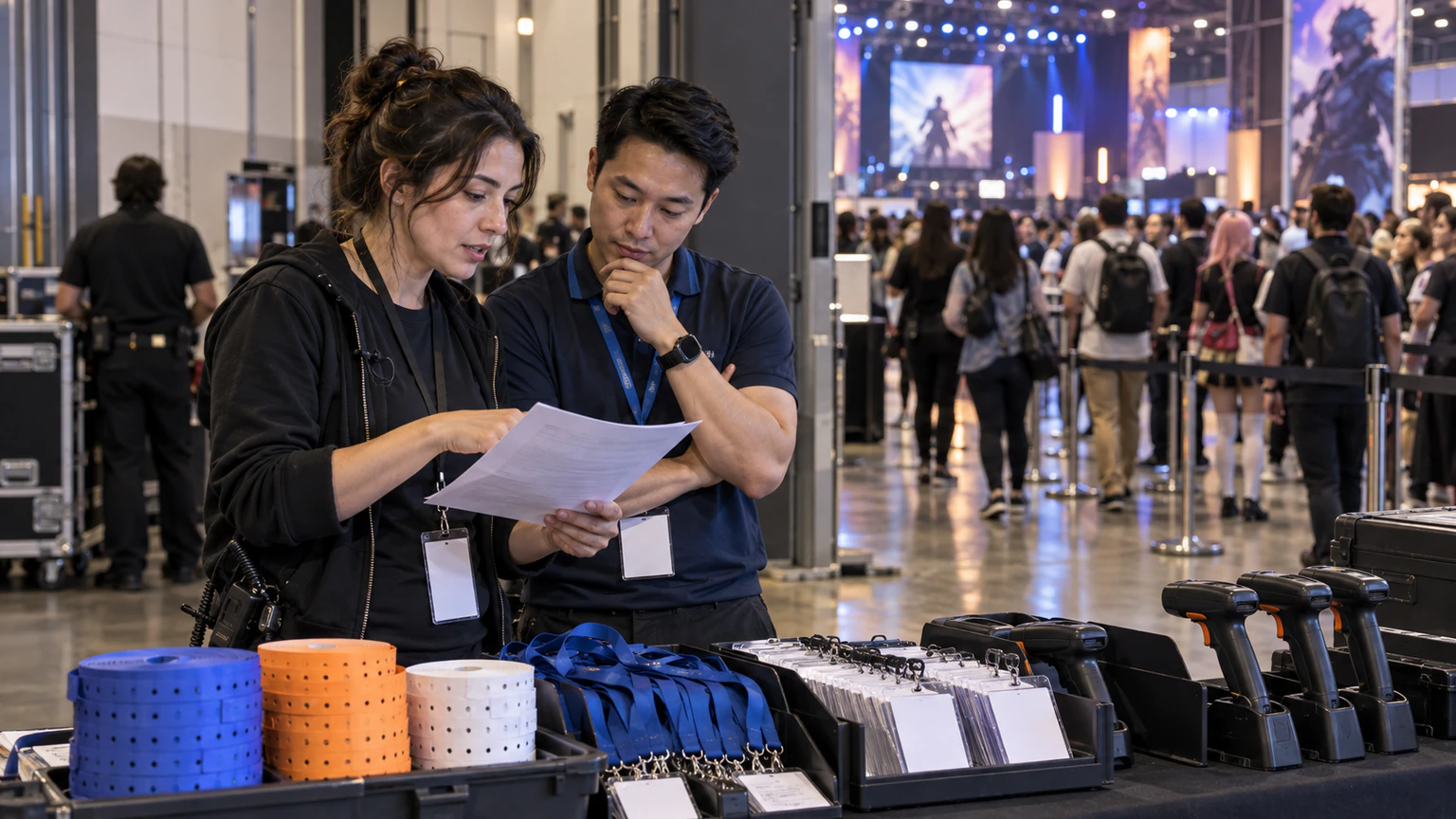

Check-in queues usually start long before the doors open.
They start when registration collected the wrong information, when participants do not know how to join, when staff are unsure which check-in flow to use, or when the entrance becomes the place where every unresolved question gets dumped.
If you have ever watched a calm arrival plan turn into a slow-moving line, you know the problem is rarely one big failure. It is usually ten small decisions that were left until the morning of the event.
The entrance should confirm attendance, not become a rescue desk for everything the event forgot to settle earlier.
Start by choosing the right check-in behavior
Not every event should use the same entrance flow. Some events work well with self check-in. Some need staff-led check-in. Some need a mix.
Bewitt supports mixed, self, and staff-led check-in behavior settings, which is useful because the best setup depends on the event you are actually running.
A few simple examples:
- Self check-in can work well when the audience is expected, instructions are clear, and arrival is spread out.
- Staff-led check-in can make more sense for controlled entry, higher-support audiences, or events where staff need to guide people in.
- Mixed check-in is helpful when you want a faster path for prepared participants, while still giving staff a way to handle exceptions.
The important part is not picking the fanciest method. It is picking the method your staff can explain in one sentence.
Do not wait until the door to solve registration problems
One of the fastest ways to create a queue is to ask the entrance team to finish registration work on the spot.
If someone still needs to answer event questions, sort out missing details, or figure out whether they even have access, check-in slows down for everyone behind them.
This is where pre-event setup matters. Bewitt lets organizers manage registration flows, participant access, and optional custom registration fields inside the same event workspace. That means the event team can decide in advance:
- what information is actually needed during join
- whether the event is public or private
- whether join codes are required
- whether participants can edit submitted registration details later
Good check-in starts with asking fewer last-minute questions at the door.
If a detail matters enough to block entry, it should probably be handled before arrival.
Give participants one clear path before they arrive
Queues get worse when participants arrive unsure about what they are supposed to show, where they are supposed to go, or how they are supposed to access the event.
Clear instructions matter more than people think. Before event day, participants should know:
- how to join or log in
- whether they need email and password or an invite PIN where applicable
- whether the event is using self, staff-led, or mixed check-in
- where to find their event-specific participant experience
- what to have ready when they arrive
This sounds basic, but it is often the difference between a moving line and a stalled entrance.
Use the participant badge as part of the flow
Check-in works better when staff and participants are looking at the same event context.
In Bewitt, participants have an event-specific app experience that can include a digital badge. That matters at the entrance because it gives staff a practical reference point instead of forcing them to rely on a paper list or improvised instructions.
It also matters inside the agenda. For staff-led agenda check-ins, Bewitt supports check-in through the participant digital badge with session context.
That is helpful for events where the front door is only the first checkpoint. You may need a main event arrival flow and then a separate way to confirm participation in specific sessions.
Keep the entrance job small
The entrance team should not be responsible for every event problem. Their job should be narrow, repeatable, and easy to train.
A practical check-in setup usually works best when you separate tasks like this:
- Entrance staff: confirm attendance and move people through.
- Support staff: handle access problems, missing registrations, or special cases.
- Organizer lead: make judgment calls without stopping the whole line.
If one person has to scan, answer questions, troubleshoot logins, explain the agenda, and fix registration mistakes, you do not have a check-in process. You have a bottleneck with a name tag.
Match your check-in setup to the agenda
Some events only need a simple arrival check. Others need to know who attended which part of the agenda.
That is why it helps when agenda management and check-in live in the same workspace. Organizers can manage agenda items, participant access, and event-day flows without splitting the truth across different systems.
If your event includes session-level participation, ask a few practical questions in advance:
- Which sessions need attendance confirmed?
- Will staff handle those check-ins?
- Do participants already know where to find their badge and schedule?
- Are notes or session details visible the way you want them to be?
The more your agenda reflects the real event flow, the less guessing staff have to do on site.
Do a queue test before the queue is real
One of the best things an organizer can do is run a five-minute rehearsal.
Not a giant operations exercise. Just a basic walk-through:
- Take one participant who is fully prepared.
- Take one participant with a login or access issue.
- Take one participant who needs help finding the right event context.
- Have staff handle all three without making up steps on the fly.
If the team has to stop and ask, “Wait, where do I find that?” you found the real problem early enough to fix it.
Event-day confidence usually comes from boring prep, not heroics.
What Bewitt helps keep connected
Bewitt is built around practical event operations, not just the signup step. For check-in planning, that matters because registration, participant access, agenda, digital badges, feedback, and reporting can stay tied to the same event record.
That does not mean every event uses every module. It means the organizer has one event workspace where the pieces can stay aligned.
For check-in specifically, useful parts of that setup can include:
- public or private joining flows
- participant access through the event-specific experience
- optional registration fields for details you actually need
- mixed, self, or staff-led check-in behavior
- digital badge-based staff-led agenda check-ins with session context
- reporting after the event without piecing attendance together by hand
A simple rule for faster entry
If the entrance team is doing too much, the queue is telling you something.
Usually, it means your registration flow asked too little or too much, your access instructions were unclear, your staff roles were blended together, or your check-in method did not match the event.
The fix is not usually more paperwork. It is less confusion.
If your current setup is a mix of forms, spreadsheets, agenda docs, and manual check-in, Bewitt is worth comparing against that workflow. You can Book a Demo or start an event to see how registration, participant access, agenda, check-in, feedback, and reporting fit together.