AI-focused events are no longer a niche booking category. They are becoming a clearer part of the conference and business events market.
Recent industry coverage, including reporting highlighted by Event Industry News, pointed to the QEII Centre seeing its biggest year-on-year increase in AI-focused events. That matters because it signals something practical for venue teams: demand is forming around a distinct type of event, with distinct operational needs.
For venues, the opportunity is not just to market to "tech events" in general. It is to show that the building, the team, and the delivery model are well suited to AI conferences, forums, summits, product launches, and partner events.
Winning AI-focused events is not mainly about using AI in your marketing. It is about proving your venue can support the way these events actually run.
Why this matters
AI events often bring a mix of audiences and formats into one programme:
- senior decision-makers
- technical practitioners and developers
- startup founders
- enterprise buyers
- sponsors and exhibitors
- media and analysts
- investors and ecosystem partners
That combination affects room use, speaker handling, networking design, exhibitor servicing, and on-site support.
Many AI events also move quickly. Agendas can change late. Speaker substitutions happen. Demo needs evolve. Sponsors may want more technical setup detail than a standard conference package expects.
If a venue can show operational confidence in those areas, it becomes easier for organizers to say yes.
What AI-focused events usually need from a venue
Not every AI event looks the same, but many share a few recurring requirements.
1. Flexible session space
AI programmes often combine keynote content with smaller breakout discussions, workshops, live demos, and private meetings.
That means organizers may value:
- rooms that can switch smoothly between presentation and discussion formats
- adjacent breakout capacity
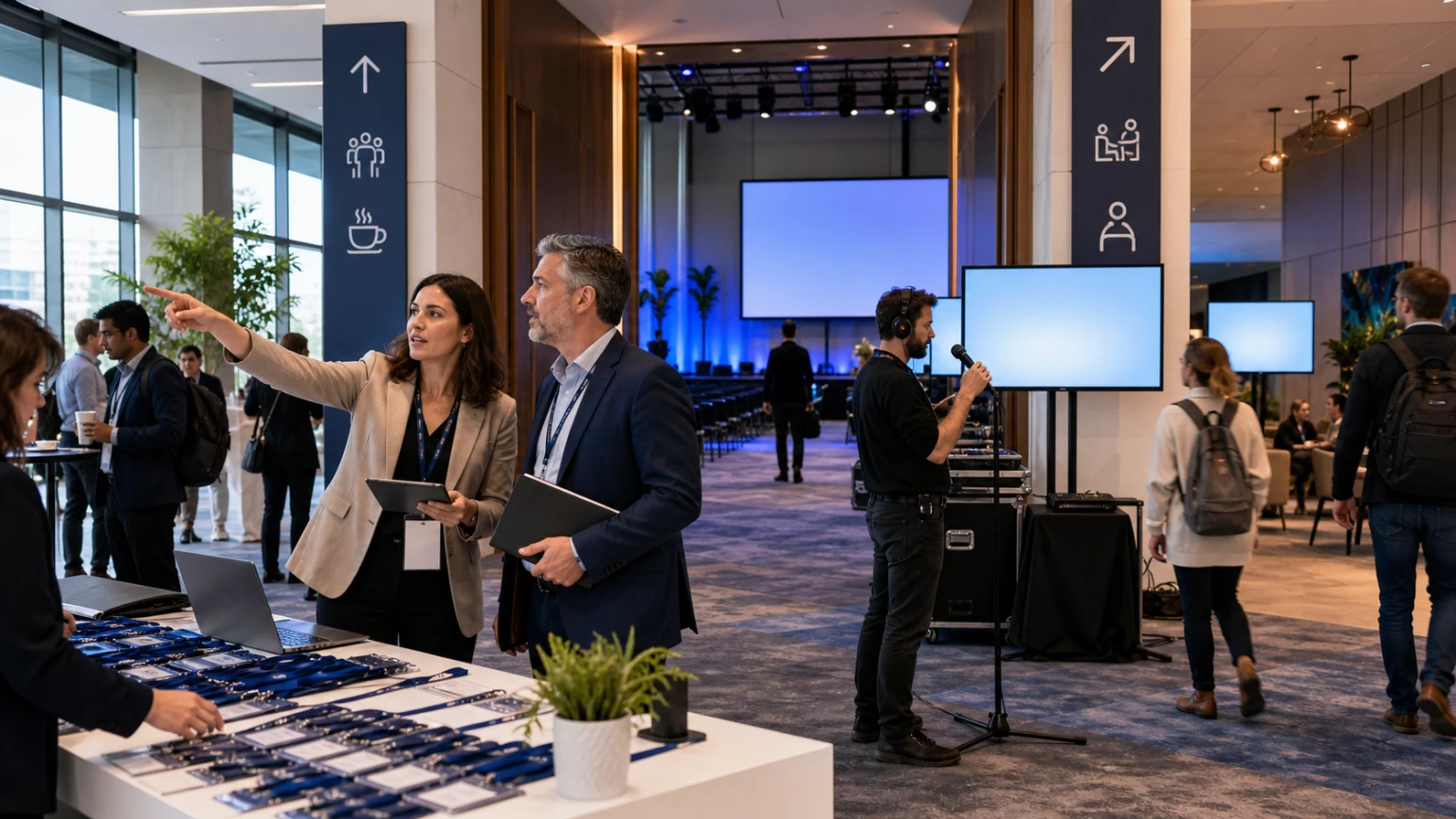
- clear wayfinding between content areas
- usable networking space close to the programme
A venue should be ready to explain not just room capacities, but how attendees flow between formats during busy programme transitions.
2. Reliable technical delivery
AI events may not always need unusual production, but they do tend to attract audiences with low tolerance for avoidable technical failure.
Organizers will care about basics done well:
- stable connectivity
- clean AV execution
- speaker support that feels professional
- good microphone coverage for Q&A
- clear screen visibility
- fast issue escalation on site
Even when the event is mostly content-led, the expectation of competence is high.
A venue that cannot explain its technical support model clearly may struggle in the sales process.
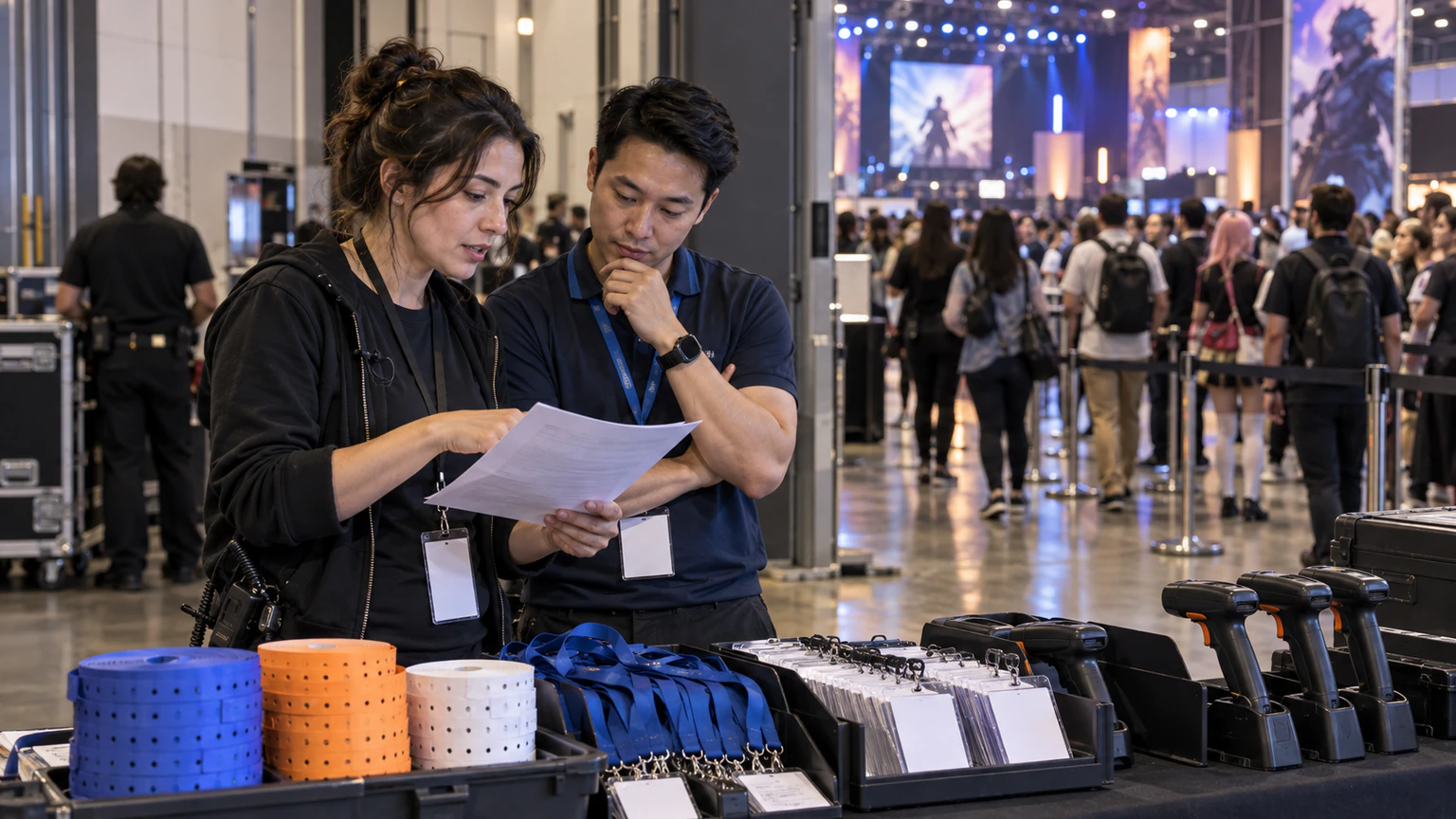
3. Sponsor and exhibitor practicality
Many AI conferences depend on sponsors, startup showcases, demo pods, or exhibitor activations.
That creates practical questions around:
- what can be brought in
- how quickly it can be installed
- power and connectivity rules
- branding limitations
- access windows
- staffing and delivery procedures
For organizers, sponsor revenue and exhibitor experience are not side issues. They are central to event viability.
If your venue can make small-footprint demos and sponsor setups easy to manage, that is a competitive advantage.
How venues can position themselves more credibly
Many venues say they can host innovation or technology events. Fewer explain that claim in a way that helps an organizer make a booking decision.
A stronger approach is to position around operational proof.
Show the event types you can support
Instead of broad language, be specific about formats such as:
- executive AI forums
- developer conferences
- startup demo events
- industry summits with multiple tracks
- sponsor-led thought leadership programmes
- private customer and partner events
This helps planners see fit more quickly.
Sell the operating model, not just the room
Organizers want to know what happens after contract signature.
Your venue sales and operations teams should be ready to explain:
- how planning handover works
- who owns technical coordination
- how exhibitor and sponsor questions are handled
- what deadlines are enforced
- how late changes are managed
- what support is available during show days
This is especially important for AI-focused events because many are growth-stage properties, first editions, or fast-scaling programmes. Those organizers often need a venue partner that reduces uncertainty.
For a growing event category, trust is often built through operational clarity, not polished generalities.
What venue teams should review internally
If attracting AI-focused events is a strategic goal, venue teams should test whether their offer is genuinely ready.
Commercial readiness
- Do sales materials speak to conferences, summits, and sponsor-led tech events clearly?
- Can the team describe ideal event formats beyond room capacity?
- Are case studies organised in a way that helps similar buyers self-identify?
Operational readiness
- Can the operations team support fast agenda changes without confusion?
- Are speaker, sponsor, and exhibitor workflows clearly documented?
- Is there a practical escalation path for technical issues during live sessions?
Physical readiness
- Are there enough breakout and networking options?
- Can demo areas be accommodated without disrupting attendee flow?
- Is signage and wayfinding strong enough for multi-track movement?
Service readiness
- Can the venue support a mix of high-level guests, technical attendees, and startup teams?
- Does the team respond well to detailed pre-event questions?
- Can planners get clear answers quickly during build-up?
How organizers typically assess venue fit for AI events
From the organizer side, venue selection is often a risk decision as much as a brand decision.
They may ask themselves:
- Will this venue understand the pace of the event?
- Can it handle sponsors and demos without friction?
- Will speakers feel well supported?
- Can attendees move easily between content and networking?
- Will the venue team solve problems calmly on site?
That means venue marketing should align closely with what the operations team can actually deliver.
Overselling a venue as a perfect fit for AI events, without operational depth behind the claim, is likely to create friction later.
Common mistakes to avoid
- treating AI events as identical to any generic business conference
- focusing only on design, prestige, or location, while ignoring delivery detail
- using vague innovation language without showing practical event support
- underestimating sponsor demo and exhibitor servicing needs
- failing to prepare for late programme changes
- keeping sales promises disconnected from event operations reality
A practical checklist for venue teams
If you want to win more AI-focused events, start here:
- Audit current demand from technology, innovation, and AI-adjacent buyers.
- Review whether your sales language reflects actual event formats, not broad category labels.
- Map the planner journey from enquiry to show day, and remove points of uncertainty.
- Strengthen technical and exhibitor support documentation.
- Prepare example rooming and flow plans for multi-format conference days.
- Align sales, operations, and technical teams on what the venue can deliver confidently.
- Build case material around execution quality, not just venue appearance.
Where Bewitt fits in operationally
For venues and organizers running complex conferences, the challenge is rarely just attracting the event. It is coordinating the moving parts once planning begins.
That includes timelines, stakeholder communication, exhibitor and sponsor handling, session changes, task ownership, and live operational control.
A structured event operations workflow helps venues and organizers stay aligned as programmes become more demanding.
Final thought
If reporting about increased AI-focused event activity continues to reflect broader market movement, venues should pay attention now.
The winners are unlikely to be the venues that simply add AI language to their website. They will be the ones that can show clear fit for the event format, strong operational discipline, and confidence in handling the practical realities of a fast-moving conference environment.
AI-focused events may be a growing category, but the buying logic is familiar: organizers choose venues that make delivery feel safer, smoother, and easier to trust.