Large-scale expos are no longer run through one platform, one team, or one channel. They are delivered through ecosystems: registration systems, mobile experiences, exhibitor workflows, content operations, venue coordination, staff communication, and partner tools that all need to work together.
A useful public signal here is the prominence of industry messaging around E3 2026 that highlights connections, people, technology, and solutions shaping the events industry. That matters because it reflects how major event environments are increasingly framed: not as isolated products, but as networks of participants, tools, and operational dependencies.
For expo organisers, conference producers, and operations leads, the practical question is not whether technology matters. It is how to use a broader tech ecosystem in a way that actually improves delivery instead of creating fragmentation, duplicated work, or live-day confusion.
At expo scale, technology works best as an operating system for coordination, not as a collection of disconnected features.
Why this matters for event operations
Large expos put pressure on almost every part of an event team at the same time. Attendees want easy entry, useful schedules, and clear wayfinding. Exhibitors want qualified traffic, smooth service, and lead visibility. Sponsors want measurable presence. Internal teams want fewer surprises and faster decisions.
That pressure usually lands in a few predictable areas:
- registration and check-in volume
- session and agenda changes
- exhibitor coordination and service requests
- networking and meeting logistics
- staff communication across halls, entrances, and help points
- attendee discovery of booths, content, and key moments
When these functions are handled in silos, the event may still happen, but it becomes harder to run cleanly. Teams spend more time reconciling information, fixing avoidable errors, and answering questions that should have been resolved earlier.
What the public signal tells us, and what it does not
From the source idea provided, the confirmed signal is limited but useful: E3 2026 is being presented around themes of connection, people, technology, and solutions that shape the events industry.
That is enough to support a grounded discussion about why large event ecosystems matter, and how organisers can think more practically about connected event operations.
What this does not confirm on its own is:
- which exact platforms or vendors any specific expo is using
- how data moves between registration, exhibitor, and attendee systems
- which integrations are live versus planned
- what measurable outcomes have already been achieved
- whether one operating model works best for every expo format
That distinction matters. The public signal supports the topic. It does not justify claiming a specific stack, integration depth, or performance result for a named event.
Evidence-aware planning means reading market signals carefully, then designing around known operational needs rather than assuming every large expo needs the same setup.
What a tech ecosystem means in expo terms
In practice, a tech ecosystem is the set of systems, workflows, and partners that support the event before, during, and after show days.
For an expo, that often includes:
- registration and access control
- agenda and content publishing
- mobile event information and updates
- exhibitor profiles and directory tools
- meeting scheduling or networking workflows
- lead capture and follow-up processes
- operations communication between teams and suppliers
- reporting across attendee, sponsor, and exhibitor activity
The important point is not the number of tools. It is whether those tools support a coherent operating model.
Where large expos benefit most from connected systems
Registration and arrival
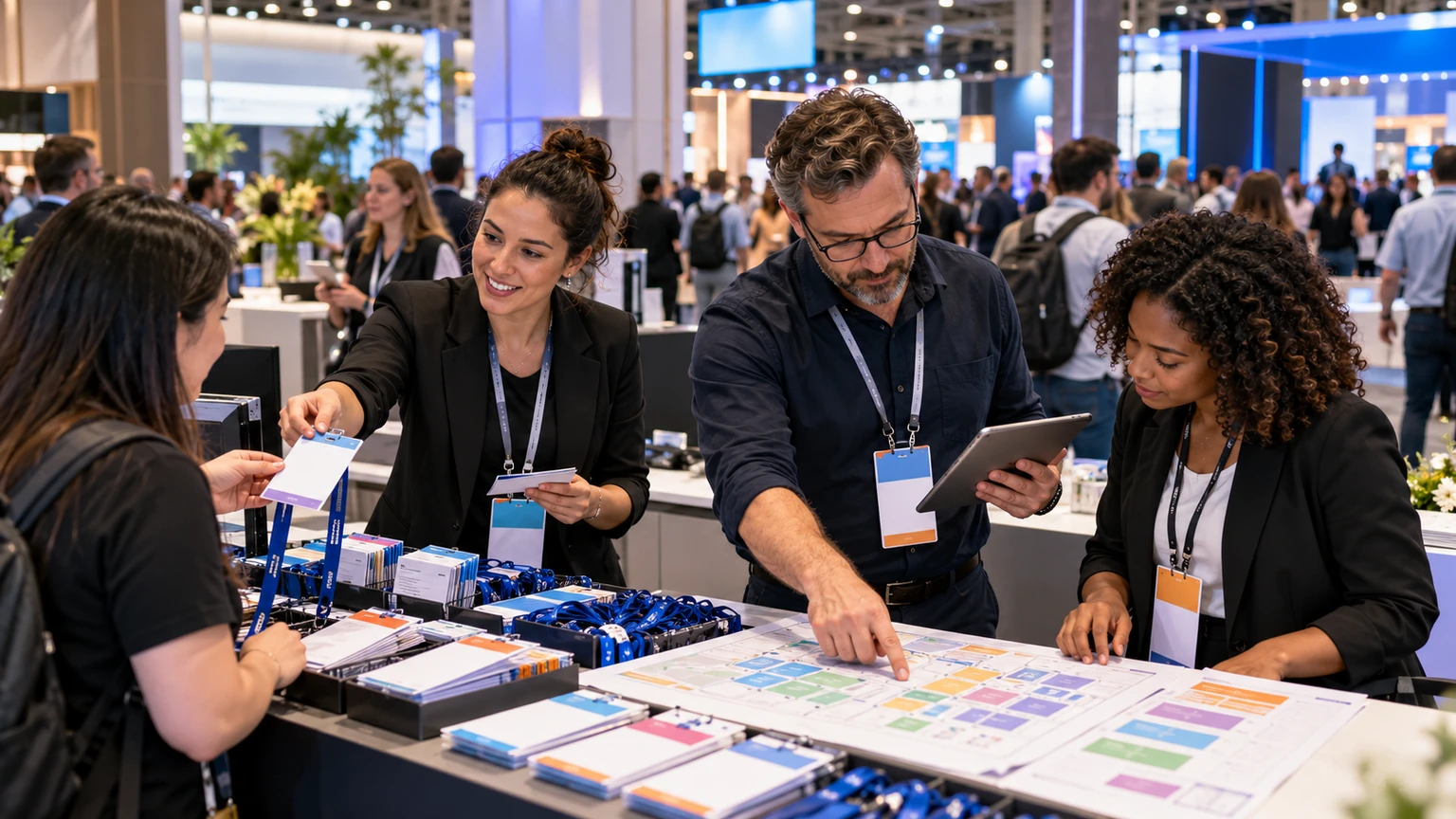
The first real test of any expo ecosystem is entry. If attendee records, pass types, approvals, and badge handling are inconsistent, the event starts under pressure.
Connected systems help most when they reduce manual correction at the desk and give frontline teams a clear view of attendee status. The goal is simple: fewer bottlenecks, fewer escalations, and faster issue resolution.
Exhibitor coordination
Exhibitors experience the event through deadlines, logistics, service requests, lead expectations, and on-site support. If these interactions are split across too many inboxes and spreadsheets, organisers lose visibility quickly.
A stronger ecosystem gives organisers a more usable picture of exhibitor needs, outstanding tasks, and common failure points. That can improve service levels without relying on constant manual chasing.
Attendee discovery
At large expos, people often miss relevant booths, sessions, or networking moments simply because discovery is weak. A good ecosystem helps attendees understand what is happening, where it is, and why it is relevant to them.
This does not require over-engineering. It requires clear information architecture, up-to-date schedules, sensible categorisation, and communication that matches how people move through the venue.
Networking and meetings
Many expos promise connection, but operationally that promise is hard to fulfil. Meetings need context, time, location clarity, and enough structure to be useful without becoming rigid.
Technology can help by supporting discovery and scheduling, but only if the format itself makes sense. A weak networking design does not become strong just because it is digital.
Live operations visibility
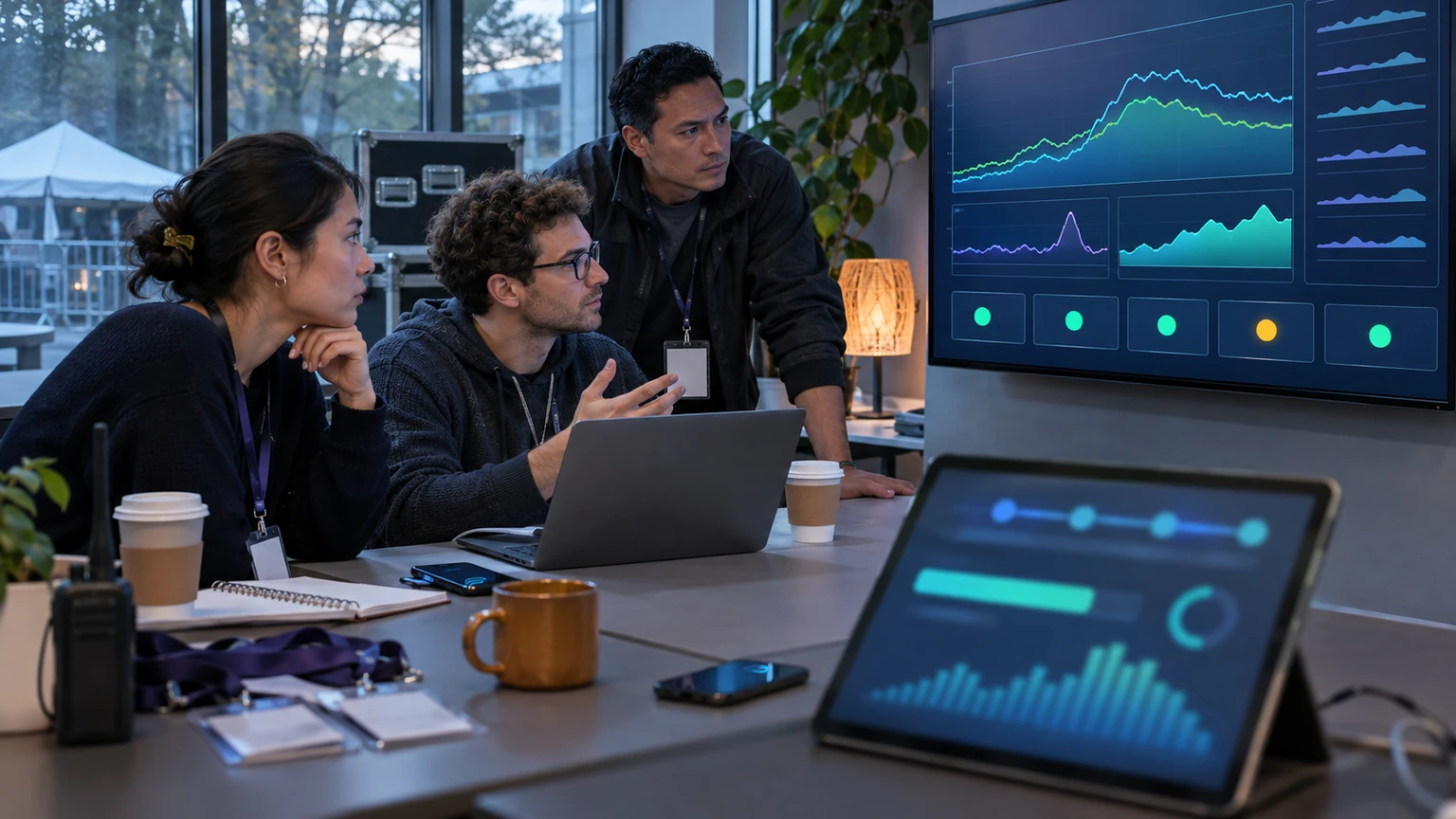
During show days, organisers need a practical view of what is changing: queue pressure, room capacity, speaker delays, service issues, signage gaps, staffing needs, and attendee confusion points.
Not every expo needs a complex command setup. But every large expo benefits from clearer situational awareness and faster internal communication.
How to evaluate an expo tech ecosystem more practically
Start with journeys, not tools
Many teams buy or add technology based on category labels. A better starting point is to map the core journeys first:
- attendee from registration to departure
- exhibitor from onboarding to post-show follow-up
- sponsor from activation planning to reporting
- staff from setup through live issue handling
Once those journeys are clear, it becomes easier to identify where connected systems matter most and where simpler processes may be enough.
Define ownership early
One of the biggest ecosystem problems is unclear ownership. A feature may exist, but no team fully owns the workflow around it. That leads to stale information, inconsistent usage, and last-minute workarounds.
For each critical process, organisers should know:
- who owns setup
- who checks data quality
- who updates changes
- who handles exceptions on site
- who reviews outcomes after the event
Test operational handoffs
Many failures happen between systems or between teams. Registration may be correct, but access rules are not clear to venue staff. Agenda updates may be published, but exhibitors or attendees do not see them quickly enough.
That is why handoffs matter as much as core functionality. In a live expo environment, the weak point is often coordination, not software capability alone.
Where organisers should be careful
Too many tools for the same job
Adding platforms can feel like progress, but overlapping tools often create duplicate data, inconsistent instructions, and extra training needs. Complexity is only worth it when it solves a real operational problem.
Assuming integration means readiness
Even when systems technically connect, teams still need governance, process discipline, and live support planning. Data flow does not automatically produce good event delivery.
Forgetting frontline usability
If a workflow looks good in planning but is hard for registration staff, floor managers, exhibitor support teams, or temporary crew to use, performance will suffer on site. Expo technology should be judged partly by how well it supports pressured human work.
Overpromising attendee personalisation
Large expos often want to present everything as tailored and intelligent. But if data is incomplete or content structure is weak, personalisation claims can outpace reality. In practice, reliable discovery and timely updates are often more valuable than ambitious but uneven recommendations.
Operational questions organisers should answer early
- Which attendee and exhibitor journeys create the most friction today?
- Where are teams still relying on manual reconciliation?
- Which workflows break first under peak volume?
- What information needs to stay accurate in real time?
- Who owns cross-functional updates during live operations?
- How will exhibitors, sponsors, and attendees get support when something changes?
- Which systems are essential for show delivery, and which are optional enhancements?
A practical planning model for expo teams
1. Prioritise critical workflows
Start with the functions that most affect attendee movement, exhibitor experience, and operational control. Usually that means registration, agenda management, exhibitor communications, and staff coordination.
2. Simplify the toolset where possible
Fewer well-run systems are usually better than a crowded stack with unclear boundaries. Reduce overlap before adding new layers.
3. Build around live decision-making
Design the ecosystem so teams can act quickly during the event. Static planning alone is not enough for a multi-hall, high-volume environment.
4. Rehearse exceptions
Test what happens when badges fail, sessions move, exhibitors need urgent help, or queues build unexpectedly. Large expos are defined by exceptions as much as by schedules.
5. Review after the event
The best ecosystem thinking is iterative. Review where information lagged, where staff improvised successfully, and where attendees or exhibitors experienced avoidable friction.
What good looks like
A well-run expo tech ecosystem is usually not the one with the most features. It is the one where attendees can get in smoothly, exhibitors know what to do, staff can respond quickly, and important information stays consistent across the event.
Good looks like:
- clear attendee communications before arrival
- faster issue resolution at entry and help points
- stronger visibility into exhibitor needs
- cleaner coordination between programme, floor, and support teams
- less duplicate work behind the scenes
- better post-event understanding of what actually happened
What this means for event teams
Large-scale expos should think beyond single event tools and focus on operational ecosystems. The real challenge is not adopting more technology. It is creating a connected environment that helps people make better decisions under live event pressure.
For organisers, that usually means being more selective, not more expansive: choose the workflows that matter most, define ownership clearly, and make sure the tech supports the reality of how the expo is actually run.
That is where a tech ecosystem becomes valuable, not as a concept, but as a practical way to keep a complex event more usable for attendees, exhibitors, and the team delivering it.