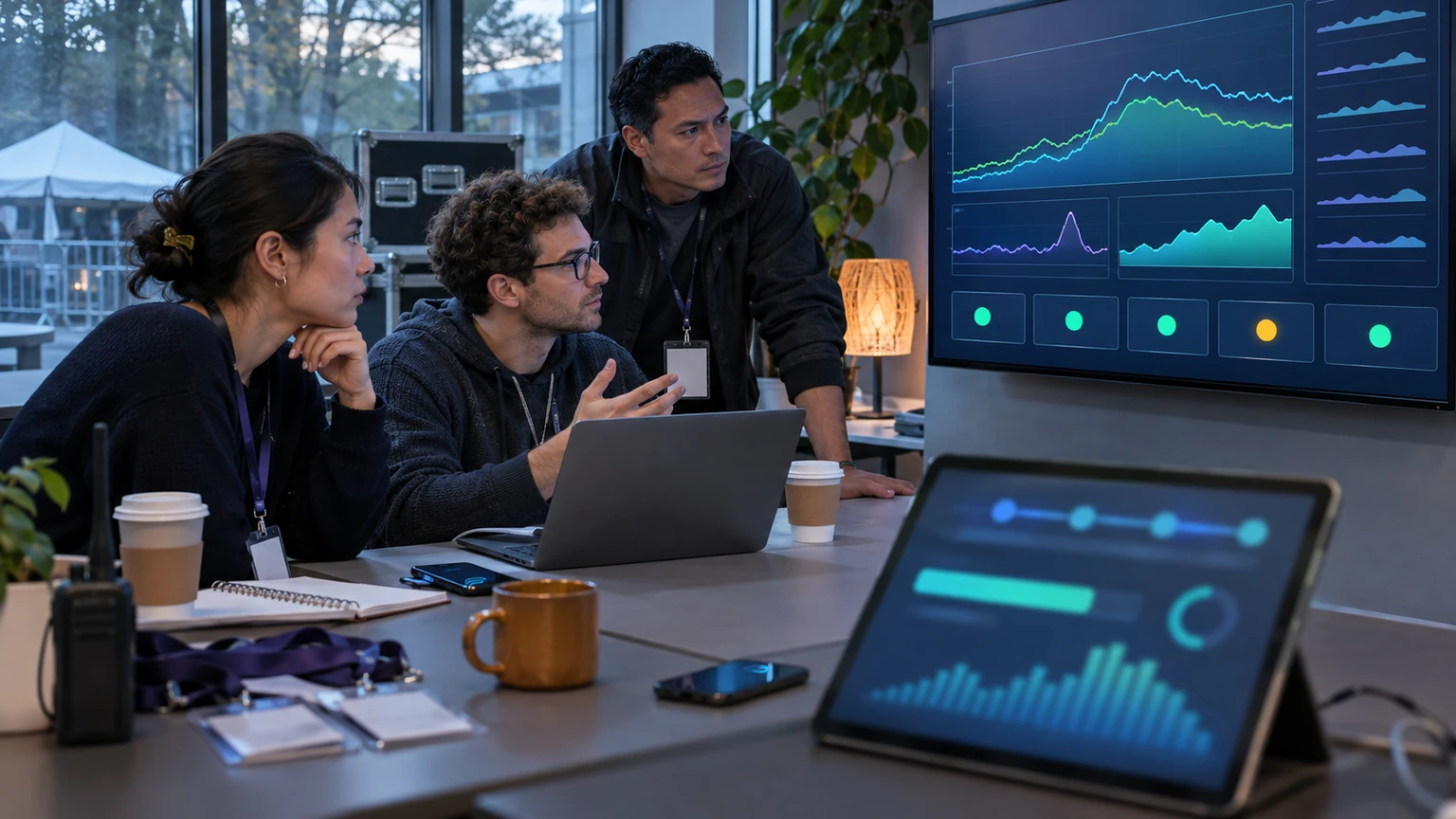

As more industry events continue strengthening their in-person formats, organisers have a practical opportunity to improve what happens after the doors close, not just what happens on the day.
A useful public signal here is the reported return of an FBAA industry conference to Sydney, covered by Australian Broker. On its own, that is a narrow fact. But it matters because it reflects continued momentum around live conference activity in a major event city, and it creates a timely reason to revisit how organisers handle post-event planning.
For conference teams, exhibitors, and operations leads, the question is not simply how to deliver a good Sydney event. It is how to capture what happened, follow up cleanly, and make the next edition easier to run and more valuable for attendees.
The event is not finished when the last session ends. That is when the operational learning becomes usable.
Why this matters for event operations
Post-event planning is often treated as admin. In reality, it is one of the best ways to improve registration, content delivery, sponsor value, and attendee experience without adding unnecessary complexity.
For Sydney conferences in particular, organisers may be managing a mix of local attendees, interstate travel, venue coordination, sponsor expectations, and in some cases a streaming layer for people who cannot attend in person.
That means the post-event phase should do more than collect feedback. It should help teams answer practical questions such as:
- where friction appeared in registration and check-in
- which sessions drew the strongest participation
- how streaming performed, if it was offered
- where attendees needed better communication
- what exhibitors and sponsors actually experienced on site
- which issues should be fixed before the next conference cycle starts
What the public signal tells us, and what it does not
From the source idea provided, the confirmed signal is limited but useful: an FBAA industry conference is reportedly returning to Sydney.
That is enough to support a grounded discussion about conference planning priorities for organisers working on in-person events in Sydney.
What this does not confirm on its own is:
- the exact operating model of that specific conference
- whether the event includes streaming or hybrid components
- which registration or attendee technology is being used
- what attendance volumes, sponsor outcomes, or engagement results are expected
- which venue workflows or supplier setups are in place
That distinction matters. The return of a conference is a useful market signal. It is not evidence for claiming one specific stack, process, or performance result.
Evidence-aware planning means using the public signal to ask better operational questions, not to assume details that have not been confirmed.
Start post-event planning before the event ends
The most effective post-event reviews are prepared in advance. If teams wait until the following week to decide what they need to measure, useful detail is often lost.
Before the conference goes live, set a short list of post-event review areas with clear owners. Keep it practical:
- registration and arrival
- agenda and session delivery
- speaker coordination
- streaming or recording operations
- attendee engagement and networking
- exhibitor and sponsor support
- staff communications and issue escalation
This makes the debrief faster and more useful because teams are reviewing against known operational goals, not vague impressions.
Review registration with operational detail
Check where friction actually happened
Registration data is helpful, but the operational story matters just as much. A registration flow can look fine in summary numbers while still creating confusion for real attendees.
Review:
- drop-off points during sign-up
- late surges in bookings
- onsite queue pressure at badge collection
- name correction or duplicate record issues
- staff interventions needed at check-in
- special access or VIP handling problems
If attendees asked the same questions repeatedly, that is usually a sign that the registration flow or pre-event communications need tightening.
Separate system issues from messaging issues
Not every registration problem is a platform problem. Sometimes the workflow works, but the instructions are unclear. Sometimes reminders are timed badly. Sometimes arrival information is buried in long confirmation emails.
In the post-event review, separate these categories:
- technical errors
- process gaps
- communications gaps
- staffing gaps at arrival points
That makes it easier to fix the real cause instead of overcorrecting in the wrong area.
Treat streaming as an operational product, not an add-on
If a Sydney conference includes streaming, recording, or remote access, the post-event review should assess it as a core attendee experience, not a side channel.
Even a modest streaming layer creates its own operational demands:
- run-of-show coordination
- speaker readiness for live or recorded delivery
- audio reliability
- session start and stop discipline
- remote viewer communications
- support for access or playback issues
After the event, review where the streaming workflow held up and where it created pressure on the wider team.
A simple streaming debrief checklist
- Were session links or access instructions clear?
- Did speakers understand the streaming format?
- Were there delays between live room timing and remote delivery?
- Did support issues cluster around access, audio, or schedule changes?
- Was ownership of live troubleshooting clear?
- Were recordings organised well enough for post-event use?
If the answer to several of these is no, the next conference may need a more defined streaming lead, a clearer cueing process, or better attendee communications.
Measure attendee engagement beyond applause and anecdote
Teams often leave attendee engagement in the realm of general feeling. That is understandable, but it is not enough if the goal is to improve future delivery.
Post-event review should focus on visible engagement behaviours such as:
- session attendance patterns
- repeat participation across the day
- networking activity or meeting uptake, where relevant
- question volume in sessions
- traffic to exhibitor areas
- response rates to feedback requests
- content views or recording access after the event
This does not require overcomplicated analytics. It requires choosing a few indicators that reflect whether attendees were informed, active, and able to get value from the format.
Ask better feedback questions
Generic satisfaction scores have limited operational value. Instead, ask questions that help teams make decisions:
- Was arrival straightforward?
- Did the agenda feel easy to follow?
- Were key sessions accessible and clearly signposted?
- Did networking feel structured enough?
- If streaming was available, was it easy to access and useful?
- What would most improve the next edition?
Short, specific questions usually produce more actionable responses than broad requests for general feedback.
Do not forget exhibitors and sponsors in the debrief
For many conferences, exhibitor and sponsor experience is one of the clearest indicators of whether the event created commercial value alongside attendee value.
Post-event review should include:
- booth setup and access experience
- lead quality perceptions
- footfall patterns during key time windows
- staff support responsiveness
- clarity of exhibitor instructions
- sponsor activation performance against expectation
If exhibitor teams had to improvise repeatedly to solve avoidable issues, that should be treated as an operations lesson, not as normal event friction.
Run a short, structured internal debrief
The best debriefs are usually short, honest, and role-specific. They should happen while details are still fresh.
A practical conference debrief can be organised around four questions:
- What worked reliably?
- What created avoidable pressure?
- What needed manual intervention too often?
- What must change before the next event?
Capture responses by function, then look for recurring issues across teams. If registration staff, speaker managers, and exhibitors all experienced the same communication bottleneck, that is a higher-priority fix than an isolated one-off complaint.
A practical post-event checklist for Sydney conference teams
- reconcile registration, attendance, and no-show patterns
- document check-in issues while staff still remember them clearly
- review session timing, room changes, and overflow points
- assess streaming or recording performance if used
- send targeted attendee, speaker, and exhibitor feedback requests
- log sponsor delivery outcomes and any missed commitments
- record supplier issues, response times, and venue coordination lessons
- summarise top operational fixes for the next planning cycle
- assign owners and deadlines, not just observations
Where organisers should be careful
There are a few common post-event mistakes that reduce the value of the review:
- waiting too long to capture on-site learning
- relying only on high-level feedback scores
- focusing on visible problems but ignoring repeated small frictions
- treating streaming feedback separately from the main attendee experience
- documenting issues without assigning ownership for change
The goal is not to produce a long report. It is to create a short list of fixes that genuinely improve the next event.
What good looks like
A strong post-event process leaves the team with a clearer operating model for the next conference. Registration becomes easier to manage. Arrival is smoother. Session delivery is more predictable. Streaming, if included, is better scoped and better owned. Attendee engagement becomes more measurable. Exhibitors receive clearer support.
Most importantly, the team stops solving the same problems from scratch each time.
What this means for event teams
The reported return of an industry conference to Sydney is a helpful reminder that in-person events continue to demand disciplined operational planning. But the real advantage comes when organisers treat the post-event phase as part of delivery, not as an afterthought.
For conference teams, that means building a review process that is specific, evidence-aware, and focused on action. The events that improve fastest are usually not the ones with the biggest debrief documents. They are the ones that turn operational learning into better registration, stronger communications, cleaner streaming workflows, and more useful attendee experiences at the next event.