Executive meetings are often planned around agenda, guest list, and timing first. The venue is then treated as a backdrop.
That is usually a mistake.
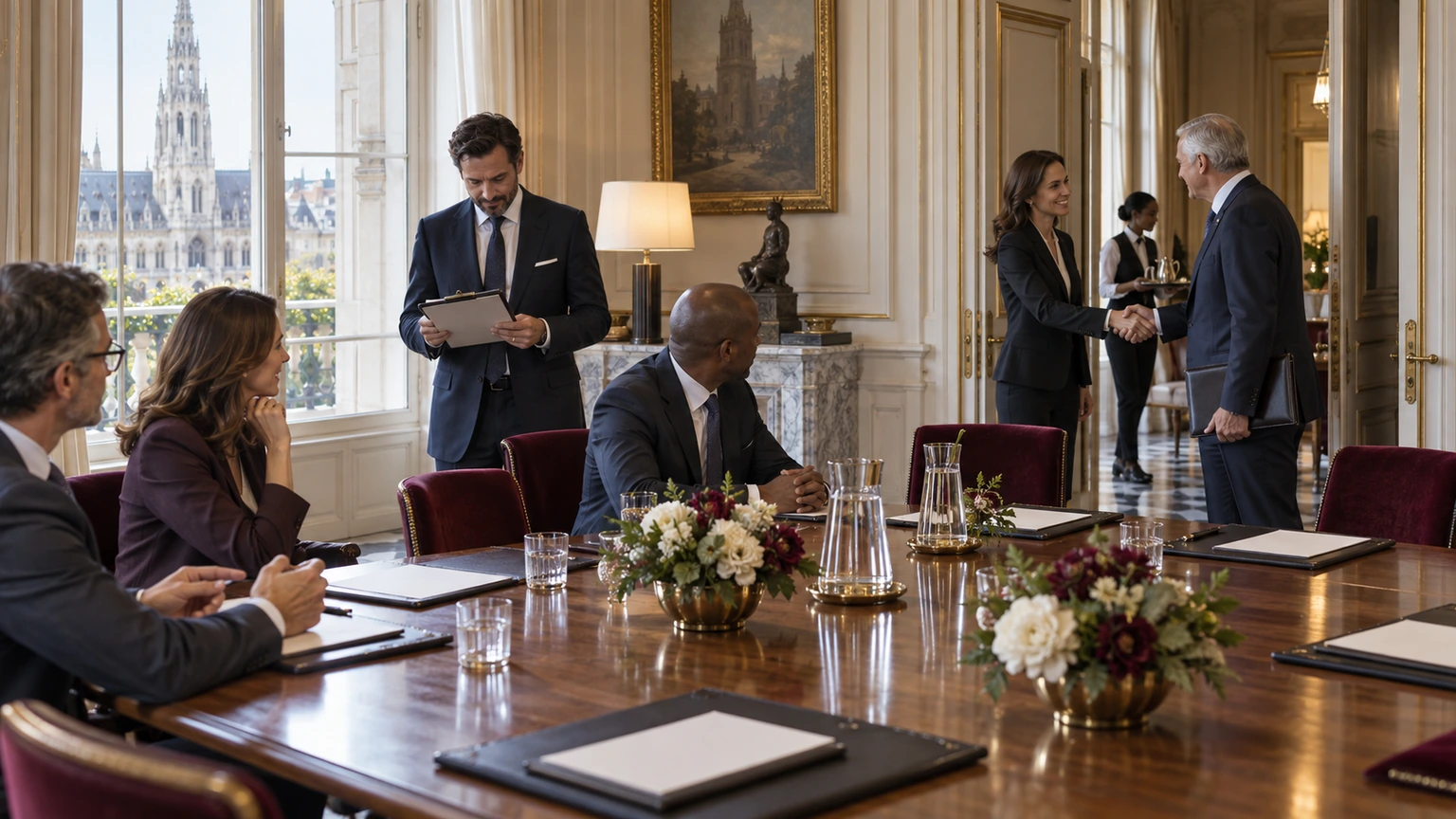
For senior-level meetings, the venue often carries part of the message. It influences how guests arrive, how the program feels, how private conversations unfold, and how seriously the event is taken.
A recent industry item about Steigenberger Icon Wiltcher’s in Brussels framed the property as an iconic address for meetings and events. On its own, that is not a full operating manual. It is still a useful prompt for organizers: in executive formats, venue choice can function like a flagship decision, not just a logistics line item.
For executive meetings, the venue is not only where the event happens. It is part of how the event is understood.
Why this matters
Senior meetings usually have tighter expectations than larger open events. The attendee count may be smaller, but the tolerance for friction is lower.
That changes how venue selection should be evaluated.
An executive venue has to support more than room capacity. It should help with:
- arrival confidence and first impression
- privacy and discretion
- smooth host, VIP, and speaker movement
- high-quality food, service, and pacing
- productive side conversations
- a setting that matches the importance of the meeting
When those basics work, the venue strengthens the event. When they do not, the agenda has to fight against the environment.
What “venue as flagship” really means
Treating a venue as a flagship does not mean choosing the most expensive property or the most famous building.
It means choosing a place that represents the standard, intent, and tone of the meeting clearly.
In practice, that usually involves three layers.
1. Symbolic value
The venue signals seriousness. For executive audiences, that can matter before the first session starts.
A well-matched venue can suggest:
- stability
- credibility
- discretion
- quality of hosting
- attention to detail
This is especially relevant when the meeting involves board members, investors, international leadership teams, strategic partners, or high-value clients.
2. Operational value
The venue must also work well behind the scenes.
A prestigious address loses value quickly if registration is awkward, movement is confusing, breakout rooms are poorly placed, or service timing interrupts the agenda.
The flagship idea only holds if the venue supports execution.
3. Experience value
Executive meetings are not judged only by content. They are judged by feel: calm, pace, comfort, privacy, and relevance.
The right venue helps people focus. It reduces noise around the meeting, both literally and operationally.
How to evaluate an iconic venue more practically
Venue teams and organizers can be drawn too quickly to brand reputation. That is understandable, but reputation should be tested against real operating conditions.
Before committing, ask practical questions in five areas.
Arrival and access
Senior attendees notice the first ten minutes.
Review:
- how vehicles arrive and depart
- whether entry feels calm or congested
- how visible staff support is at key arrival points
- how quickly guests can orient themselves
- whether VIP access needs a separate flow
If the entrance experience feels uncertain, the flagship effect disappears early.
Privacy and discretion
Not every executive meeting requires secrecy, but many require control.
That means checking:
- distance from public traffic
- sound spill between rooms
- private holding areas for speakers or principals
- confidential meeting space for side discussions
- how visible attendees are to general hotel or venue traffic
A venue can look premium and still handle privacy badly.
Program flow
Executive agendas depend on timing discipline.
Look closely at how the venue supports transitions between plenary sessions, breaks, meals, and smaller meetings.
Important details include:
- walking distance between rooms
- queue risk at coffee and lunch points
- ease of resetting spaces between sessions
- whether side meetings can happen without disturbing the main program
- staff response speed when timings change
The best executive venues make movement feel almost invisible.
Service standard under pressure
Many venues perform well in a site visit and less well when the program gets busy.
Ask how service holds up when several needs land at once:
- dietary exceptions
- schedule changes
- AV adjustments
- early arrivals
- private meeting requests
- late-running sessions
Executive events often create these exceptions. The venue should not treat them as surprises.
Brand alignment
The venue does not need to overshadow the host organization. It should support the host's positioning.
That means asking whether the space fits the event's real purpose.
For example, is the meeting meant to feel:
- formal and institutional
- modern and strategic
- intimate and relationship-driven
- international and polished
- high-trust and discreet
A mismatch between venue character and meeting purpose is easy for attendees to feel, even if nobody says it directly.
An iconic address helps only when the operating reality matches the promise.
Where venue choice affects meeting outcomes
It is easy to discuss venue selection in image terms alone. For planners, the more useful question is where venue choice changes outcomes.
In executive meetings, the venue often shapes four things.
1. Attention quality
If the setting is noisy, crowded, or fragmented, focus drops.
Senior attendees are often balancing messages, calls, travel fatigue, and time pressure. A venue that reduces distraction helps the agenda land better.
2. Informal conversation value
Some of the most important discussion happens outside the formal session.
That means lounges, corridors, pre-function areas, dining setups, and private corners matter more than they might in other event types.
If the venue gives people nowhere comfortable to continue a useful discussion, part of the meeting's value is lost.
3. Host credibility
The venue contributes to how well prepared the organizer appears.
Guests may never see the run sheet or staffing plan. They do experience whether the environment feels coherent, considered, and appropriate.
That impression affects trust.
4. Time efficiency
Executive schedules are expensive.
Every unclear transfer, delayed meal, AV reset, or access issue has a larger cost when the room is full of senior decision-makers.
Venue efficiency is not just operational hygiene. It protects the value of executive time.
Common mistakes when using a premium venue
A high-end venue does not automatically produce a high-end meeting.
Common mistakes include:
- choosing prestige over layout fit
- underestimating the need for private support spaces
- ignoring arrival and departure pinch points
- relying on venue reputation instead of testing live workflows
- building an agenda with no margin for transition delays
- assuming premium service means the team needs less briefing
Good venues still need clear direction. They cannot guess the political, relational, or sequencing needs of a specific executive group.
How event tech should support, not compete with, the venue
For executive formats, technology should usually be quiet, reliable, and purposeful.
The role of event tech is not to add noise to an already strong setting. It is to remove friction.
That can mean keeping a close eye on essentials such as:
- simple registration and pre-arrival communication
- clear attendee information
- fast staff visibility into guest status and changes
- accurate rooming or access coordination where relevant
- timely updates if agendas shift
The general rule is simple: if the venue is part of the flagship experience, the technology should make the operation feel smoother, not more complicated.
A practical site visit checklist for executive meetings
When reviewing a venue for a leadership or board-level event, walk the journey in sequence.
- arrive as a guest would arrive
- time the route from drop-off to meeting room
- check where hosts will greet attendees
- stand in breakout and corridor spaces to assess noise and privacy
- review where confidential side meetings can happen
- test whether catering points create queue risk
- confirm AV support response paths
- look for hidden bottlenecks such as lifts, security points, or shared corridors
- identify where staff can operate without becoming too visible
- ask what happens when the program runs late or changes on the day
This is where venue glamour meets event operations. Both matter, but the second one decides whether the first one holds up.
What this means for event teams
The article about an iconic meetings address in Brussels is best read as a signal, not a detailed case study. Even so, the signal is useful.
Executive meetings benefit when organizers treat venue choice as part of meeting strategy, not just procurement. The right venue can elevate trust, reduce friction, improve conversation quality, and make the host look more prepared.
But that only happens when event teams evaluate the venue like operators, not tourists.
A flagship venue should do two jobs at once: represent the importance of the meeting, and help it run exceptionally well.