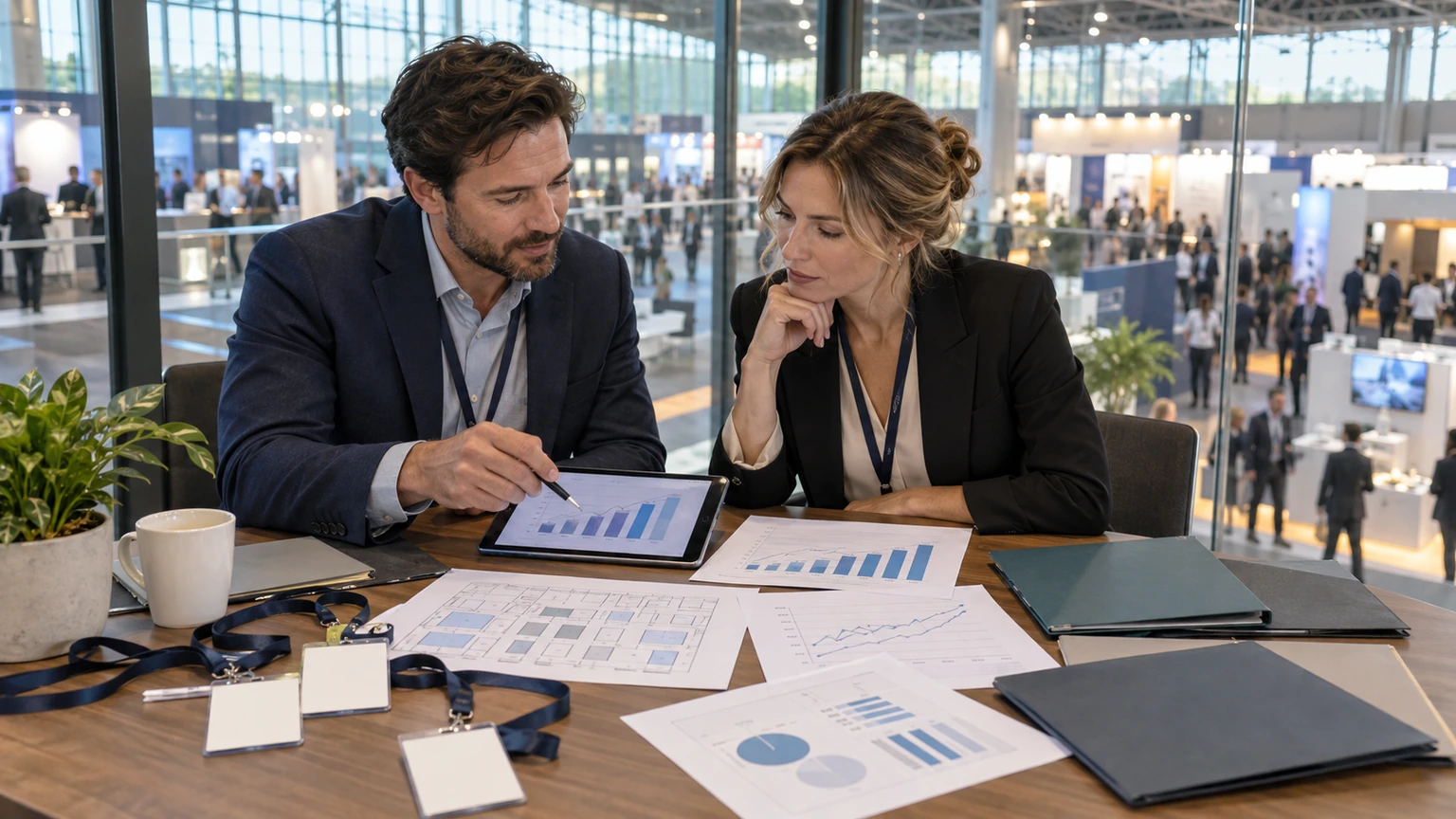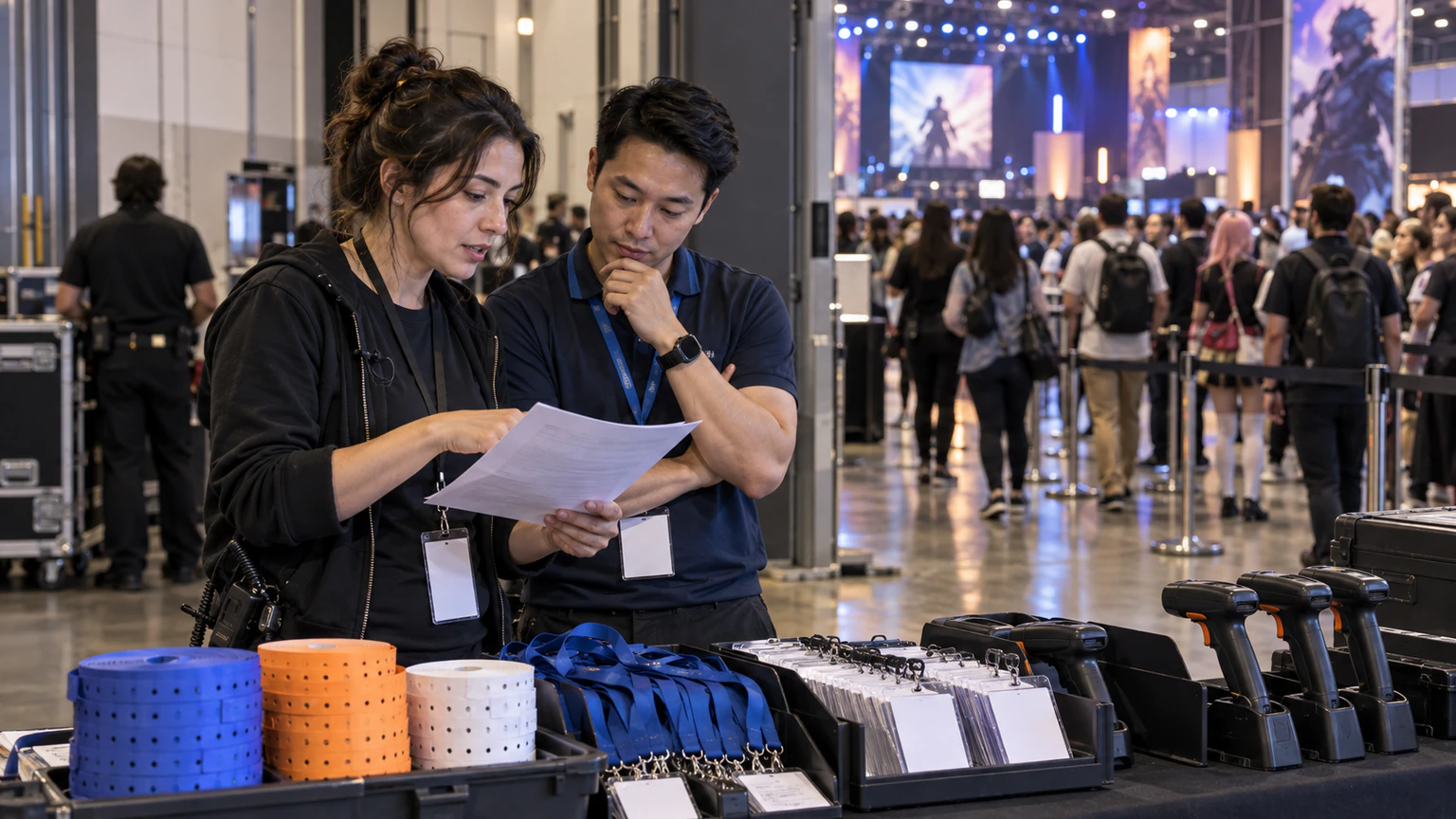
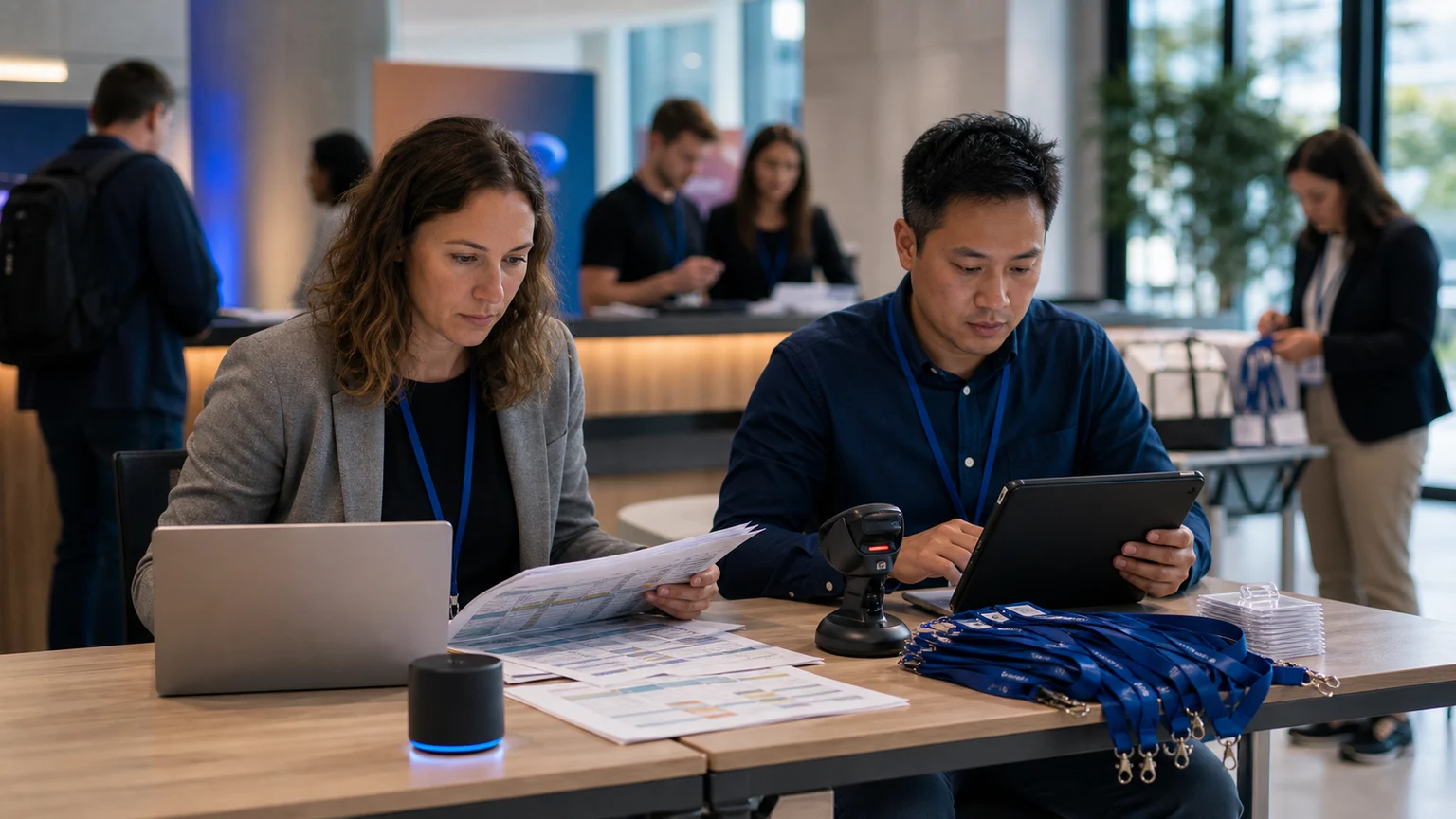
AI in events is easy to talk about in broad terms. It is harder to make useful on the ground.
Recent industry coverage around Nextech3D.ai partnering with F2B to expand its AI-powered event technology business is a useful signal that the market is still moving from point solutions toward broader operating ecosystems.
That does not mean every event team needs a fully automated stack. It does mean buyers should get more specific about where AI belongs, what it should improve, and where human control still matters most.
An AI-enabled event stack should reduce operational friction, not add another layer of complexity for already busy teams.
Why this matters
By 2026, most event teams will not be asking whether AI matters. They will be asking whether it fits into real workflows: registration, content operations, exhibitor support, attendee communications, lead handling, and post-event follow-up.
That is an important shift.
The best event stack is rarely the one with the most AI features. It is the one where the tools connect to operational priorities clearly.
For organizers, that usually means a few simple tests:
- Does it save time in a process the team already struggles with?
- Does it improve accuracy, speed, or response quality?
- Does it help attendees, exhibitors, or staff complete a task faster?
- Does it create a clearer operating picture during the event?
- Can the team still understand and control what it is doing?
What an AI-enabled stack should actually include
Not every event will use the same setup. A conference, exhibition, hosted buyer event, and brand activation all have different needs.
But in practical terms, an AI-enabled event stack in 2026 will likely be shaped around a few core layers.
1. A reliable system of record
Before AI can be useful, the event needs a dependable source of truth for participants, access status, schedules, and engagement records.
If attendee data is fragmented, duplicated, or poorly governed, AI will amplify confusion rather than solve it.
Operators should start by asking:
- Where does the clean attendee record live?
- Who owns data quality before the event opens?
- How are speakers, sponsors, exhibitors, staff, and VIPs differentiated?
- Which system is authoritative when records conflict?
This may sound basic, but it is where many AI projects quietly fail. Smarter workflows depend on cleaner operational inputs.
2. AI in attendee and exhibitor support
One of the clearest use cases for AI is support volume.
Events generate repetitive questions: timings, access rules, location details, exhibitor information, deadlines, and session logistics. If those requests can be handled faster and more consistently, teams gain breathing room.
That said, buyers should be careful. Faster answers only help if the answers are correct and current.
A useful support layer should be judged on:
- whether it uses approved event information
- how quickly updates can be reflected
- how exceptions are escalated to human staff
- whether responses stay aligned with actual event policy
For operations teams, the question is not whether AI can answer questions. It is whether it can answer the right questions, with the right information, at the right moment.
3. Content and agenda assistance
Large events create a lot of content pressure. Session descriptions, speaker summaries, agenda updates, track explanations, and post-event recap materials all take time.
AI can help here, especially where teams need faster drafting and formatting support. But this is still an area where review discipline matters.
In practice, event teams should use AI to speed up production work, not to remove editorial judgment.
Useful operating questions include:
- Who approves agenda copy before it goes live?
- How are last-minute changes reflected across channels?
- Can the content workflow keep pace with live programme changes?
- What must always be checked by a human?
4. On-site decision support
The most valuable event technology often helps teams make decisions faster under pressure.
In 2026, a stronger AI-enabled stack should support that need with better visibility into live operating conditions, not just better marketing claims.
Examples of where teams may look for practical value include:
- identifying registration bottlenecks
- surfacing common attendee issues
- highlighting schedule pressure points
- helping staff find the right policy or process quickly
- spotting handoff gaps between teams
Even here, the principle is the same: support the operator, do not replace the operator.
5. Post-event follow-up and commercial handoff
Many event teams already struggle with what happens after the doors close. Leads need routing, conversations need follow-up, and internal teams need a usable record of what happened.
AI may become more useful in summarizing activity, organizing follow-up work, and reducing admin load between event teams and commercial teams.
But buyers should validate the workflow carefully. A fast summary is not helpful if the underlying records are incomplete or if handoff ownership is unclear.
What partnerships may signal for the market
The Nextech3D.ai and F2B partnership matters less as a headline and more as a market pattern.
When AI-focused event technology companies expand through partnerships, it usually suggests that standalone capability is no longer enough. Buyers increasingly want connected value: better reach, broader implementation options, or more complete workflows.
For event operators, that creates two practical implications.
First, vendor evaluation should move beyond feature demonstrations. Teams need to understand how a partner ecosystem affects support, implementation, data ownership, and accountability.
Second, partnerships can be useful, but they can also create blurred responsibilities if roles are not clear.
Before buying, ask:
- Who owns delivery?
- Who supports the client day to day?
- Which party handles integration and issue resolution?
- Where does data move between systems or partners?
- Who is accountable when something breaks during a live event?
What event buyers should prioritise in 2026
It is tempting to buy around the most visible AI promise. That is not usually the right operating decision.
A stronger buying approach is to work backwards from event friction.
Start with the areas where teams consistently lose time or accuracy:
- attendee communications
- repetitive support questions
- agenda change distribution
- exhibitor servicing
- on-site exception handling
- post-event follow-up admin
Then evaluate whether AI improves those tasks in a measurable way.
Good buying questions include:
- What exact workflow gets easier?
- What human work is reduced?
- What new risk does this introduce?
- What training does the team need?
- What is the fallback if the workflow underperforms on show day?
Common mistakes to avoid
As more AI partnerships and platform announcements reach the market, event teams should avoid a few predictable mistakes.
- Buying the concept, not the workflow: if the use case is vague, implementation usually becomes vague too.
- Ignoring data discipline: poor source data weakens every downstream output.
- Assuming automation equals readiness: a workflow still needs ownership, escalation, and review.
- Overlooking on-site reality: event systems should work in busy, noisy, time-sensitive conditions.
- Failing to define accountability across partners: expansion and partnerships can help, but only if responsibilities stay clear.
A practical rollout approach for operators
Most teams do not need to transform everything at once.
A more realistic approach is to phase AI into the stack through one or two operationally meaningful use cases first.
- Map the workflow that causes the most friction.
- Define what better looks like in time, quality, or responsiveness.
- Test the tool on controlled use cases.
- Decide what must stay human-reviewed.
- Train staff around exceptions, not just normal usage.
- Review performance after the event, then expand carefully.
This is less exciting than a full-stack vision slide. It is usually much more effective.
What this means for event teams
An AI-enabled event stack in 2026 should not be judged by how futuristic it sounds. It should be judged by whether it helps teams run better events.
That means cleaner information, faster support, stronger handoffs, better visibility, and less avoidable admin. It also means keeping human oversight in the places where trust, accuracy, and live decision-making matter most.
The market will likely keep moving through partnerships, platform expansion, and stronger AI positioning. Buyers should stay interested, but disciplined.
The stack that wins will not be the one that claims to do everything. It will be the one that fits the event operation well.
Final thought
AI in events is becoming more commercially visible, and partnerships like the one involving Nextech3D.ai and F2B suggest that the category is still expanding.
For operators, the opportunity is real, but the standard should stay practical: clearer workflows, fewer manual bottlenecks, better information flow, and systems that still make sense when the event gets busy.