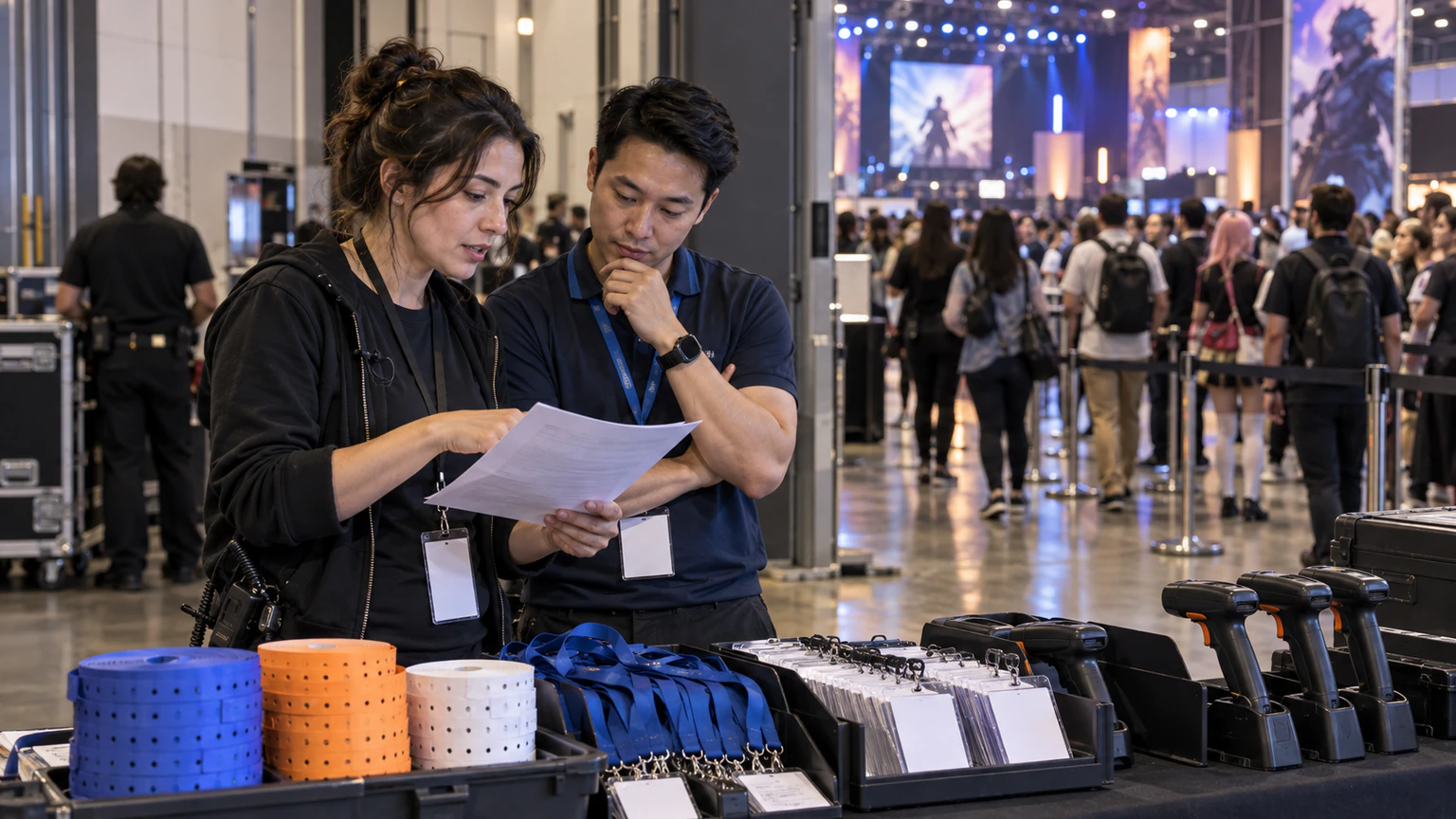

When a trade show reaches the scale of tens of thousands of visitors and hundreds of exhibitors, operations stop being a background function. They become part of the attendee experience itself.
Recent coverage of CHIC Shanghai closing its edition with roughly 70,000 visitors and more than 700 exhibitors is best read as a scale signal. Public recap coverage can show the size and momentum of an event, but it usually does not provide a verified breakdown of the exact software stack used behind registration, exhibitor workflows, or on-site movement.
That limitation matters. It means organizers should be careful not to assume a specific platform setup from headline numbers alone.
At large shows, the question is often not which single tool powered the event. It is whether the full operating system around registration, exhibitor data, staff coordination, and on-site decision-making was strong enough to keep friction low.
Why this matters
A show can look successful from the outside and still put huge pressure on its operational backbone.
At this scale, event teams are usually managing several linked problems at once:
- high-volume attendee registration and check-in
- exhibitor onboarding across many companies and contacts
- badge accuracy and access control
- hall entry timing and queue management
- wayfinding across a large floorplan
- lead capture and business follow-up expectations
- real-time communication between organizer, venue, and contractors
If those systems do not connect cleanly, teams end up solving predictable issues manually on site.
What public coverage usually does not show
Most event coverage focuses on attendance, exhibitors, launches, and market relevance. That is useful, but it leaves out the practical machinery that determines whether the show floor feels efficient or stressful.
For a show of this size, public reporting rarely answers questions like:
- how exhibitor records were collected and approved
- how many attendee types had different access rules
- whether badge printing was pre-produced, on demand, or hybrid
- how queue pressure was monitored during peak arrival periods
- what data was captured for post-show analysis
- how service desks handled corrections and exceptions
Those are the questions that event operations teams care about most.
The core systems large shows usually depend on
Registration and attendee data management
The registration layer is usually the first operational test.
At large shows, it needs to handle more than sign-ups. It often has to support attendee categories, approvals, confirmation logic, badge data, communications, and on-site lookup without slowing down front-of-house teams.
In practical terms, organizers usually need registration workflows that can support:
- pre-event sign-up and confirmation
- group or company-based attendance records
- VIP, buyer, media, exhibitor, and staff categories
- status changes before arrival
- fast retrieval at check-in desks
- clean export or reporting after the event
If attendee records are incomplete or inconsistent before doors open, the registration zone becomes a repair desk instead of a throughput point.
Badge printing and check-in operations
Badge operations are often underestimated until the first rush period starts.
For very large shows, the issue is not only printing speed. It is exception handling.
Teams should plan for:
- pre-printed badges for predictable segments
- on-site printing for late registrations and corrections
- separate help points for data fixes
- clear lane design for different attendee types
- trained staff who can solve mismatches quickly
A fast printer does not solve a weak process. The layout, staffing plan, and data quality matter just as much.
Exhibitor onboarding and profile management
With 700 or more exhibitors, the exhibitor system becomes a major project in its own right.
Each exhibitor may involve multiple contacts, stand requirements, deadlines, documents, branding assets, service orders, and badge allocations. That is why large expos usually need a structured exhibitor workflow, not just a sales spreadsheet and email thread.
Useful capabilities in this part of the process generally include:
- a central exhibitor record
- contact and permission management
- deadline tracking
- manual review steps where needed
- service and logistics instructions
- consistent data collection for directory or floor listings
The goal is simple: reduce rework and make sure exhibitors are operationally ready before move-in begins.
Exhibitor management breaks down when teams treat each stand as an isolated account instead of part of a shared operational system.
Where attendee flow is usually won or lost
Arrival design
Large events often experience their highest visible stress in the first ninety minutes of the day.
That makes arrival design more important than many teams expect. Good attendee flow usually depends on a combination of physical layout and system discipline:
- clear pre-event instructions
- distinct lines for pre-registered and problem cases
- visible signage before guests reach the desks
- enough scanning or lookup points for peak bursts
- staff rovers who redirect people before queues harden
If every attendee enters the same queue regardless of readiness, throughput falls fast.
Wayfinding and zone logic
Once visitors are through the entrance, flow depends on how easy the event is to read.
At a large exhibition, people need to understand quickly:
- where halls and feature zones are
- how to move between content and expo areas
- where service desks, food, and rest areas sit
- how to find exhibitors without repeated stops for help
This is where digital and physical systems need to support each other. Maps, directories, and staff information points should all describe the venue the same way.
Live monitoring during show hours
Big shows need more than a static floor plan. They need a way to notice developing pressure points while the event is live.
That does not always require advanced technology. In many cases, the most useful flow signals come from:
- check-in volume by time period
- manual reports from hall managers
- service-desk issue logs
- queue observations at key entrances
- exhibitor complaints about traffic imbalances
The important part is not complexity. It is having a repeatable process for deciding when to add staff, open another line, redirect arrivals, or update attendee guidance.
How lead capture and post-show data fit in
For exhibitors, attendee flow is only part of the value equation. They also need a reliable way to identify and follow up with the people they meet.
That is why lead capture workflows matter at large trade shows. Whether handled through scanning, structured forms, or simple digital logging, the objective is the same: turn booth traffic into usable follow-up data.
Organizers should think about lead capture less as a feature checklist and more as an adoption question.
The practical questions are:
- is the method fast enough to use during busy periods
- does it produce clean contact records
- can exhibitors tag interest or priority levels consistently
- is follow-up data available quickly after the show
If the process is awkward, exhibitors fall back to business cards, photos, notebooks, and memory. That weakens ROI for everyone.
What organizers should ask when evaluating event operations tools
For teams planning a growing trade show, the key issue is rarely whether a tool sounds modern. It is whether the workflow can hold up under live pressure.
A practical review should cover:
- how attendee and exhibitor records are created, edited, and approved
- how exceptions are handled on site
- how quickly staff can find and correct bad data
- how different event areas share the same source of operational information
- what reporting is available during and after the show
- what still depends on manual workarounds
These questions matter more than polished demos.
Where teams should stay realistic
It is tempting to look at a large, successful show and assume the answer was a single platform or a highly automated setup.
In reality, strong event operations often come from disciplined basics:
- clean data before the event
- clear ownership of exhibitor and attendee workflows
- well-designed front-of-house lanes
- staff trained for exceptions, not just normal cases
- fast communication between operations points
- good post-show review habits
Technology supports these outcomes, but it does not replace them.
A simple checklist for large-show operators
- separate standard check-in from problem resolution
- treat exhibitor onboarding as a structured program, not a message chain
- align digital maps, signage, and help-desk language
- define peak arrival plans before opening day
- track recurring service issues while the show is live
- make post-show data usable for both organizer learning and exhibitor follow-up
What this means for event teams
The CHIC Shanghai attendance and exhibitor figures point to a healthy scale story for trade shows. They do not, on their own, confirm the exact platforms used behind the scenes.
Still, they highlight a practical reality: when an event grows to this size, attendee flow and exhibitor management have to be treated as connected operating systems.
For organizers, that means focusing less on tool labels and more on whether the full process, from onboarding to check-in to post-show data, is built to handle volume without creating avoidable friction.
That is usually where large-show performance is decided.